Vastlite i7 EDC Torch Review
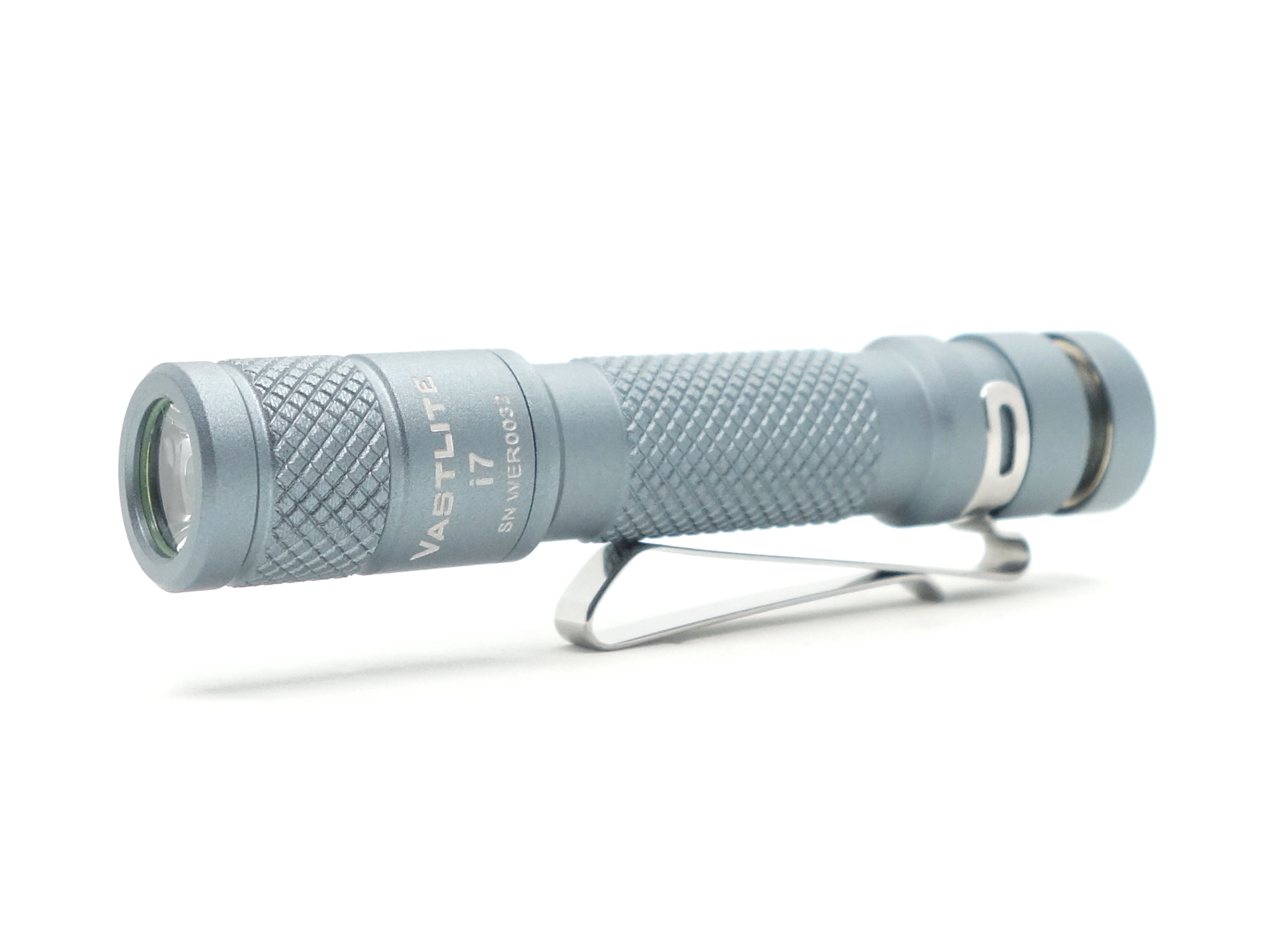
Vastlite i7#
- Specifications
- Introduction
- Torch in use
- Build quality
- LED, bezel, lens, reflector and beam
- Size and comparison
- User interface
- Batteries and charging
- Performance
- Beamshots
- Conclusion
- Price
- Product page
Specifications#
| Brand/model | Vastlite i7 |
|---|---|
| LED | Osram GW PUSRA1.PM P8 |
| Maximum lumens | 545 lm |
| Maximum beam intensity | 2,600 cd |
| Maximum throw | 102 m |
| Battery | 1*10440, AAA |
| Onboard charging | No |
| Material | Aluminium |
| Modes | 4 |
| Blinkies | - |
| Reflector | TIR |
| Waterproof | IP68 |
| Review date | August 2025 |
Introduction#
The Vastlite i7 is a reverse-clicky AAA-sized EDC torch with a unique design! It has a really cool tail switch with a magnet built-in.
Shenzhen Vastlite Technology Co., LTD. was founded by Leo Wong and Easy Dang. They have years of experience in the flashlight industry. You may already be familiar with their work on the BLF GT and the FW3A.
I met Leo in Shenzhen. He is eager to collaborate with the flashlight enthusiast community and he recommended reaching out if we have any designs that we would like to see come to life.
Here are some Vastlite torches that I have reviewed:
flashlightgo.com kindly provided this torch for review. I have not been paid for this review nor have I held back my opinions of this torch.
Packaging#
The Vastlite i7 comes in a transparent box with foam.
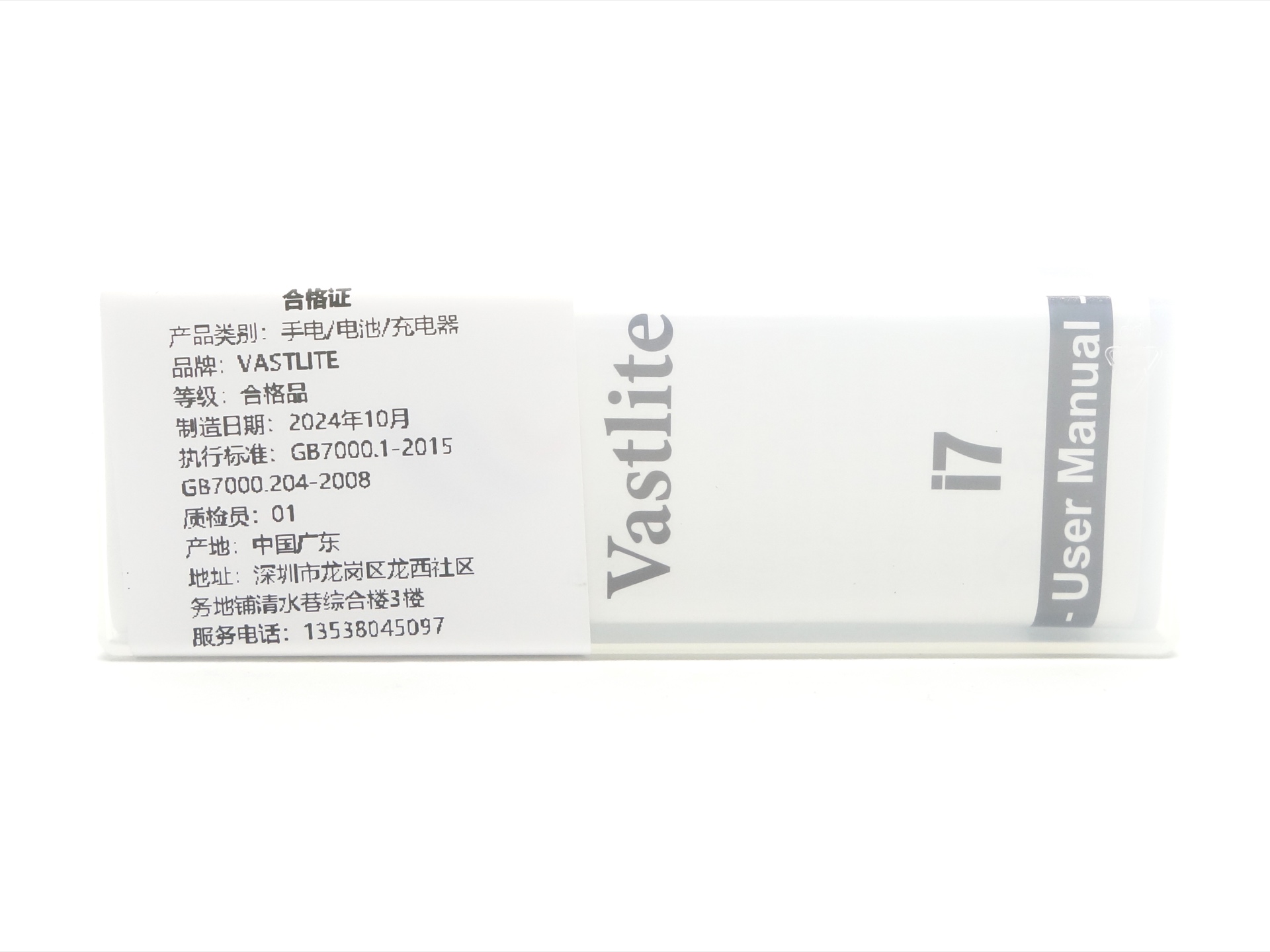
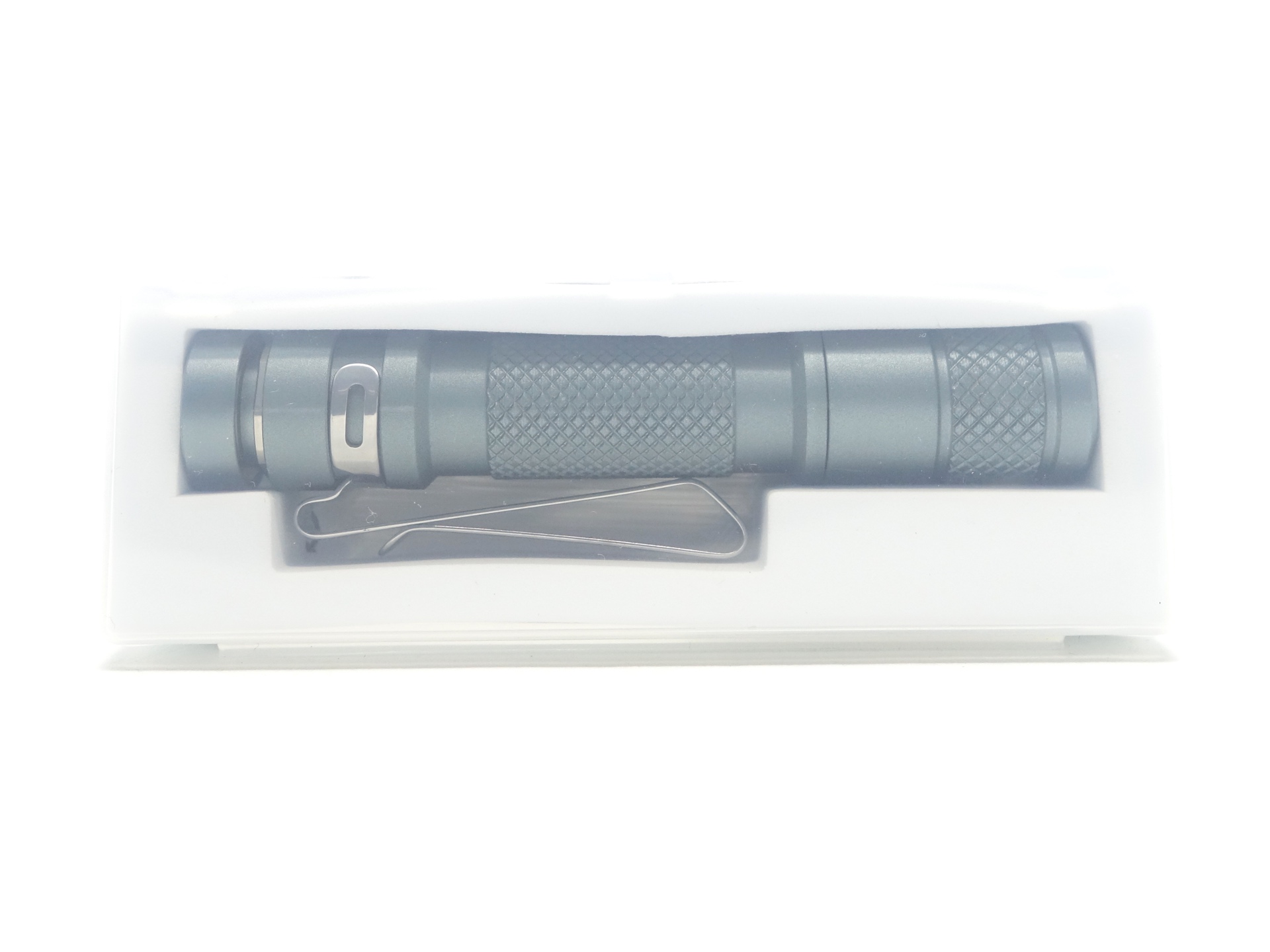
The following is included in the box:
- Vastlite i7.
- 1.5V AAA Alkaline battery (optional).
- Two spare o-rings.
- User manual.

User Manual#
Torch in use#
The Vastlite i7 is very compact for a AAA-sized torch with a tail switch.
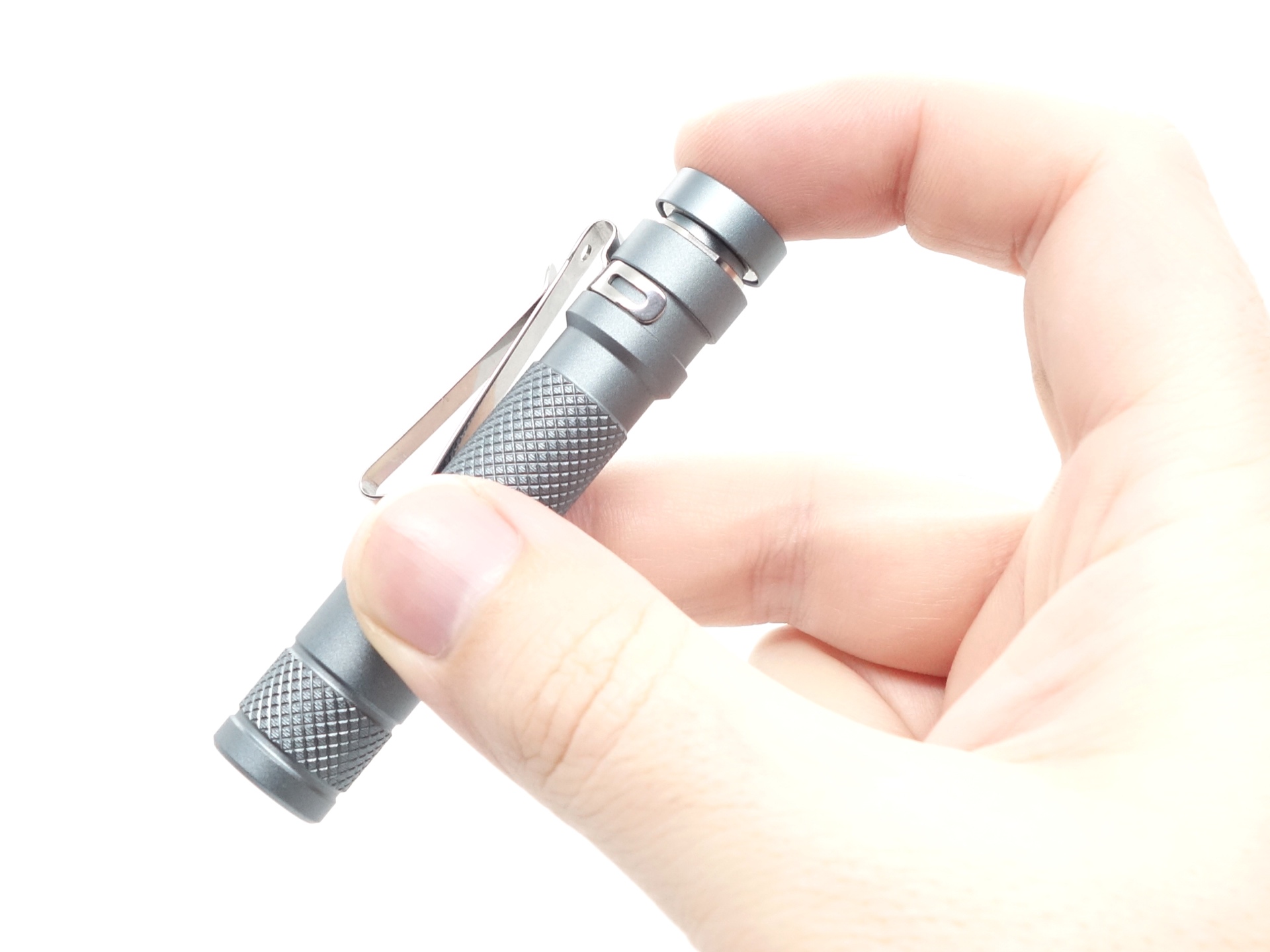
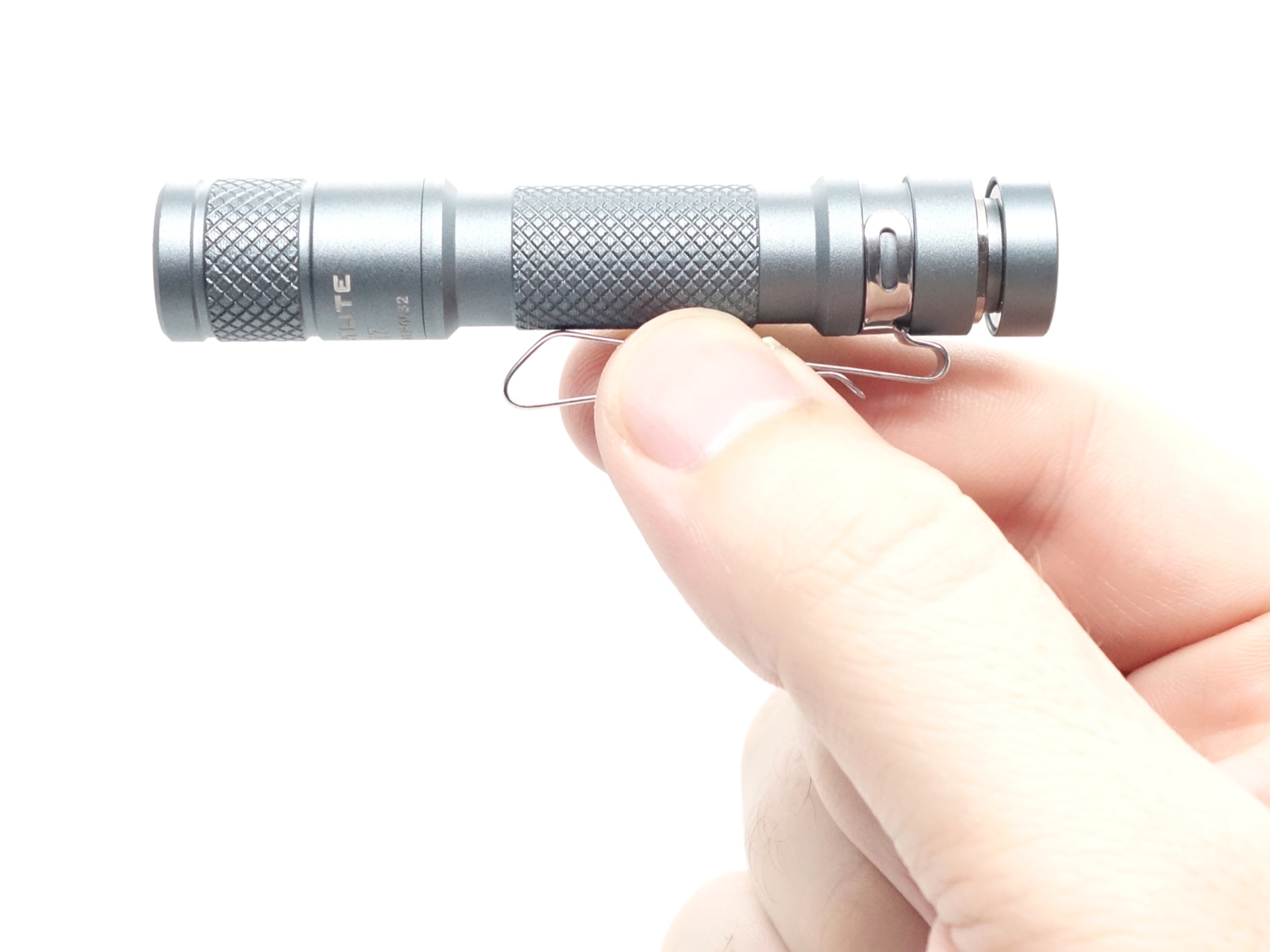
It can be carried while clipped to a pocket or a hat.
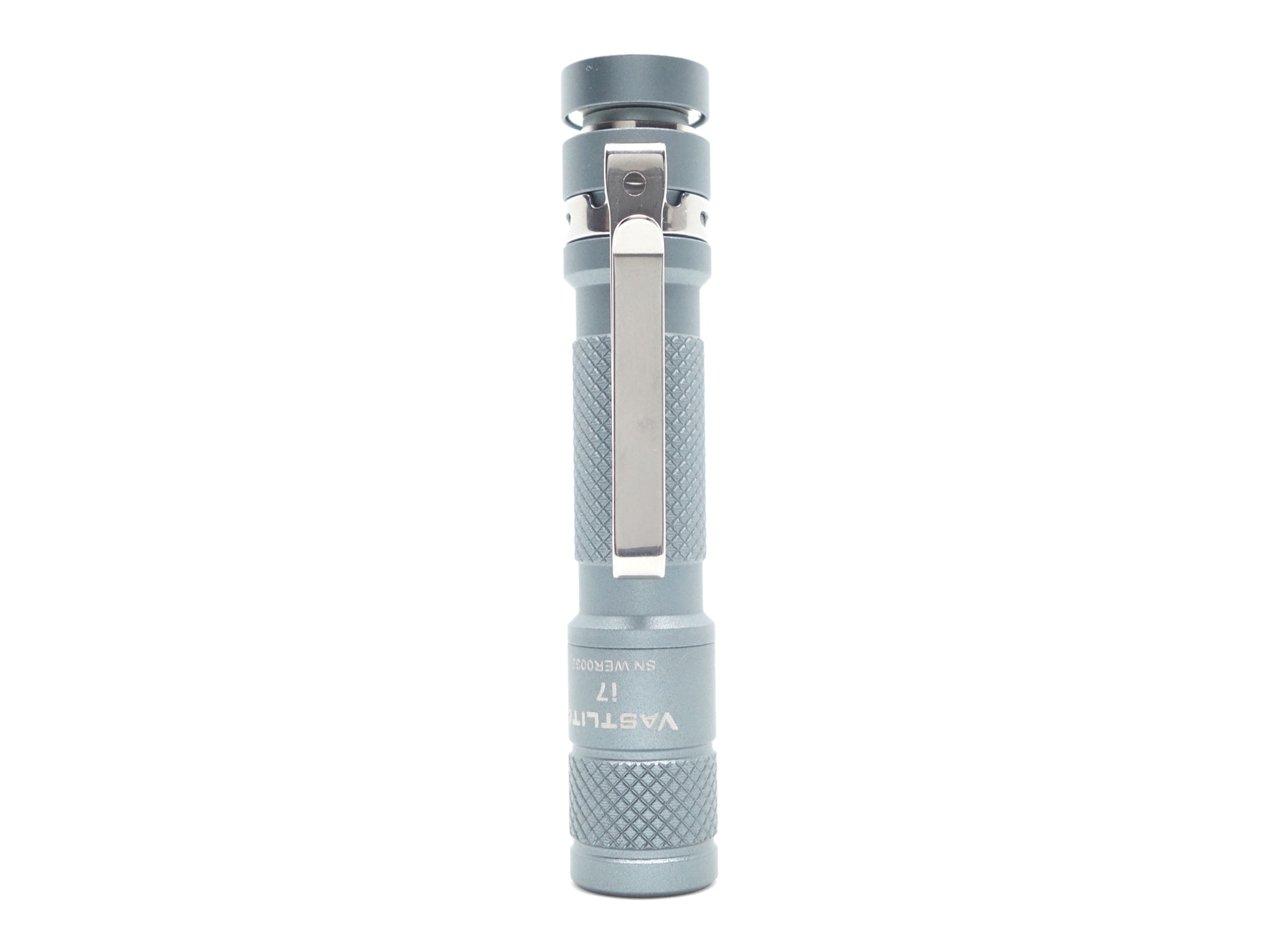
The two-way pocket clip fits extremely securely on the tube. There is a cutout to prevent the pocket clip from rotating around the tube.
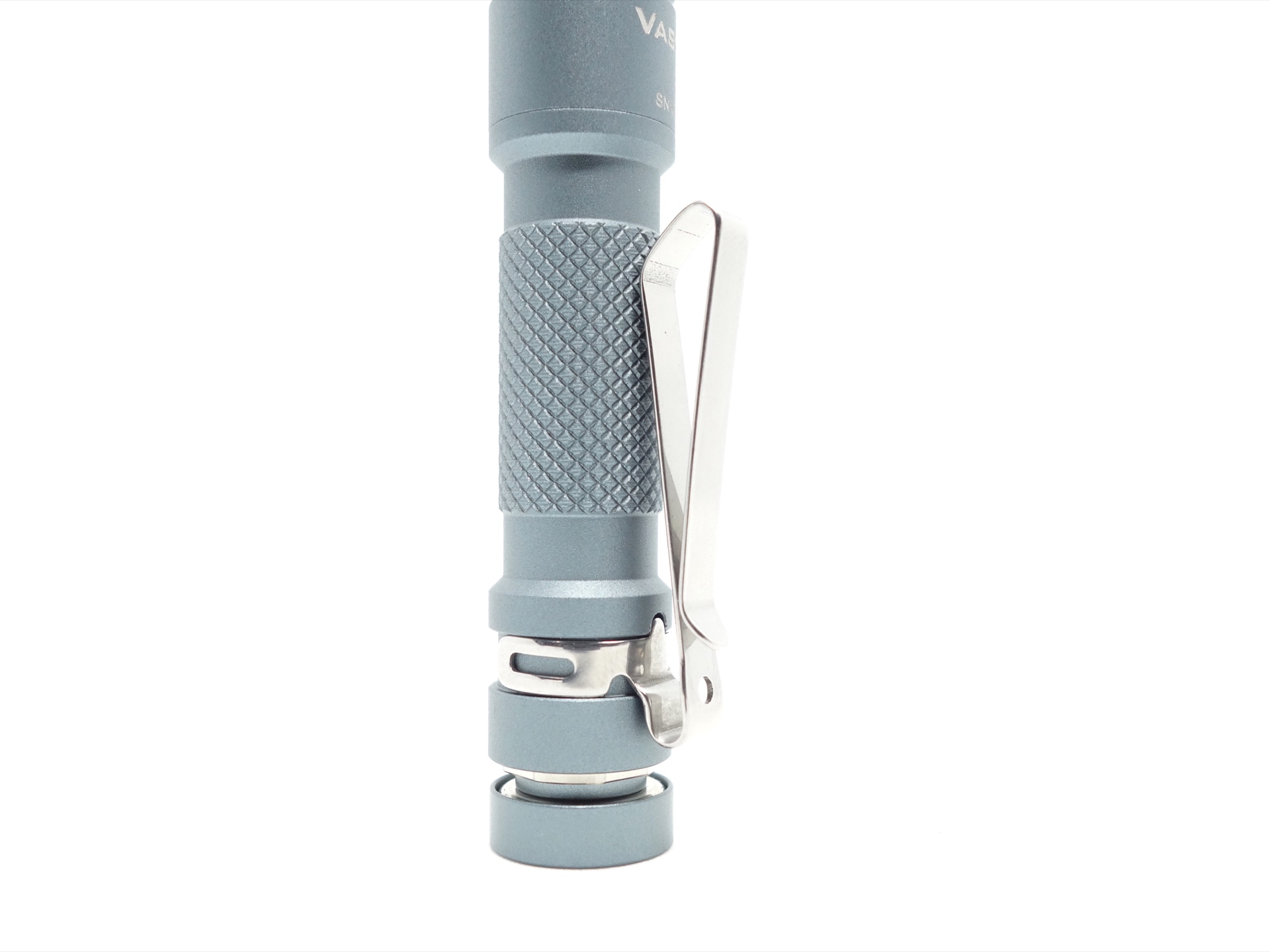
There is a hole in the pocket clip that could be used to attach a lanyard (not included).
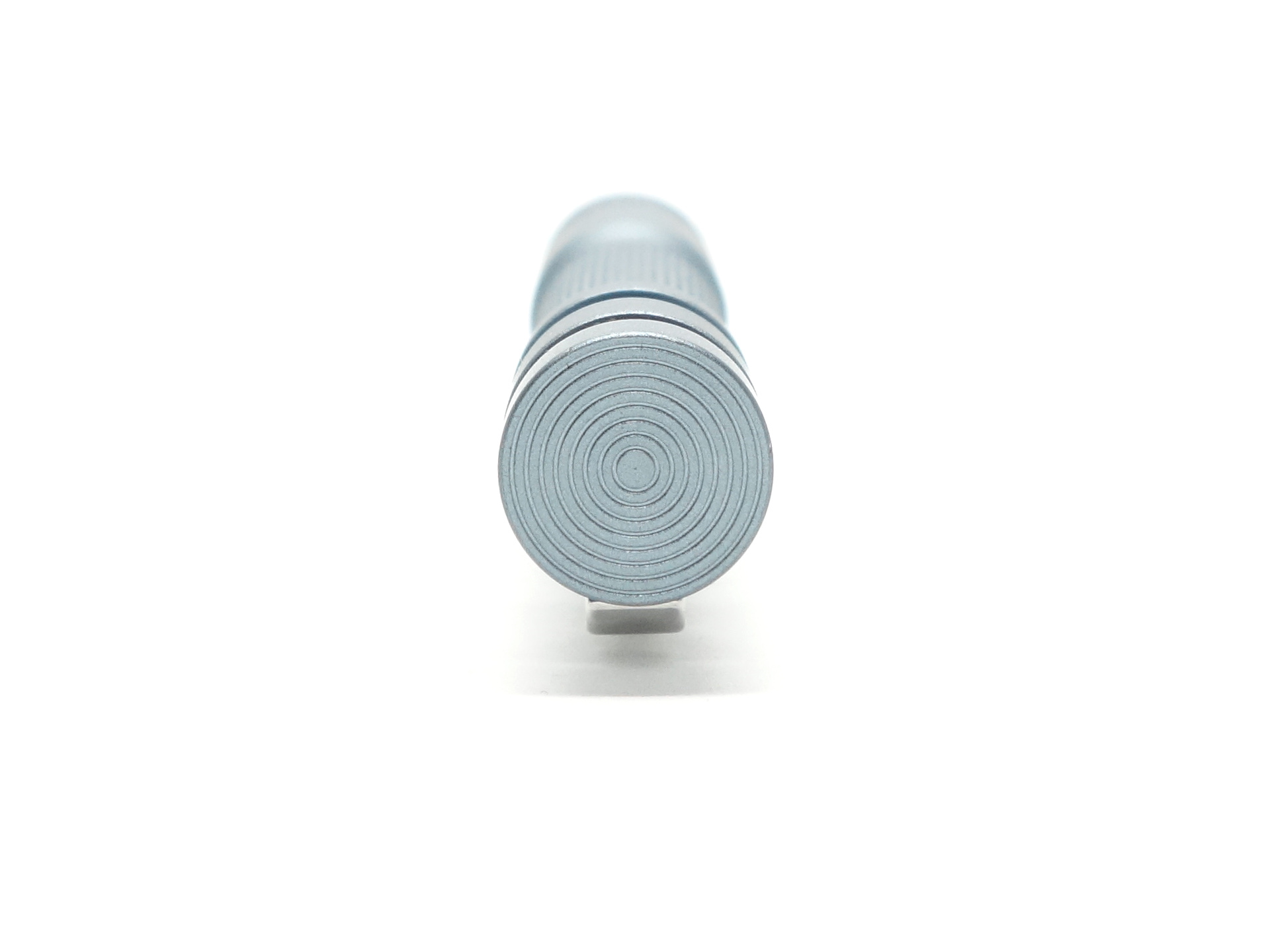
My favourite part of this torch is the unique tail design! The entire tail is one big reverse-clicky button with a magnet inside.
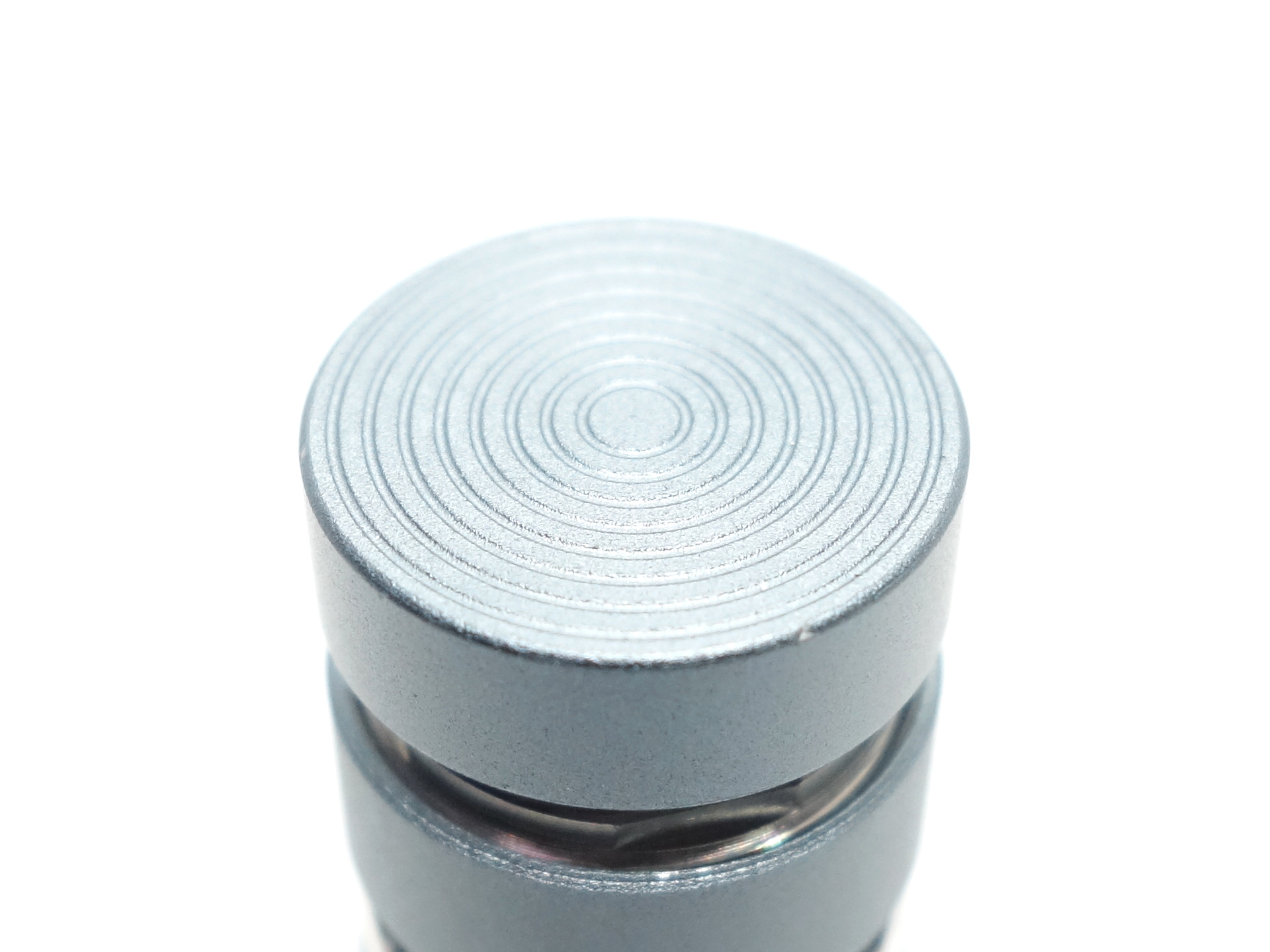
The torch can easily tailstand.
Build quality#
The Vastlite i7 has a matte light blue anodised finish. It is also available in black.
There is plenty of knurling on the head and the tube.
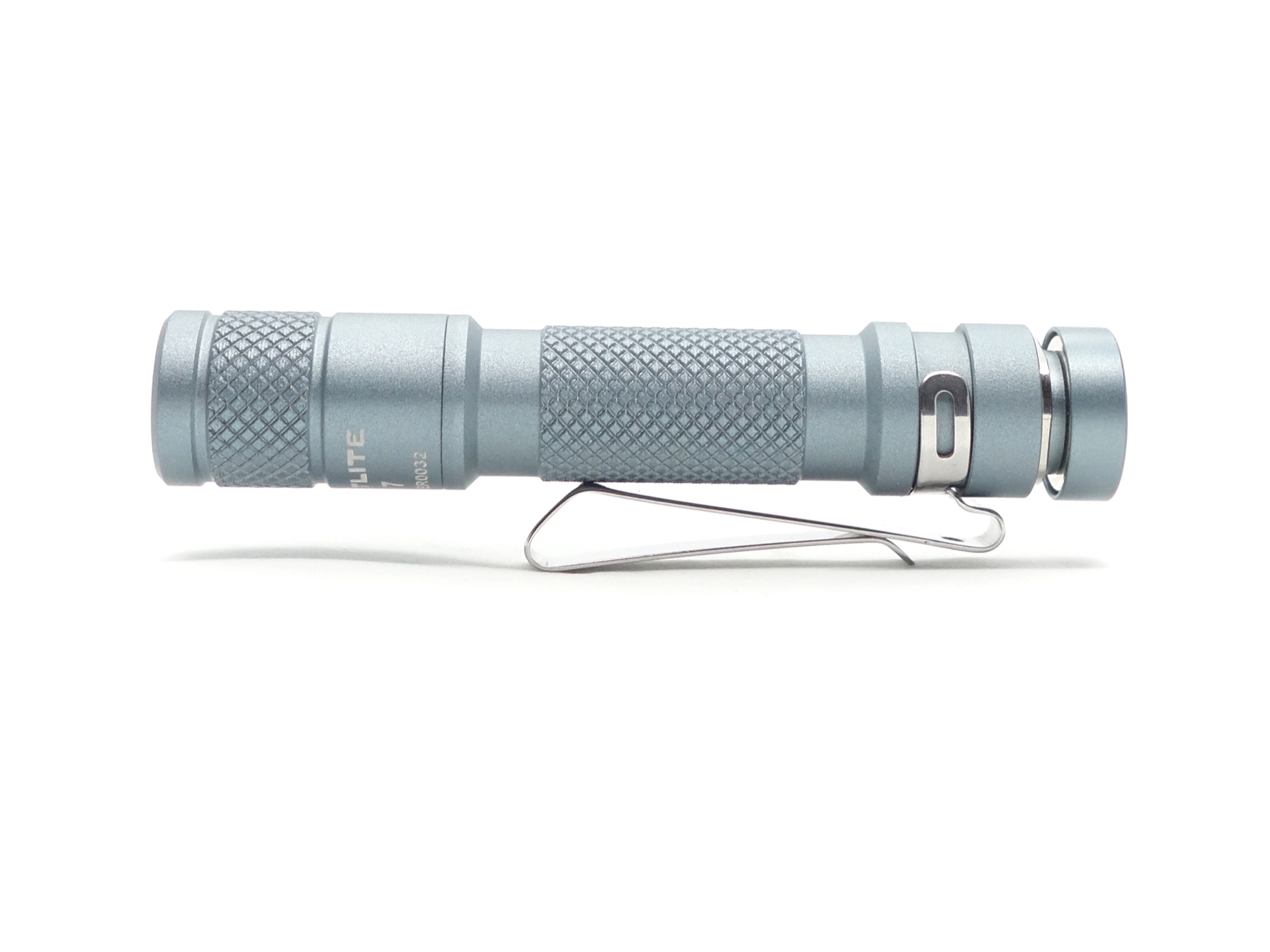
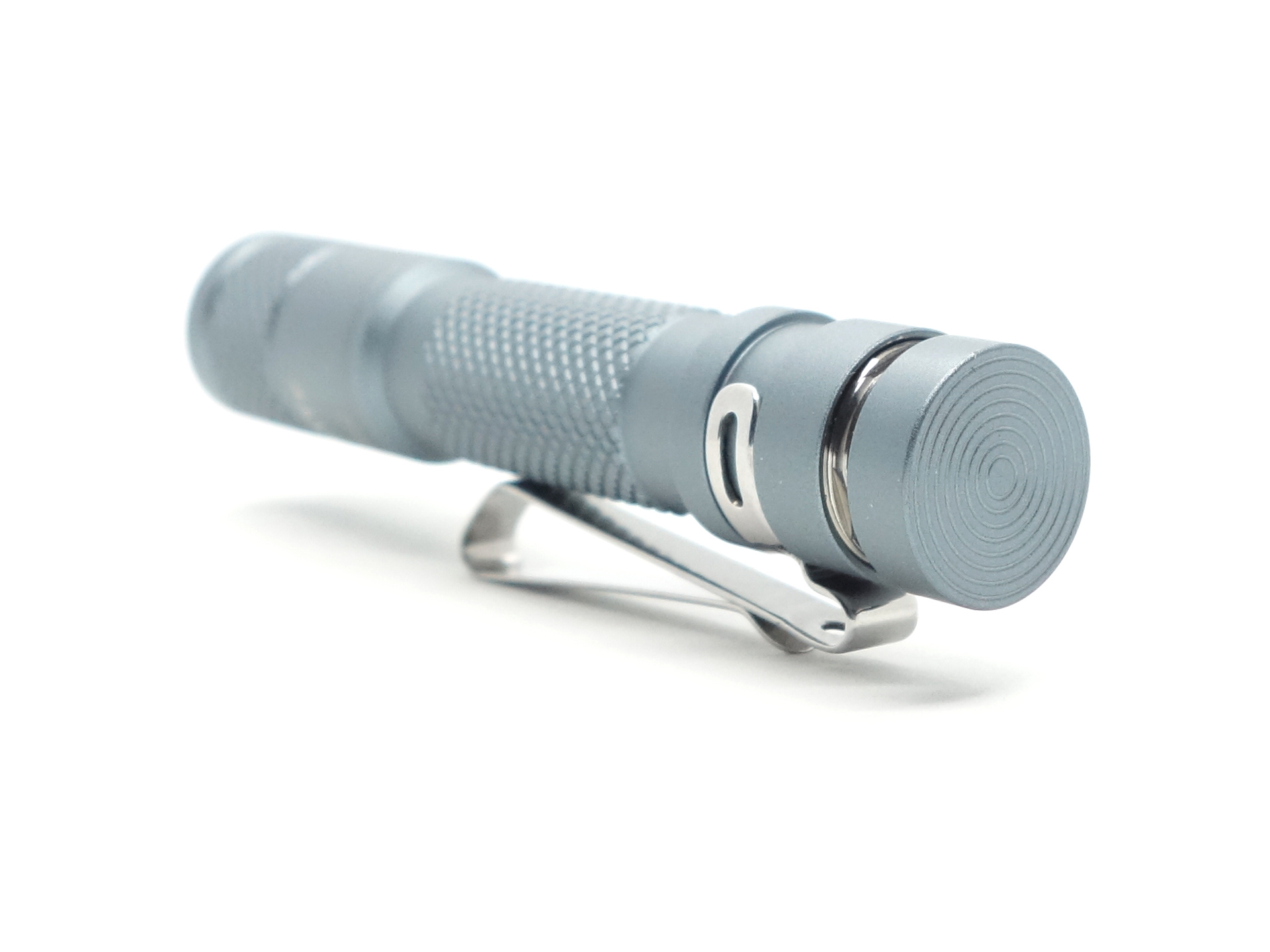
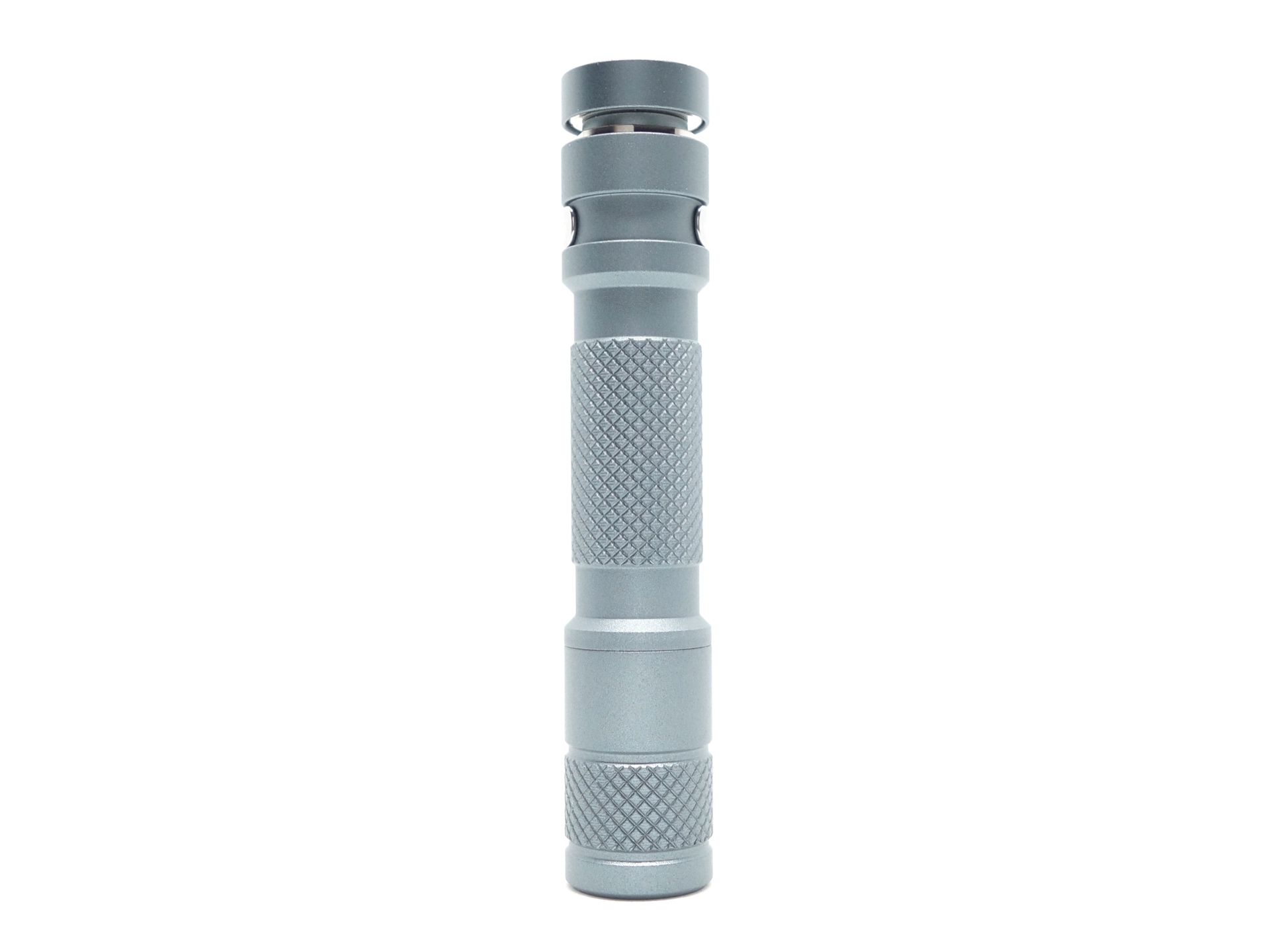
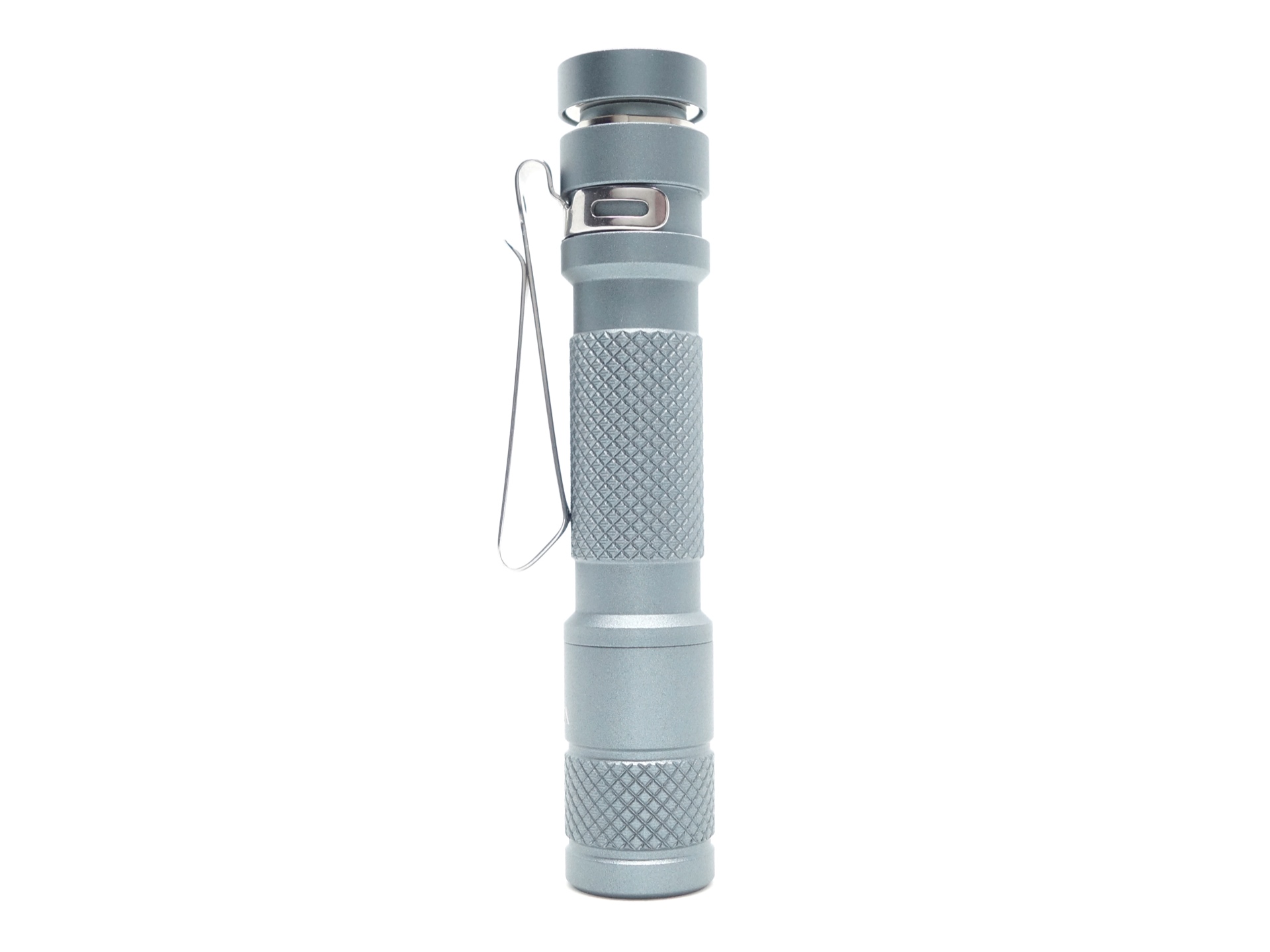
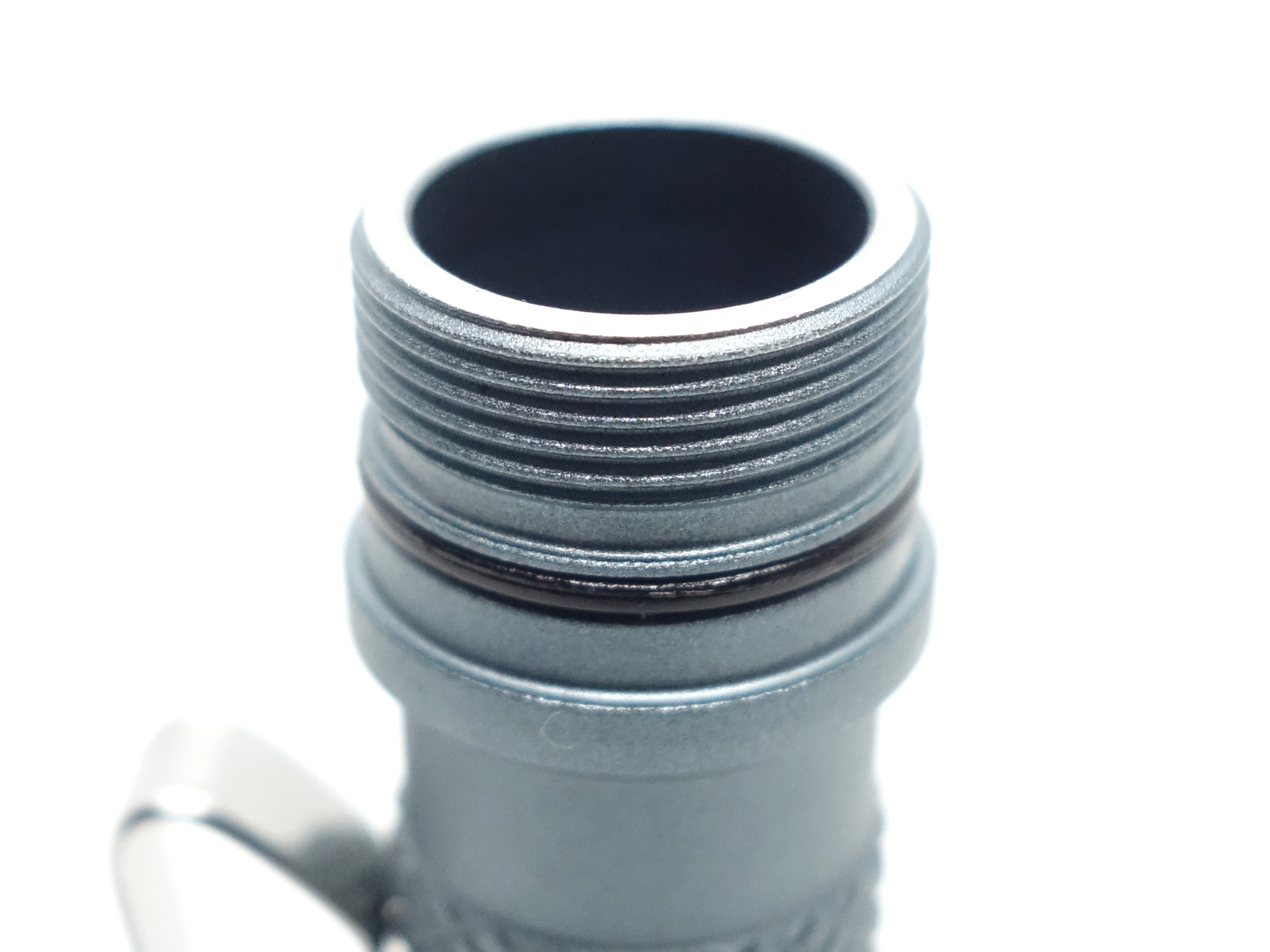
The threads are anodised and they turn smoothly.
The reverse-clicky tail switch has a bit of wobble. It gives a satisfying click.
I like the circular pattern on the button.
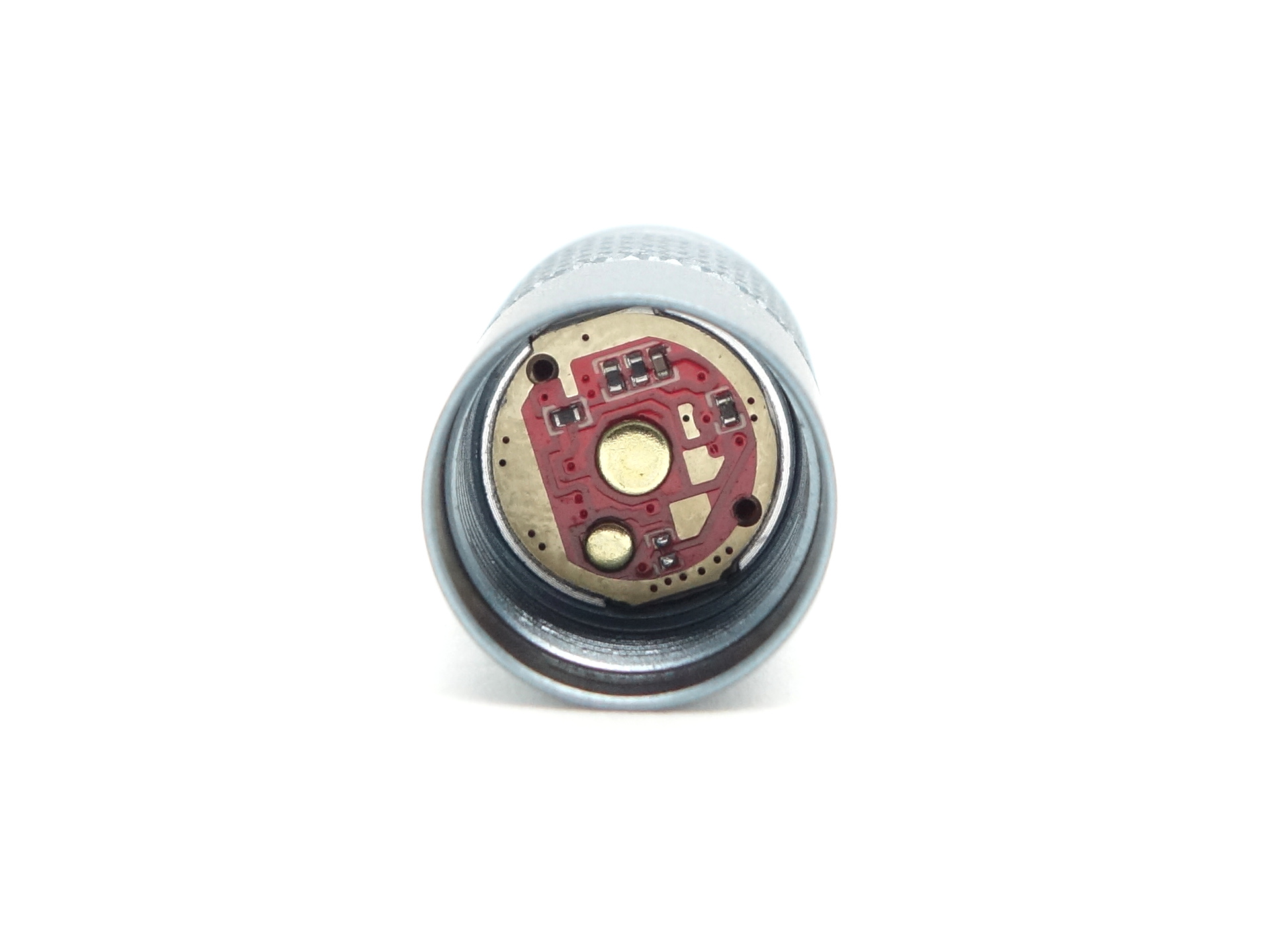
The driver has a notch for physical reverse polarity protection. That said, flat top and button top 10440 cells work.
LED, bezel, lens, reflector and beam#
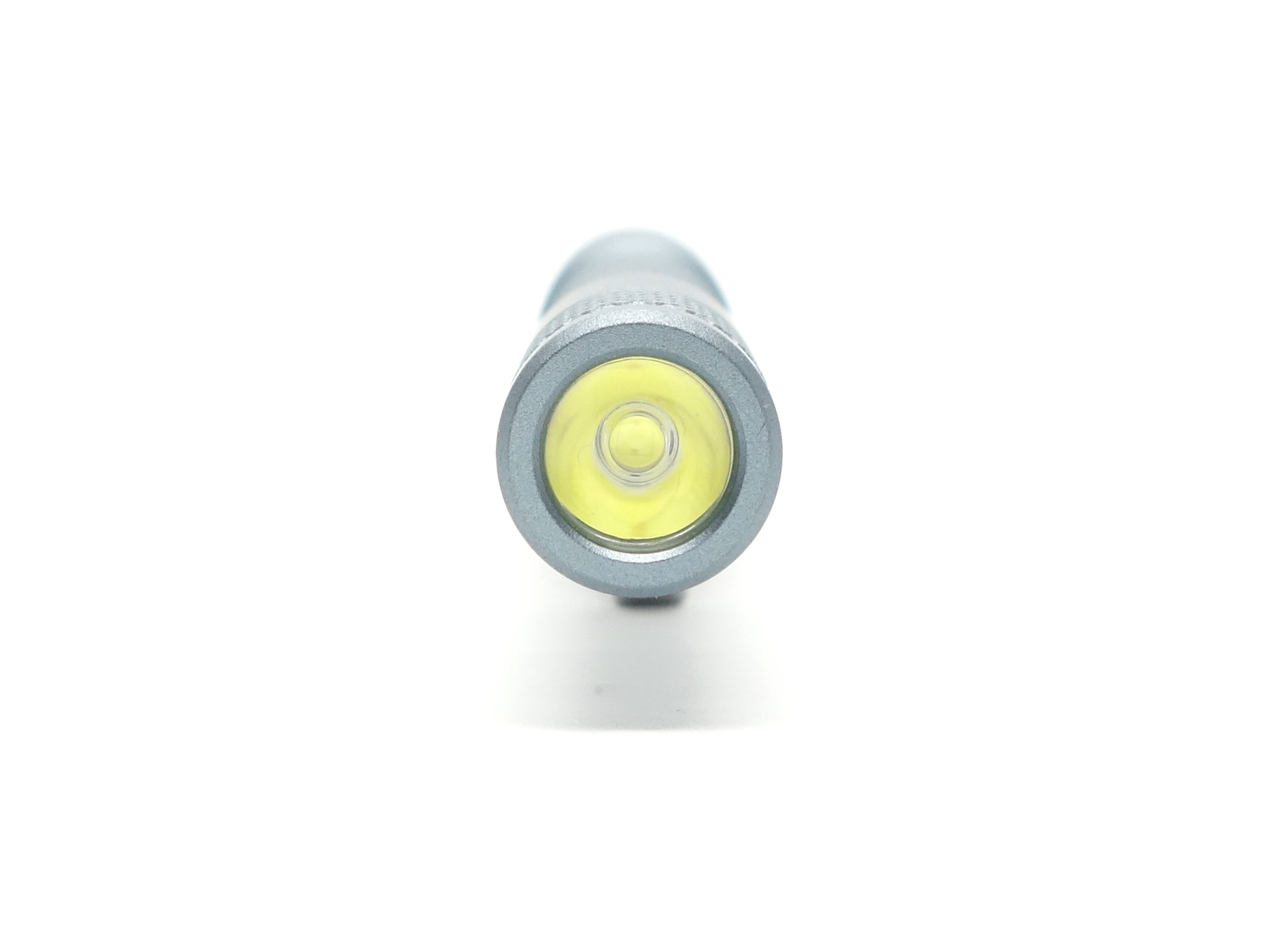
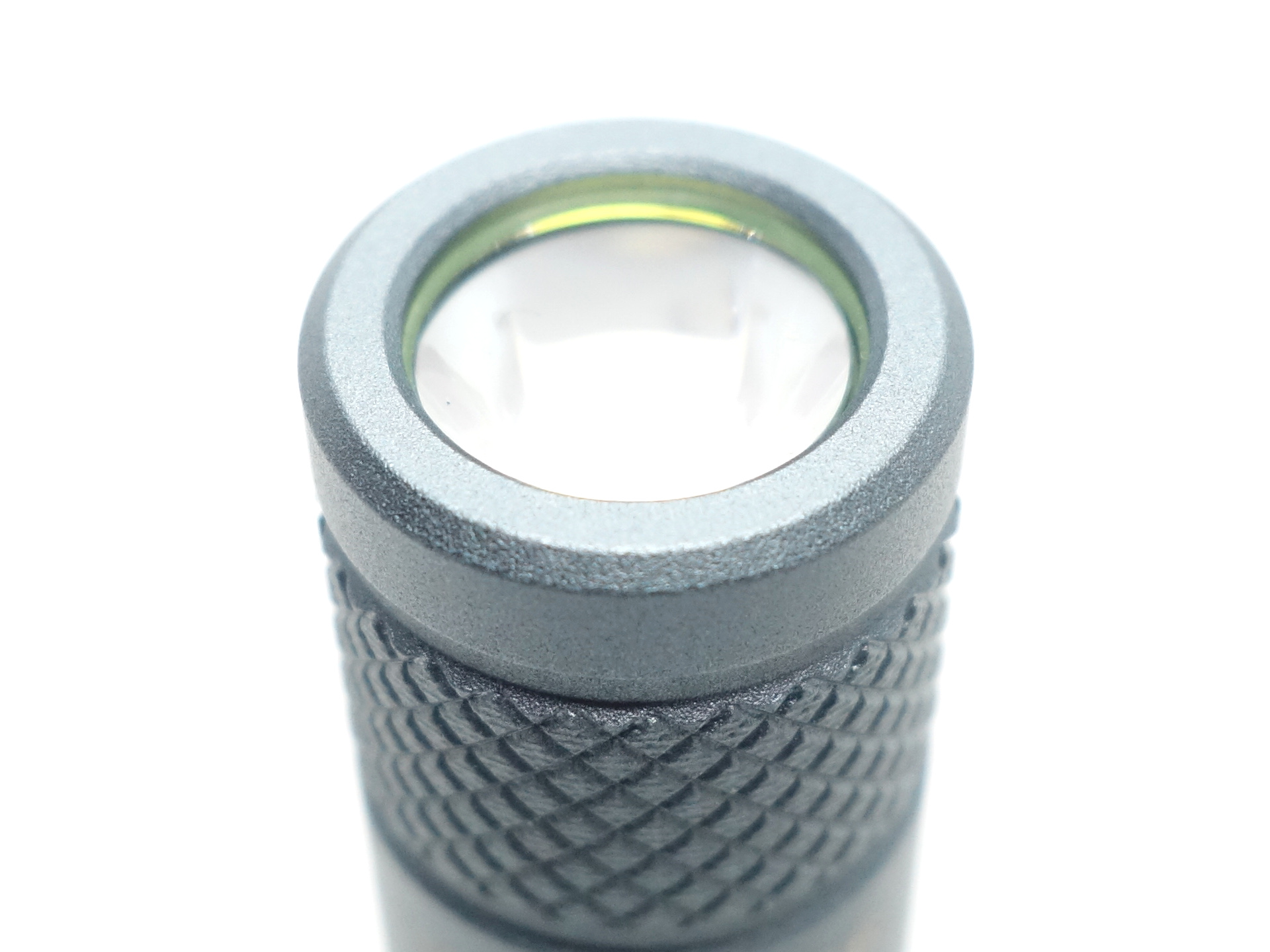
The Vastlite i7 has a cool white 6500K Osram GW PUSRA1.PM P8 emitter behind a TIR topic. It is also available in neutral white 5000K.
There is a green glow-in-the-dark o-ring between the bezel and the TIR optic.
CCT, CRI, and duv#
I have taken Correlated Colour Temperature (CCT) and Colour Rendering Index (CRI, RA of R1-R8) measurements with the torch positioned 20cm away from an Opple Light Master Pro III (G3).
The CCT is around 6000K, the CRI is around 69 and the Delta u, v is positive (slightly green).
The beam has a narrow hot spot surrounded by a slightly green corona that blends into a smooth spill. The hot spot almost looks pillow shaped. The large size of the LED and small size of the TIR optic has caused some artefacts around the hot spot where there are slightly darker corners.
| Mode | CCT (K) | CRI (Ra) | x | y | Duv |
|---|---|---|---|---|---|
| Low | 5973 | 69.6 | 0.3217 | 0.3455 | 0.0072 |
| Med | 5997 | 69.4 | 0.3212 | 0.3455 | 0.0074 |
| High | 6040 | 69.5 | 0.3204 | 0.3441 | 0.0071 |
| Turbo | 6215 | 70.5 | 0.3172 | 0.3385 | 0.0058 |
Calculate Duv from CIE 1931 xy coordinates
Dimensions and size comparison#
Dimensions#
I took the following measurements using a digital caliper.
| Measurement | Unit (mm) |
|---|---|
| Length | 81.95 |
| Head diameter | 15.16 |
| Tube diameter | 13.41 |
| Button diameter | 15.14 |
Weight#
I took the following measurements using a digital scale.
| Weight | Unit (g) |
|---|---|
| Vastlite i7 | 22.22 |
Size comparison with its competition#
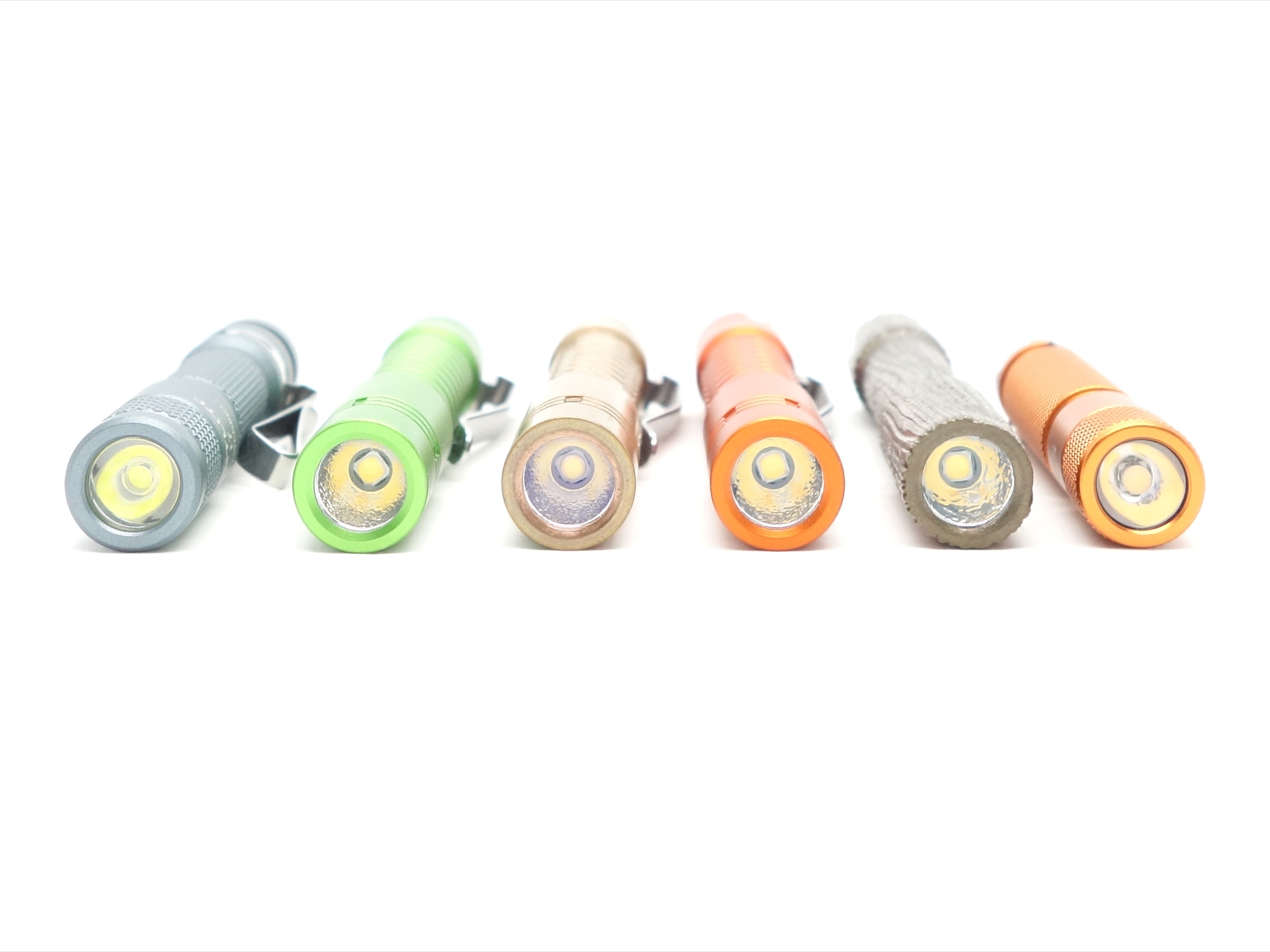
From left to right: Vastlite i7, ReyLight Pineapple Mini Green, ReyLight Pineapple Mini Copper, ReyLight Pineapple Mini Orange, ReyLight Pineapple Mini Carved Titanium, Sofirn C01S Orange
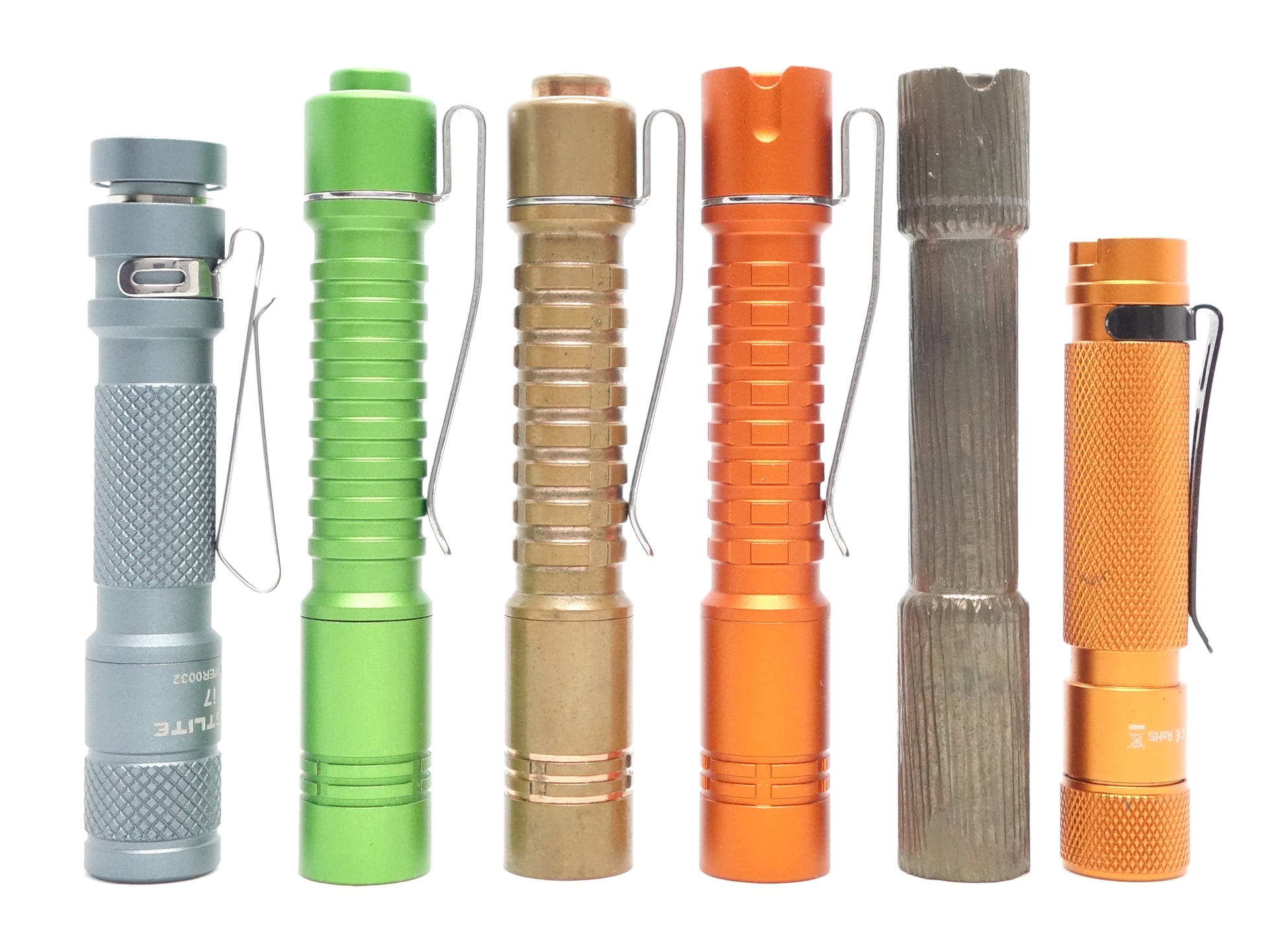
From left to right: Vastlite i7, ReyLight Pineapple Mini Green, ReyLight Pineapple Mini Copper, ReyLight Pineapple Mini Orange, ReyLight Pineapple Mini Carved Titanium, Sofirn C01S Orange
User interface#
The Vastlite i7 has a reverse-clicky tail switch.
There are four modes in the main group: Low, Med, High and Turbo.
| State | Action | Result |
|---|---|---|
| Off | Click | On (mode memory) |
| On | Half press | Cycle (Low, Med, High, Turbo) |
| On | Click off and click on | Cycle (Low, Med, High, Turbo) |
| On | Click | Off |
Mode memory#
There is mode memory.
The torch will memorise the last used mode when the light is off for 3 seconds.
Low voltage protection#
There is no low voltage protection.
I recommend using a protected 10440 cell with USB-C charging built-in.
The torch is available with a protected 10440 USB-C rechargeable cell.
Pulse Width Modulation#
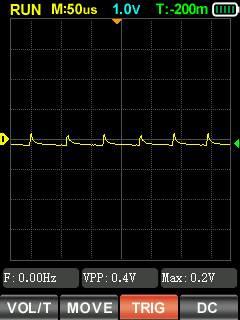
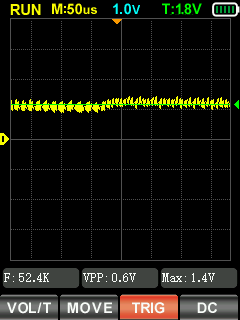
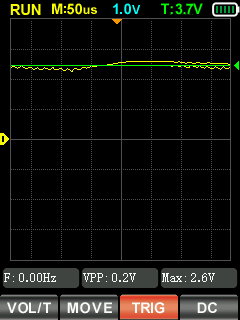
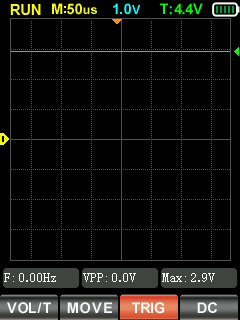
I did not notice any visible PWM (flickering).
I measured the PWM of the light with a Zoyi ZT-701 oscilloscope.
10440: Low, Med, High, Turbo
What I like about the UI#
- Simple.
What could be improved#
- Forward-clicky would be better in my opinion.
Batteries and charging#
Battery#
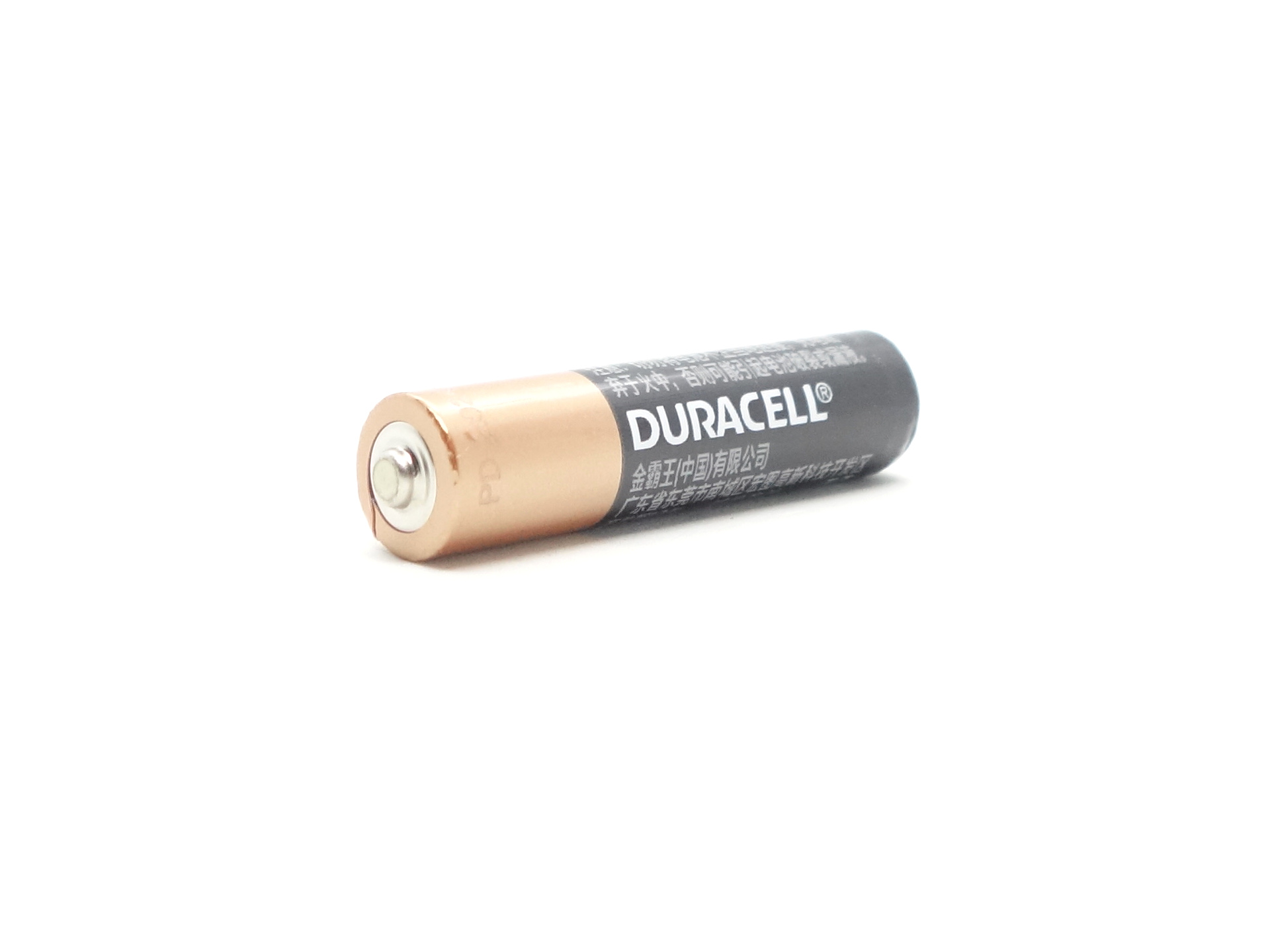
The Vastlite i7 is available without a battery, with a 1.5V AAA Alkaline battery or with a 10440 USB-C rechargeable battery.
A 1.5V AAA Alkaline battery was included with this sample.
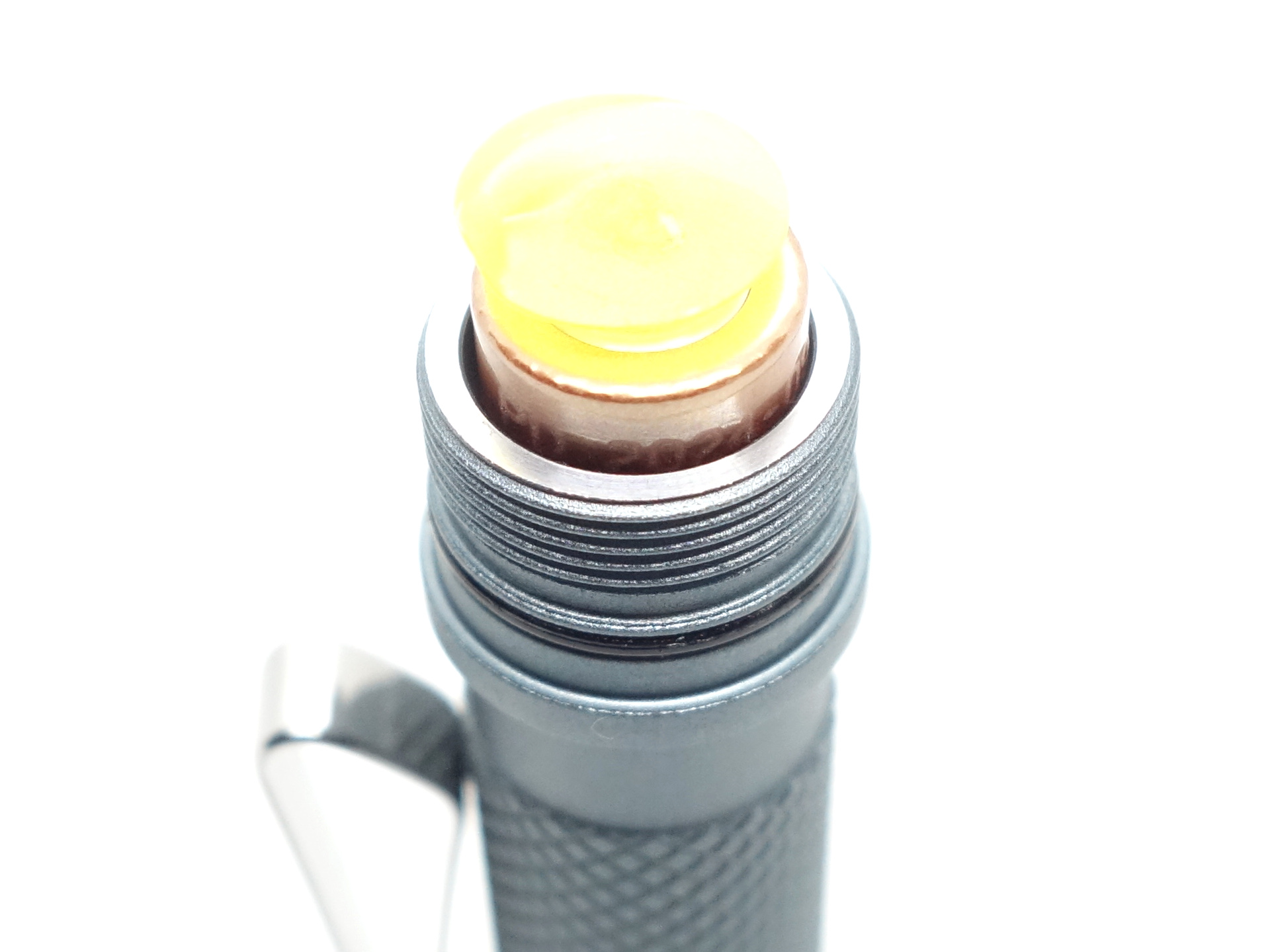
The battery was isolated with a piece of plastic to prevent accidentally turning the torch on.
The torch supports the following types of batteries:
- 1.5V AAA Alkaline battery.
- 1.2V AAA NiMH battery (e.g. eneloop, LADDA)
- 10440 3.7V Li-ion cell.
Charging#
There is no built-in charging.
It may be worth getting a 10440 USB-C rechargeable battery.
Performance#
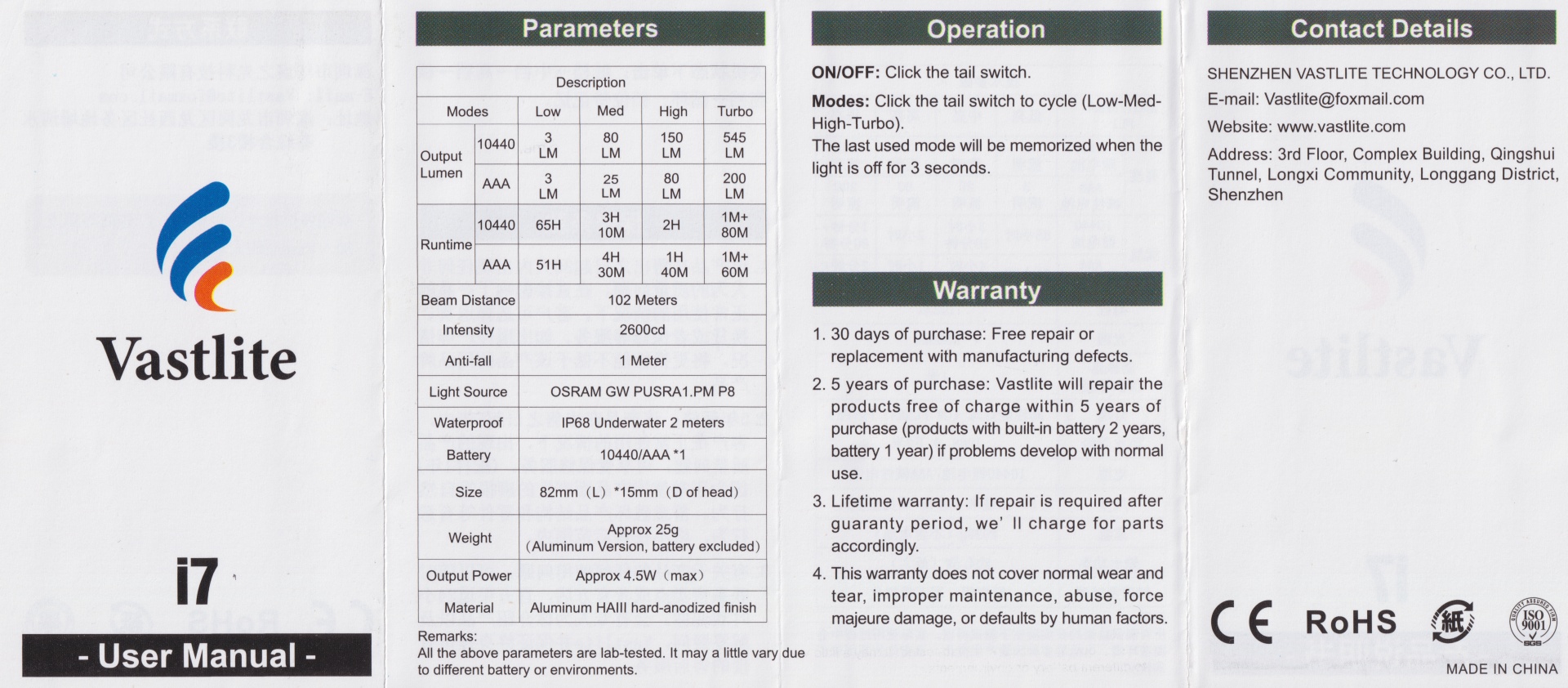
Specifications from the user manual:
| Cell | Low | Med | High | Turbo | |
|---|---|---|---|---|---|
| Output (lumens) | 10440 | 3 | 80 | 150 | 545 |
| Output (lumens) | AAA | 3 | 25 | 80 | 200 |
| Runtime | 10440 | 65h | 3h 10min | 2h | 1min + 1h 20min |
| Runtime | AAA | 51h | 4h 30min | 1h 40min | 1min + 1h |
| Beam Distance (metres) | 10440 | 102 | |||
| Beam Intensity (cd) | 10440 | 2,600 |
The specifications in the user manual have estimates for 10440 and 1.5V AAA Alkaline batteries.
Estimates for 1.2V Ni-MH cells are not mentioned in the user manual.
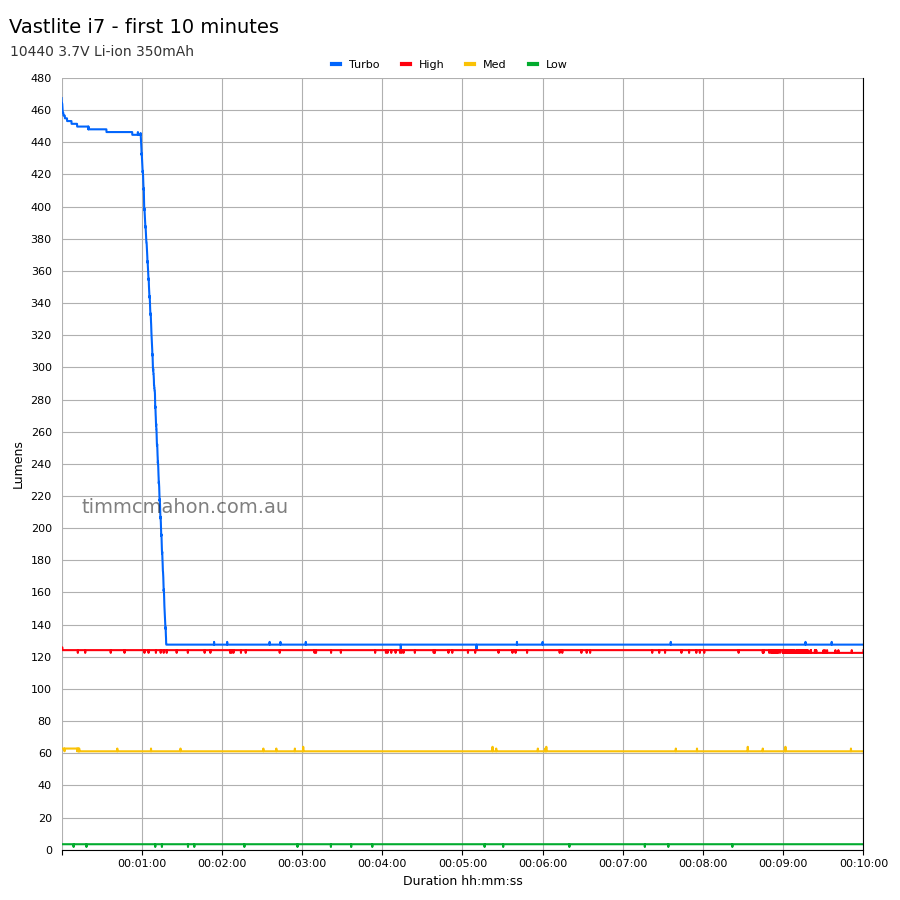
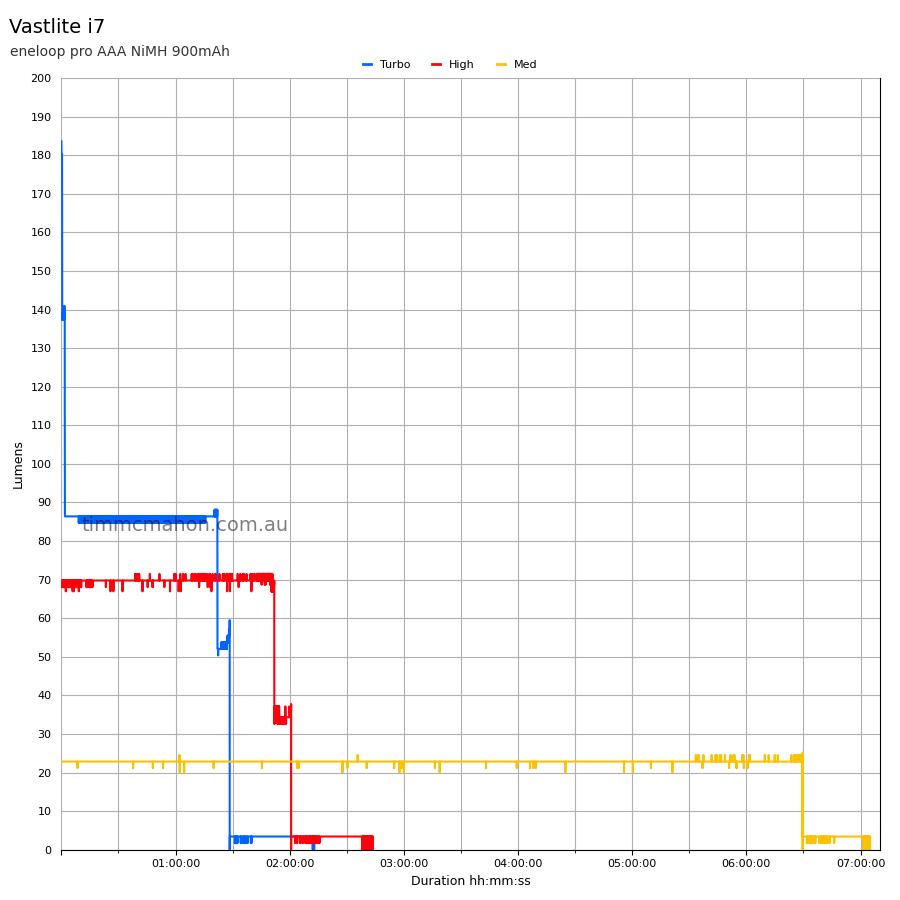
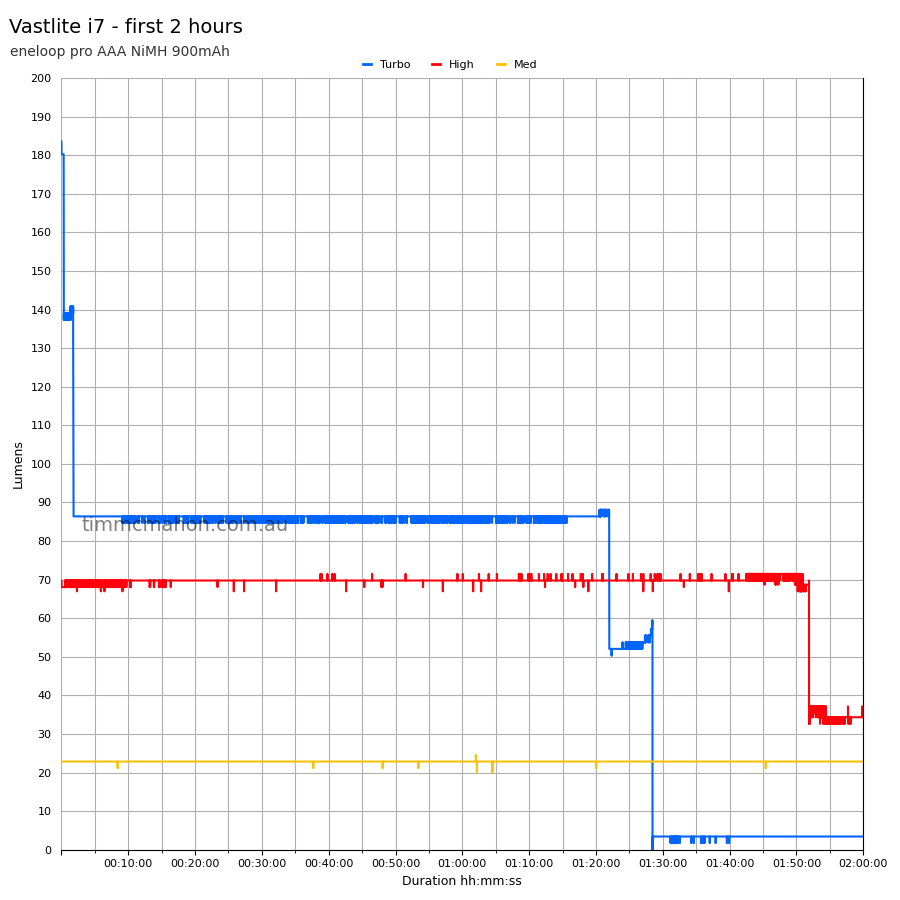
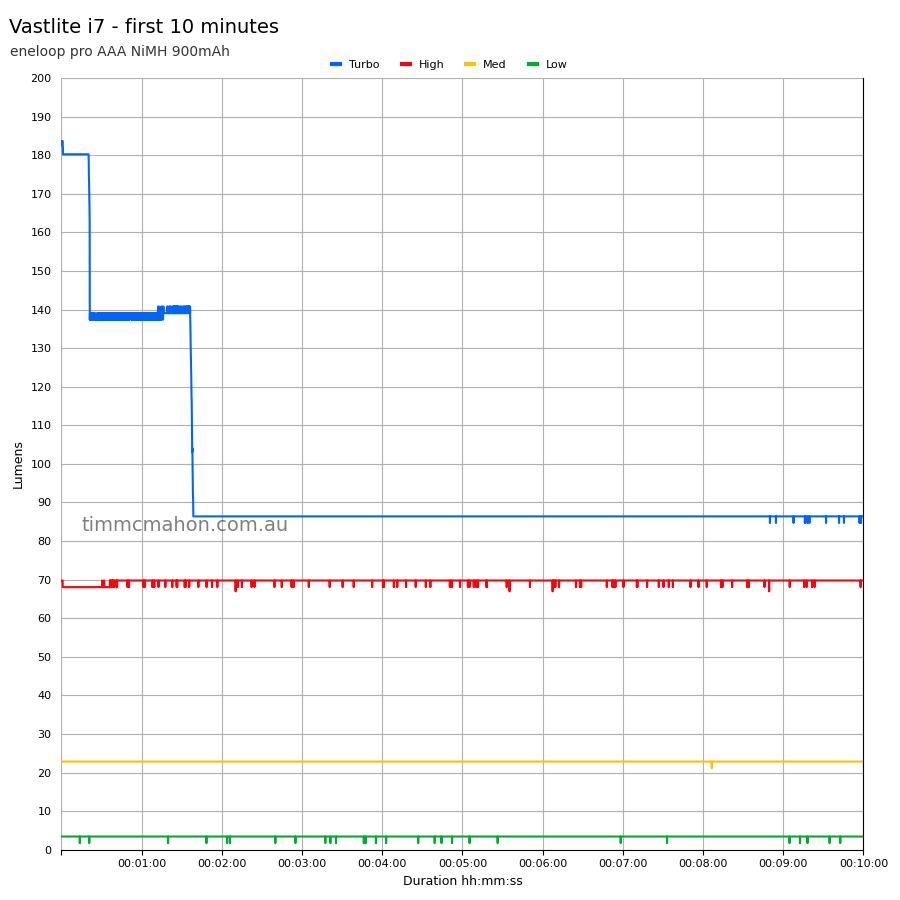
I tested the light using a ReyLight 10440 3.7V Li-ion 350mAh cell and an eneloop pro AAA 1.2V Ni-MH 900mAh cell.
Lumen measurements#
| Cell | Mode | Specs | Lumens @turn on | Lumens @30 sec | Lumens @10 min |
|---|---|---|---|---|---|
| 10440 | Low | 3 | 3 | 3 | 3 |
| 10440 | Med | 80 | 62 | 61 | 61 |
| 10440 | High | 150 | 125 | 124 | 122 |
| 10440 | Turbo | 545 | 467 | 448 | 127 |
| Ni-MH | Low | 3 | 3 | 3 | |
| Ni-MH | Med | 22 | 22 | 22 | |
| Ni-MH | High | 69 | 68 | 69 | |
| Ni-MH | Turbo | 183 | 139 | 86 |
The lumen output is slightly lower than expected for 10440 but my DIY lumen tube tends to read low for small torches with a TIR optic.
Runtime graphs#
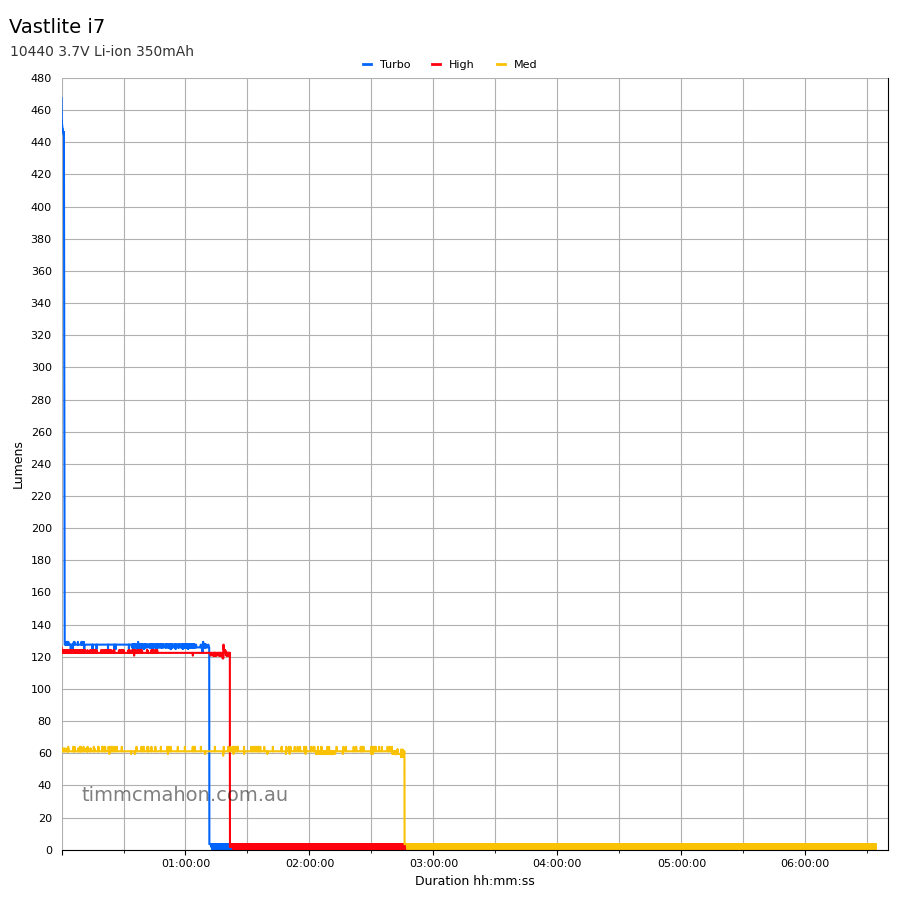
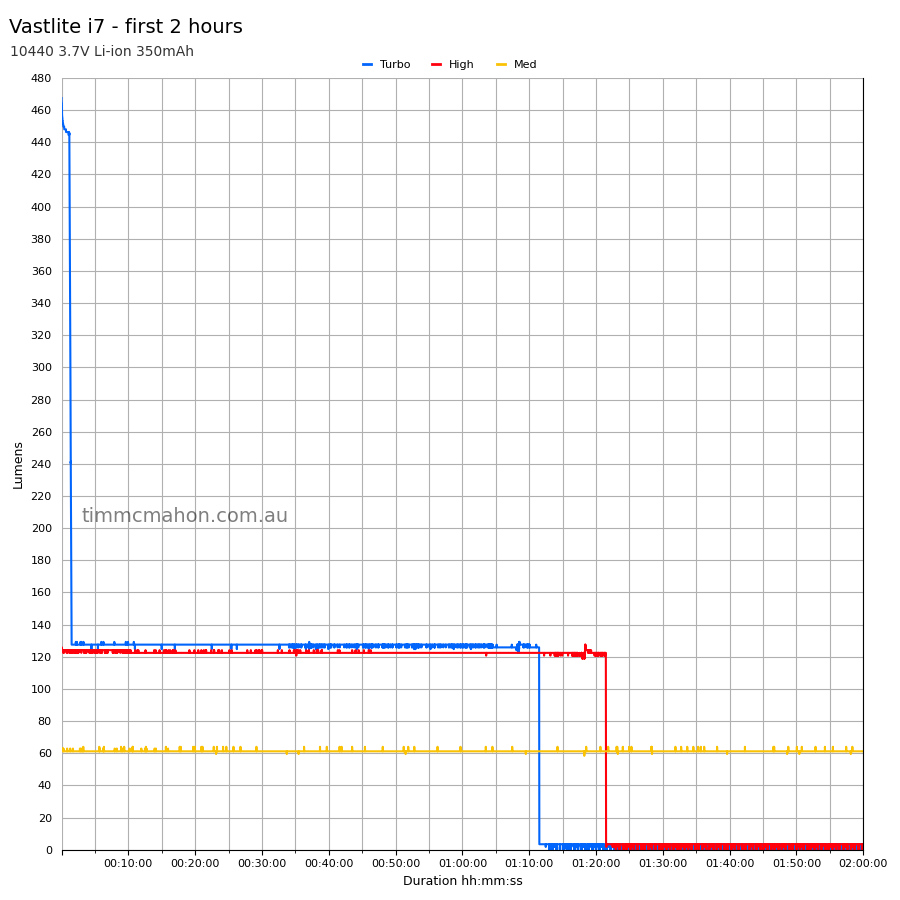
I used my own DIY lumen tube with a TSL2591 sensor and forked bmengineer’s project RuTiTe to record runtimes.
Note: Lumen measurements may be off by 10% with my DIY lumen tube.
The room temperature was approximately 15 C.
10440#
Ni-MH#
Runtime#
Here is a summary of the runtime results:
| Cell | Mode | User manual | Runtime | Turn off | Final voltage |
|---|---|---|---|---|---|
| 10440 | Turbo | 60s + 1h 20min | 1h 11min 15s | 5h 35min 52s | 1.39 |
| 10440 | High | 2h | 1h 21min 3s | 5h 28min 59s | 0.78 |
| 10440 | Med | 3h 10min | 2h 45min 58s | 6h 34min 8s | 0.81 |
| 10440 | Low | 65h | 10min+ | 10min+ | |
| Ni-MH | Turbo | 1h 28min 9s | 2h 12min 34s | 0.78 | |
| Ni-MH | High | 2h 0min 3s | 2h 42min 20s | 0.79 | |
| Ni-MH | Med | 7h 5min 4s | 7h 5min 4s | 0.78 | |
| Ni-MH | Low | 10min+ | 10min+ |
“Runtime” is the time until the output reduces to 10% of the output at 30 seconds (as per the ANSI/PLATO FL1 2019 Standard).
“Turn off” is the time until my DIY lumen tube no longer detects more than one lumen.
“+” indicates that the light remained on after recording had stopped.
The runtime for Turbo when using a 10440 cell was close to what Vastlite claim but the output dropped below 10% sooner than expected for Med and High.
The output is well regulated.
Throw#
I took lux measurements with a UNI-T UT383BT at 30 seconds. TUrbo was measured at five metres.
| Cell | Mode | Specs (cd) | Specs (m) | Candela measured (cd) | Distance (m) |
|---|---|---|---|---|---|
| 10440 | Turbo | 2,600 | 102 | 2,825 | 106 |
Beamshots#
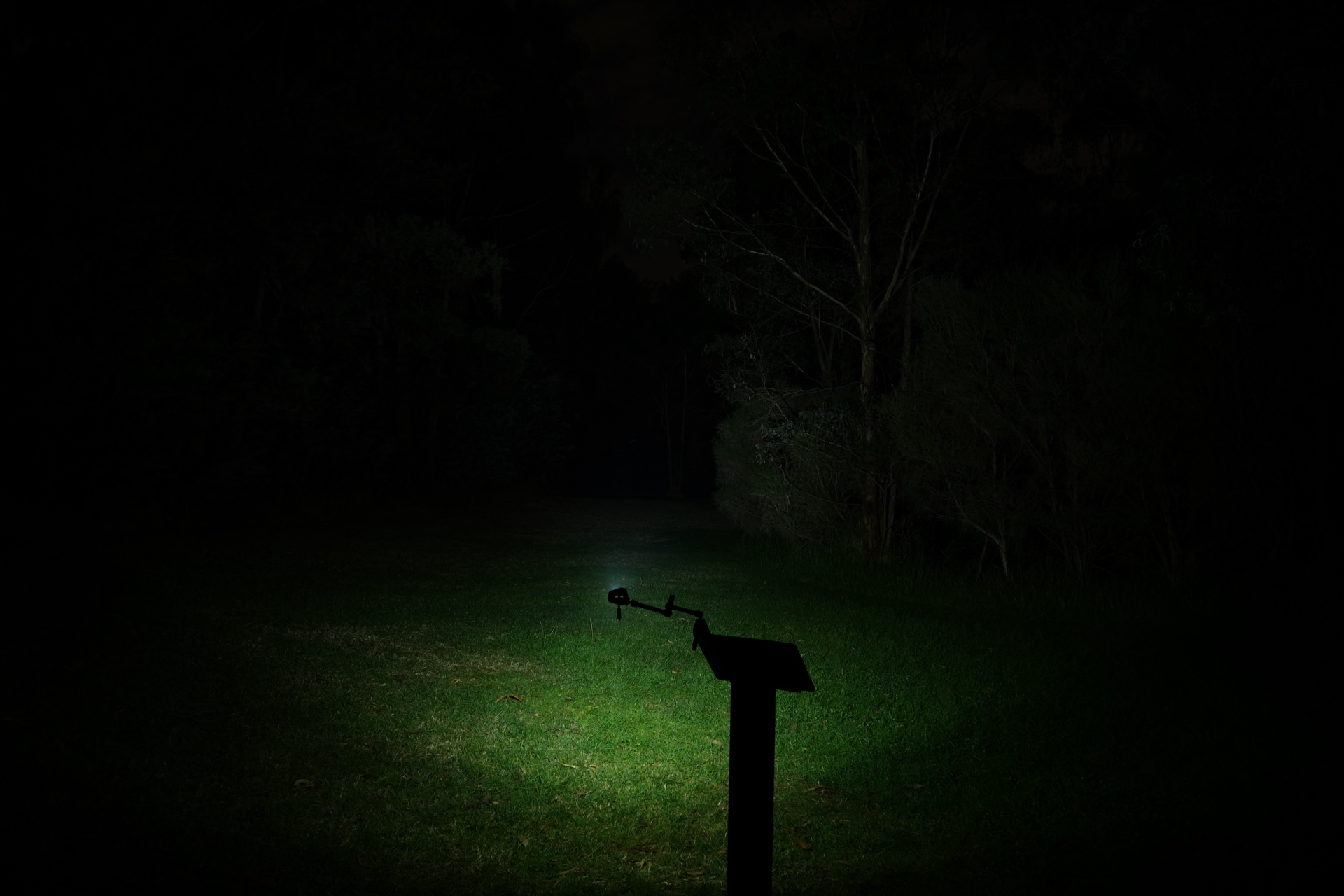
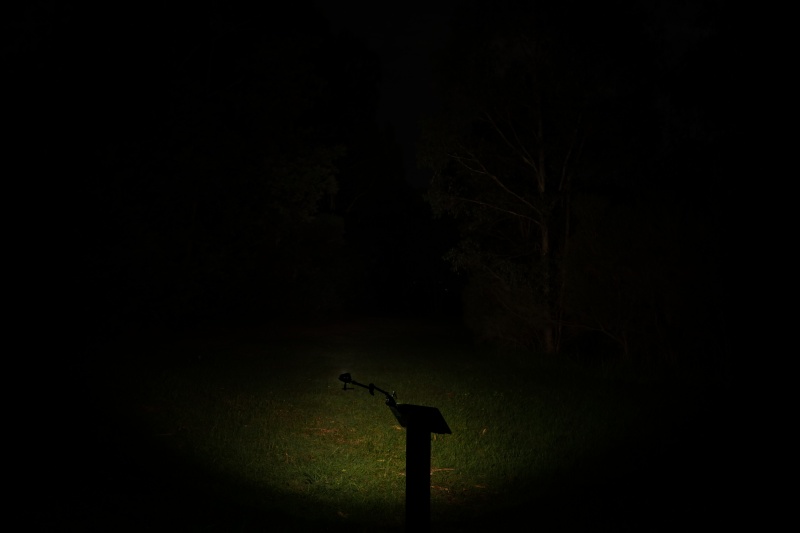
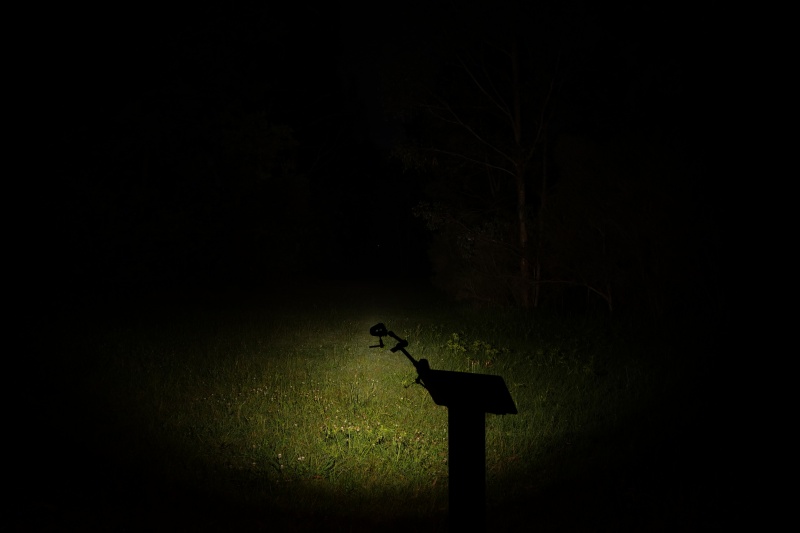
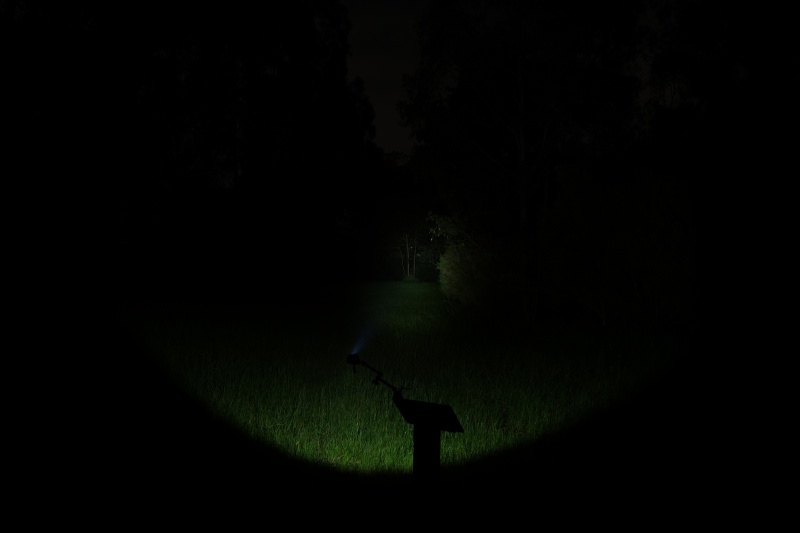
I went to a local park and I aimed the torch at a tree 70 metres away while using Turbo.
Beamshots were taken using a Sony RX100M2 using 3.2", f3.2, ISO 800, 5000K WB.
Vastlite i7 (Turbo)#
ReyLight Pineapple Mini Green (100%)#
ReyLight Pineapple Mini Orange (100%)#
Lumintop PK27 (High 2xAAA)#
Conclusion#
This version of the Vastlite i7 is geared towards high performance.
The cool white Osram GW PUSRA1.PM P8 emitter and TIR optic help achieve that.
The beam distance is good and the output is well regulated.
I like how Vastlite keeps playing with designs and trying different things. The big round button with a magnet is so cool!
The notch in the tube to prevent the pocket clip from being rotated is a nice attention detail.
If you like cool white emitters for EDC then this might be for you. I would love to see a version with an orange-peel reflector and a Nichia 519A emitter.
Pros:#
- Simple user interface.
- Good beam distance.
- Output is well regulated.
- Magnet in tail button.
- Secure two-way pocket clip.
Cons:#
- No low voltage protection.
- Artefacts in the beam.
Price#
The Vastlite i7 is US$23.40 from flashlightgo.com after discount.
It is available with black anodising, a cool white or neutral white emitter, without a battery, with a AAA Alkaline battery or with a 10440 USB-C rechargable battery.
Product page#
Promo code: TIM
Vastlite i7 at flashlightgo.com (affiliate link)
Vastlite i7 at amazon.com (affiliate link)
I may earn a commission if you use an affiliate link or a promo code. This will help fund future torch reviews and tutorials.