NEXTORCH eStar Knob Controlled Headlamp Review
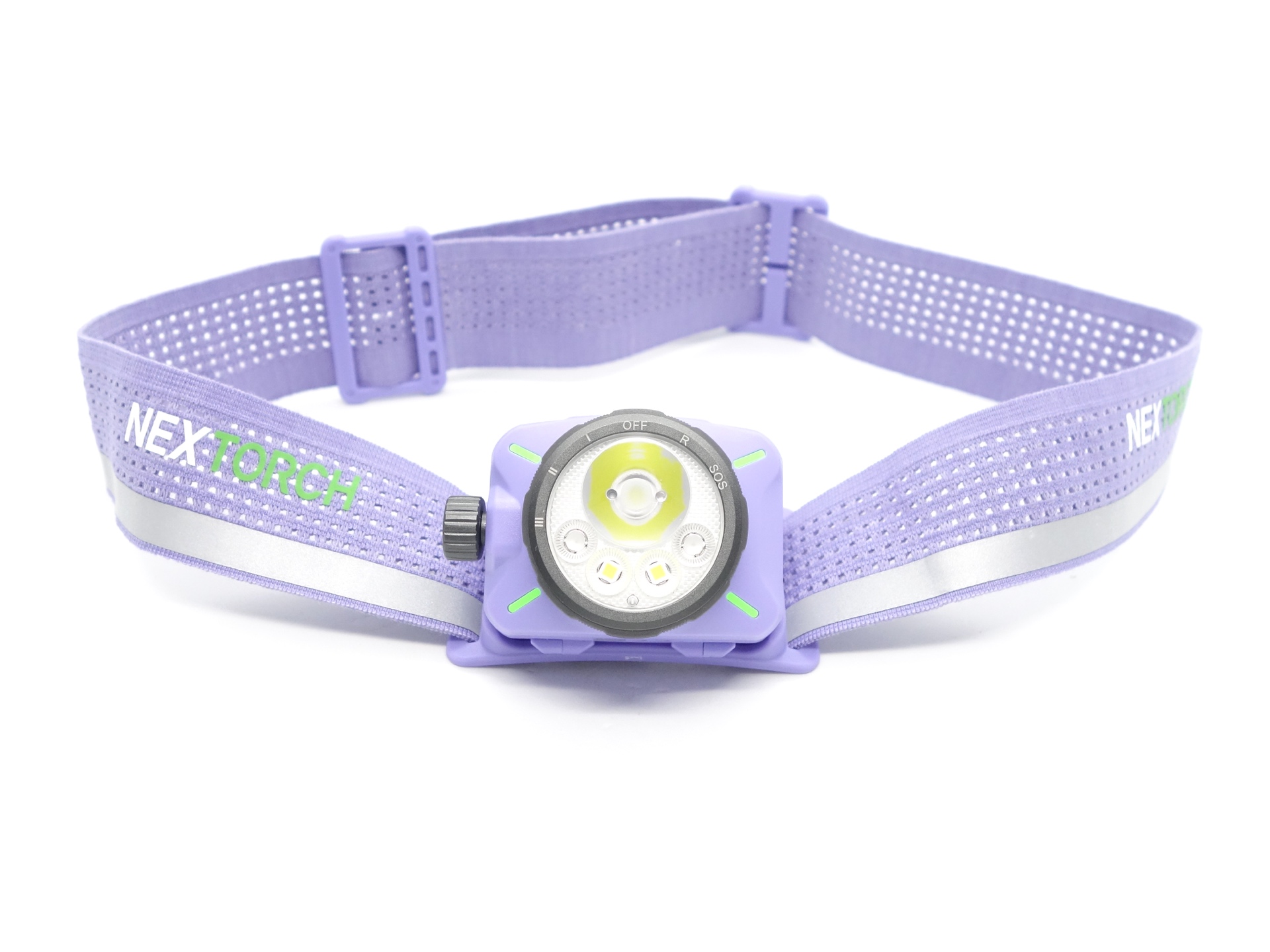
NEXTORCH eStar#
- Specifications
- Introduction
- Torch in use
- Build quality
- LED, bezel, lens and reflector
- Size and comparison
- User interface
- Batteries and charging
- Performance
- Beamshots
- Thermal Images
- Conclusion
- Price
- Product page
Specifications#
| Brand/model | NEXTORCH eStar |
|---|---|
| LED | 1* White Spotlight, 2* White Floodlight, 2* Red |
| Maximum lumens | 1,300 lm |
| Maximum beam intensity | 10,506 cd |
| Maximum throw | 205 m |
| Battery | 1200mAh LiPo, 3x AAA Alkaline |
| Onboard charging | No (LiPo has USB-C) |
| Material | PC, ABS, Aluminium |
| Modes | Rotary dial |
| Blinkies | SOS |
| Reflector | TIR |
| Waterproof | IP67 |
| Review date | April 2026 |
Introduction#
The NEXTORCH eStar is a knob controlled headlamp with a spotlight, a floodlight and a red light. It takes three AAA batteries or a rechargeable LiPo battery with USB-C charging.
NEXTORCH primarily make tactical flashlights for law enforcement and military use but they also make general purpose flashlights like this NEXTORCH eStar headlamp.
If you would like to see how they make flashlights, check out this factory tour video that I made the other year where I was able to assemble the TA30C.
NEXTORCH kindly provided this torch for review. I have not been paid for this review nor have I held back my opinions of this torch.
Packaging#
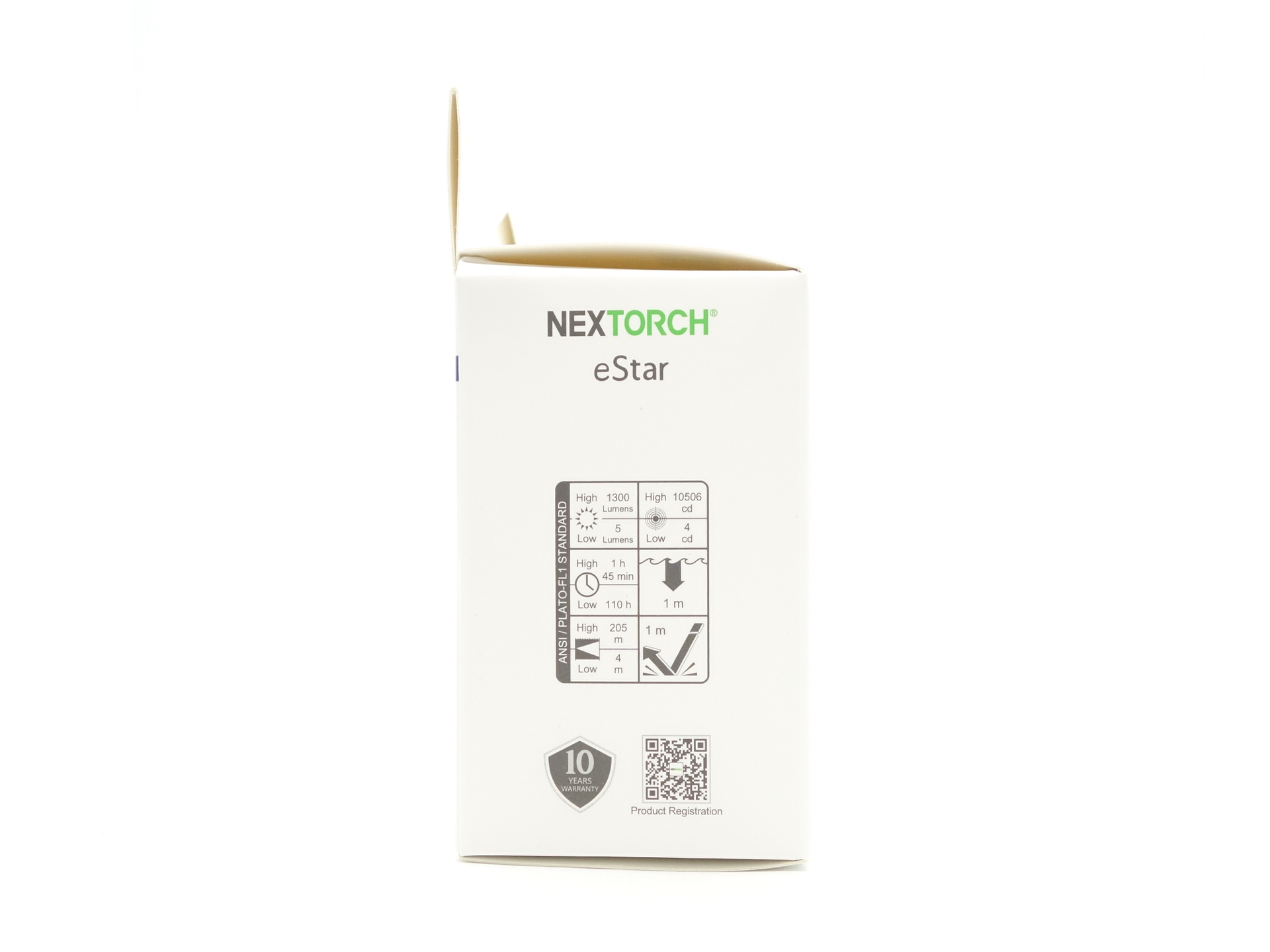
The NEXTORCH eStar comes in a white and green NEXTORCH branded box with an image of the torch on the front and specifications on the back.
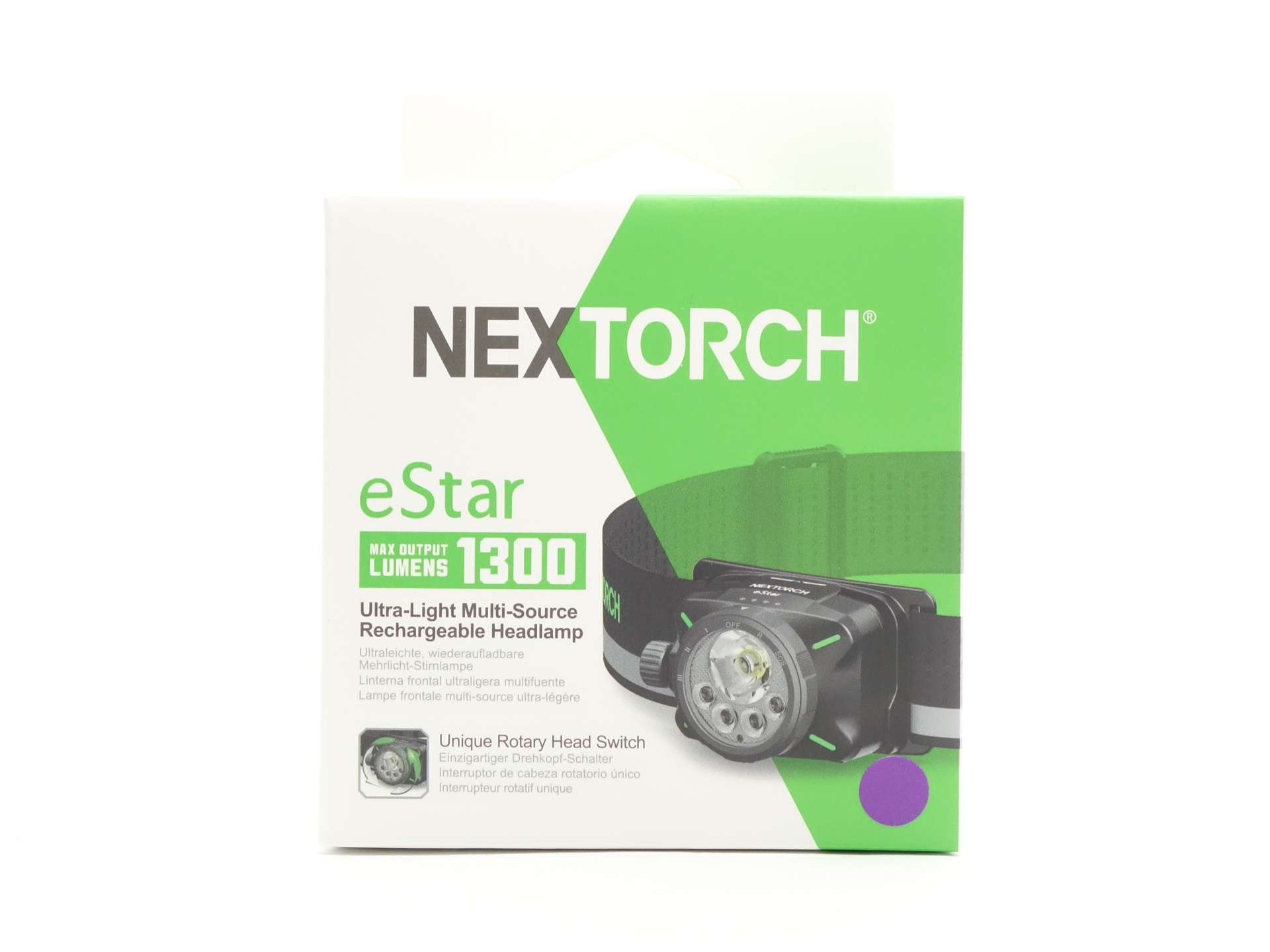
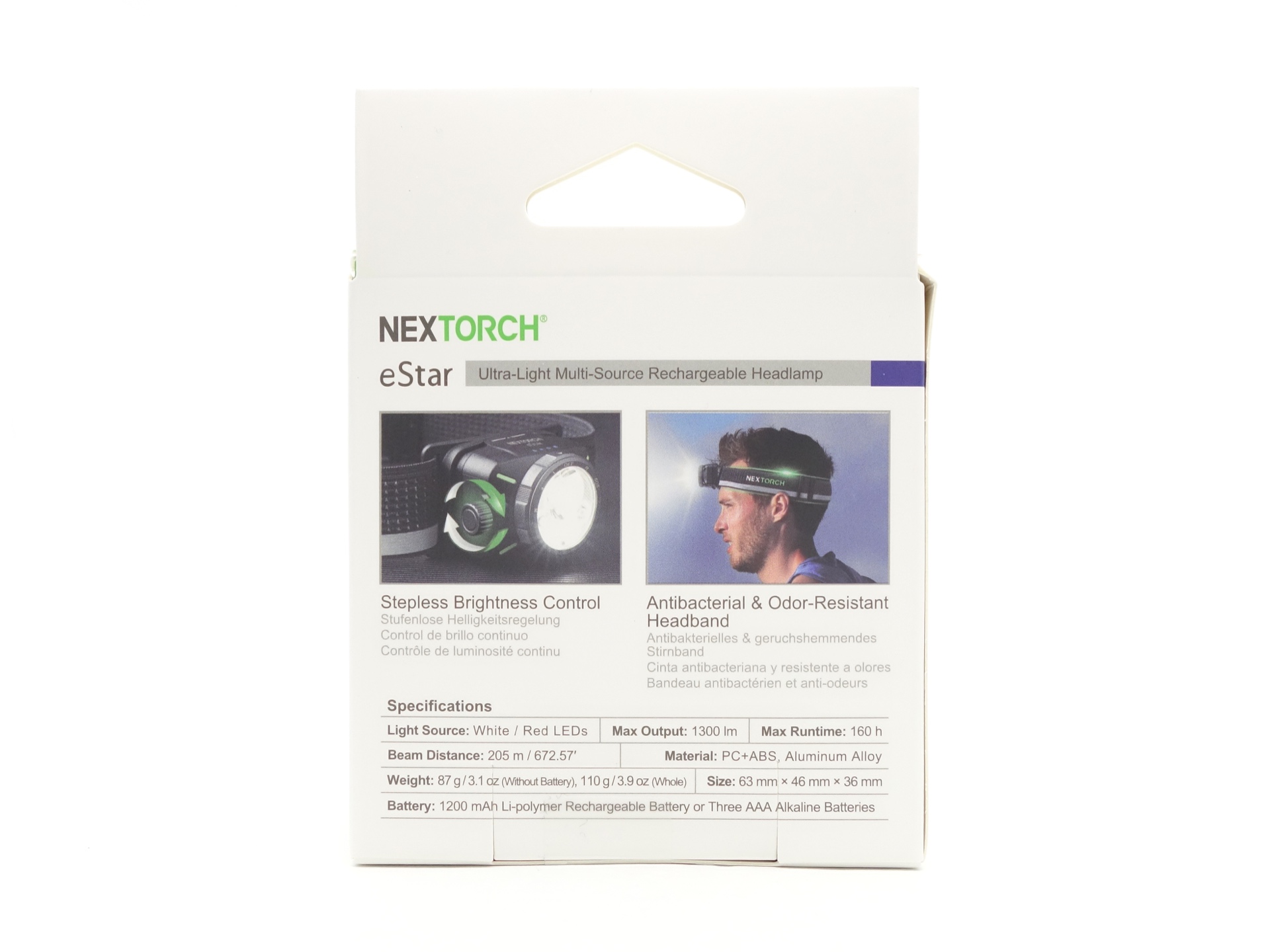
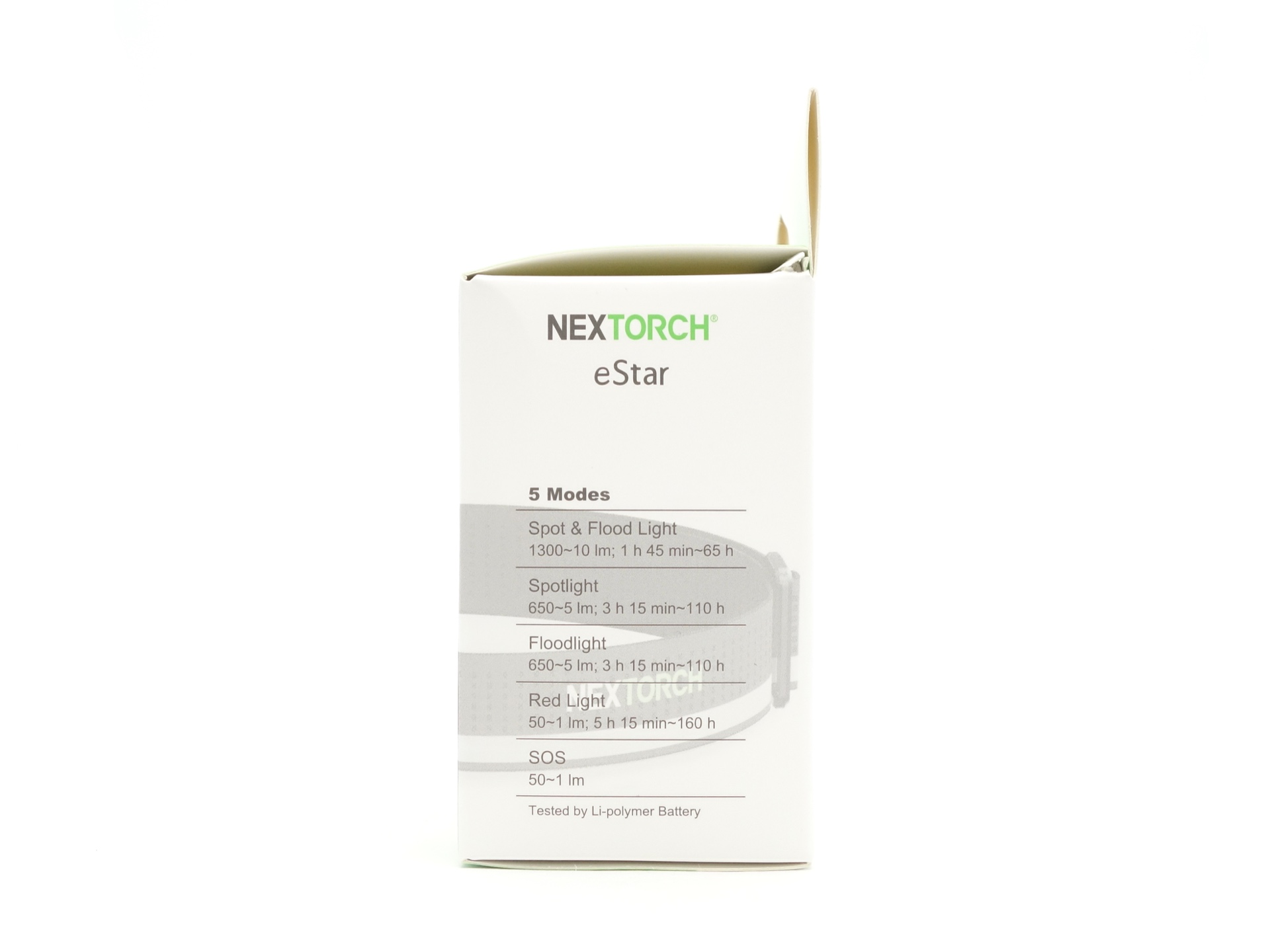
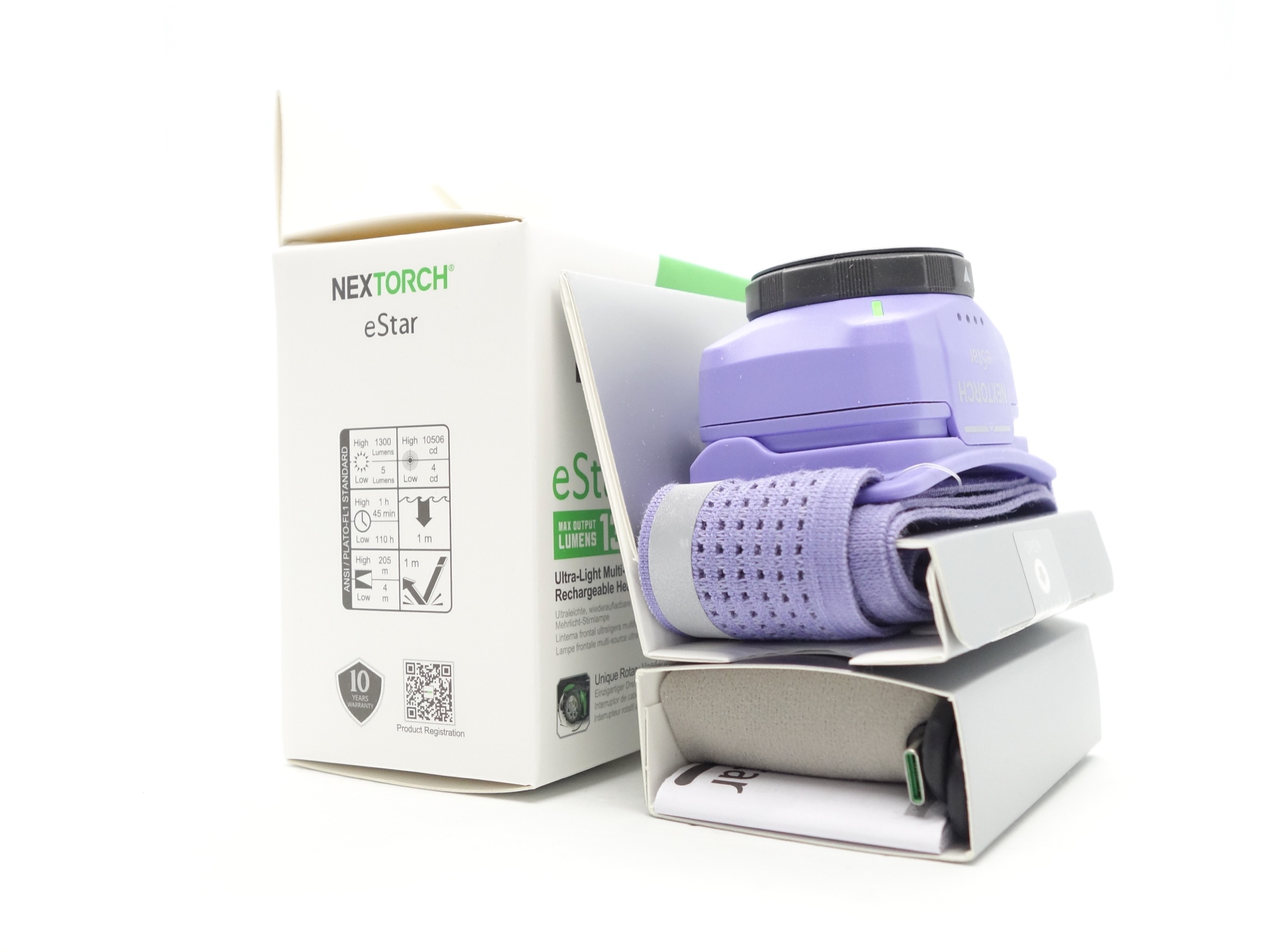
The following is included in the box:
- NEXTORCH eStar.
- Two NEXTORCH 3.85V LiPo 1200mAh batteries with USB-C charging.
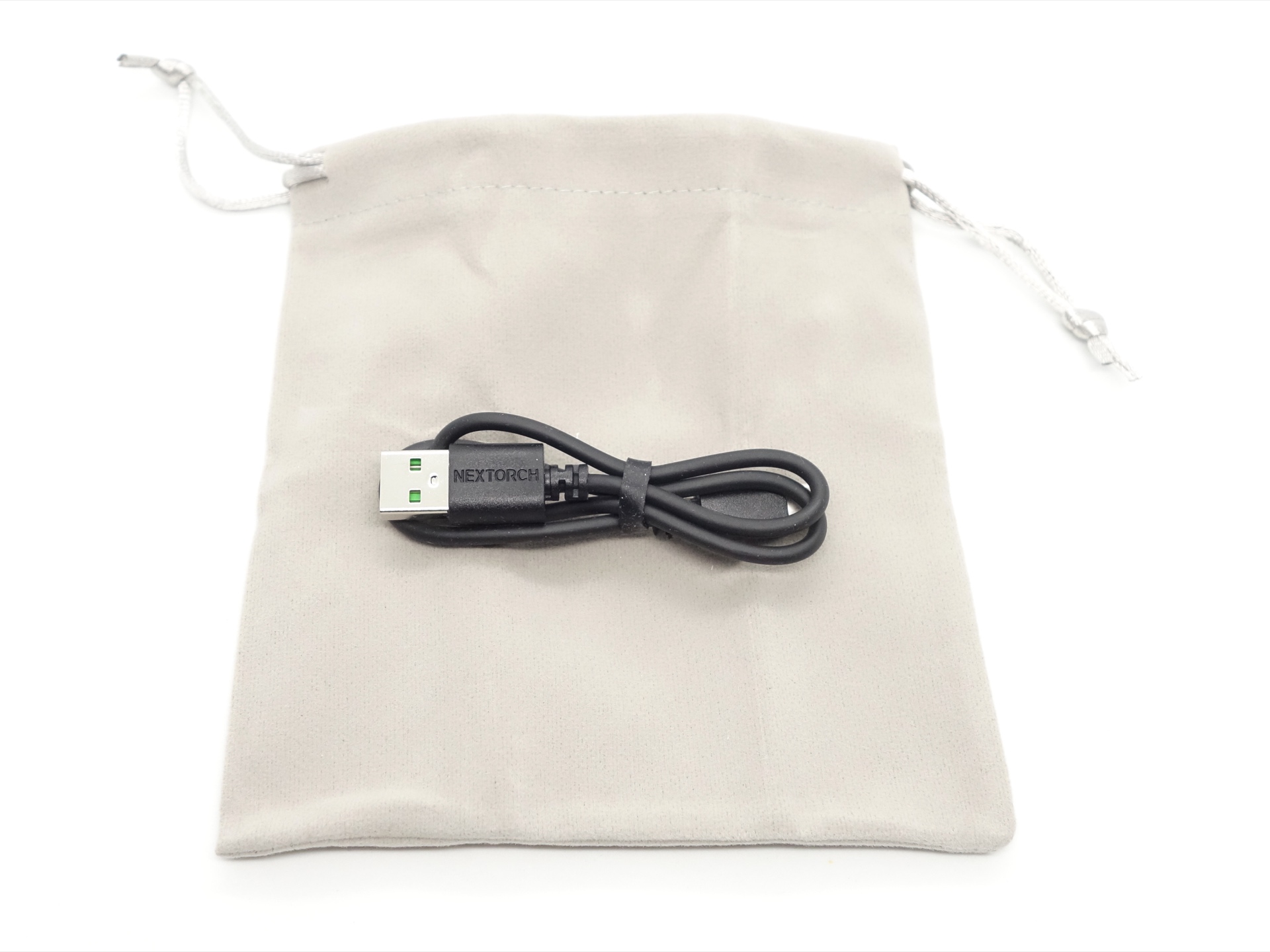
- USB-A to USB-C cable.
- Carry bag.
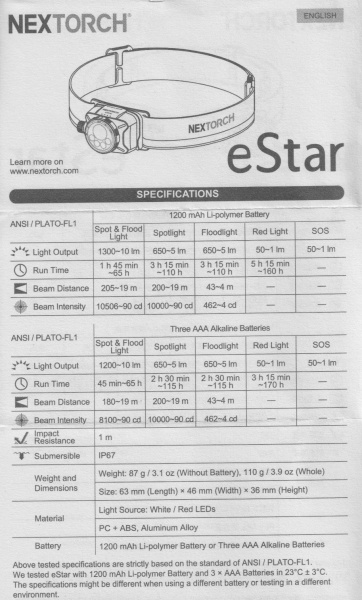
- User manual.
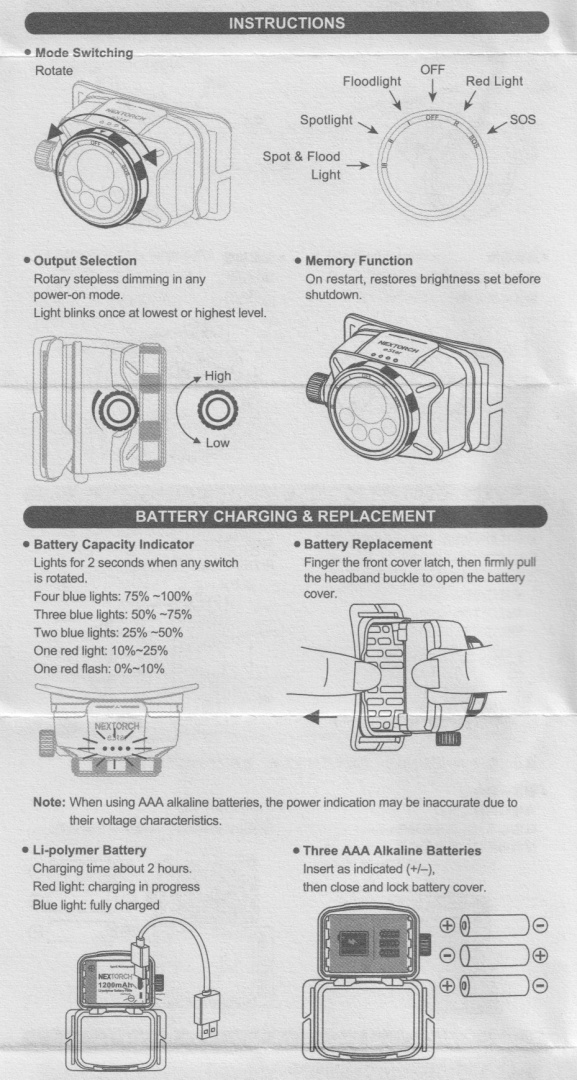
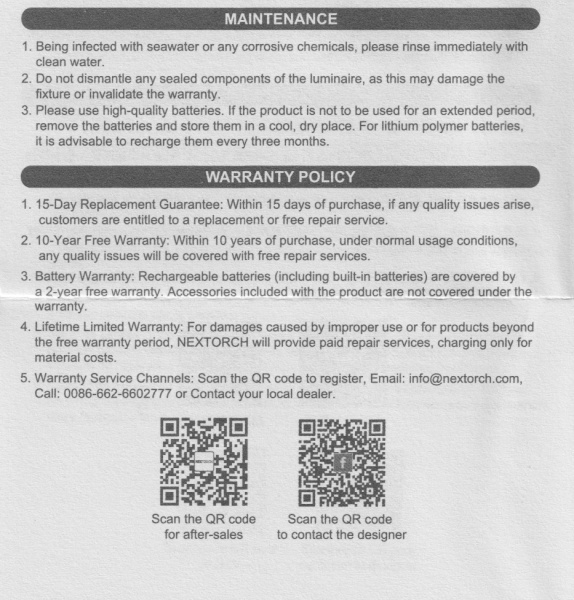
User manual#
Torch in use#
The NEXTORCH eStar feels comfortable. The headband is stretchy and it has grip on the inside.
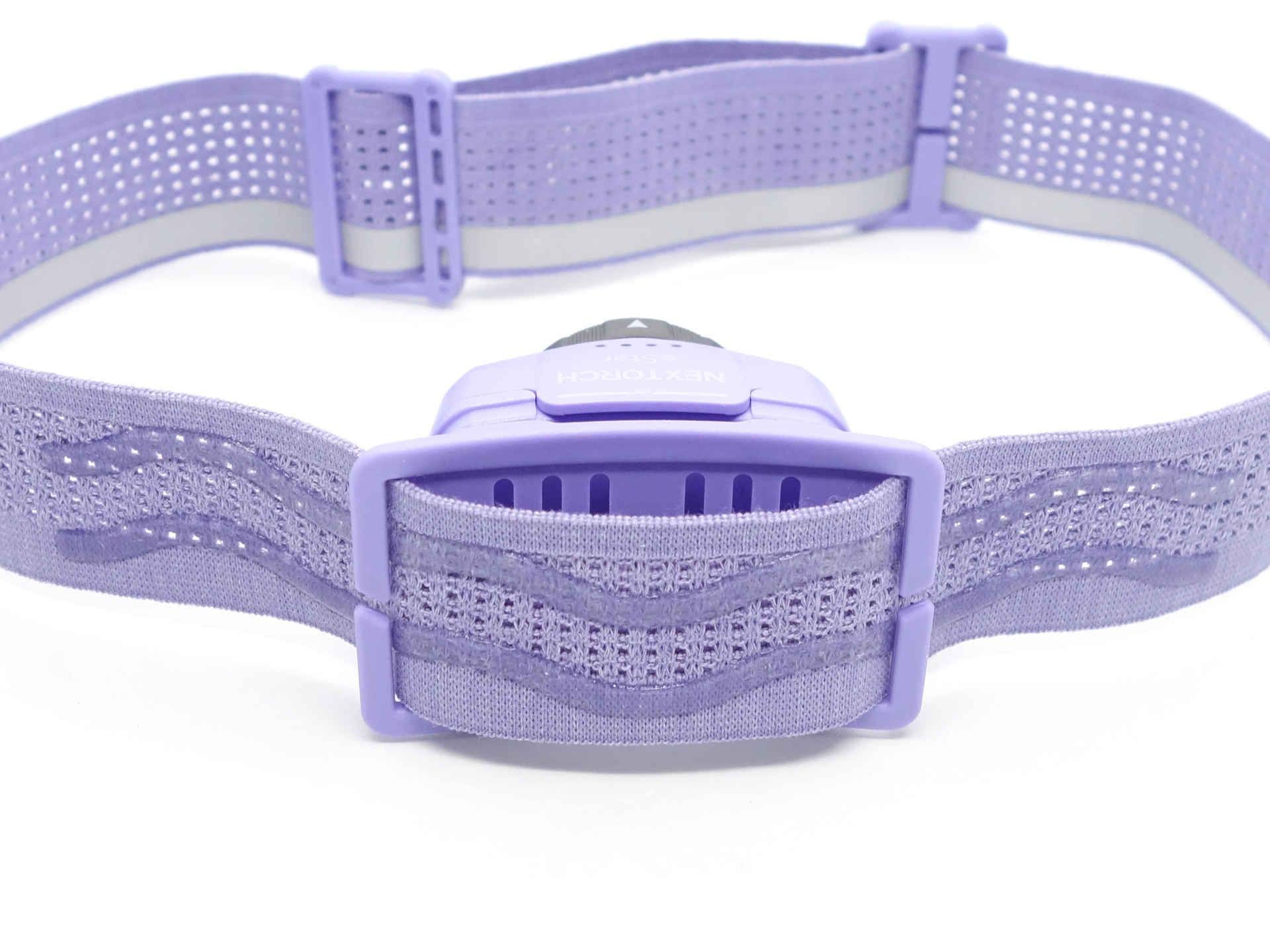
The maximum angle that the headlamp can be pointed down is about 45 degrees.
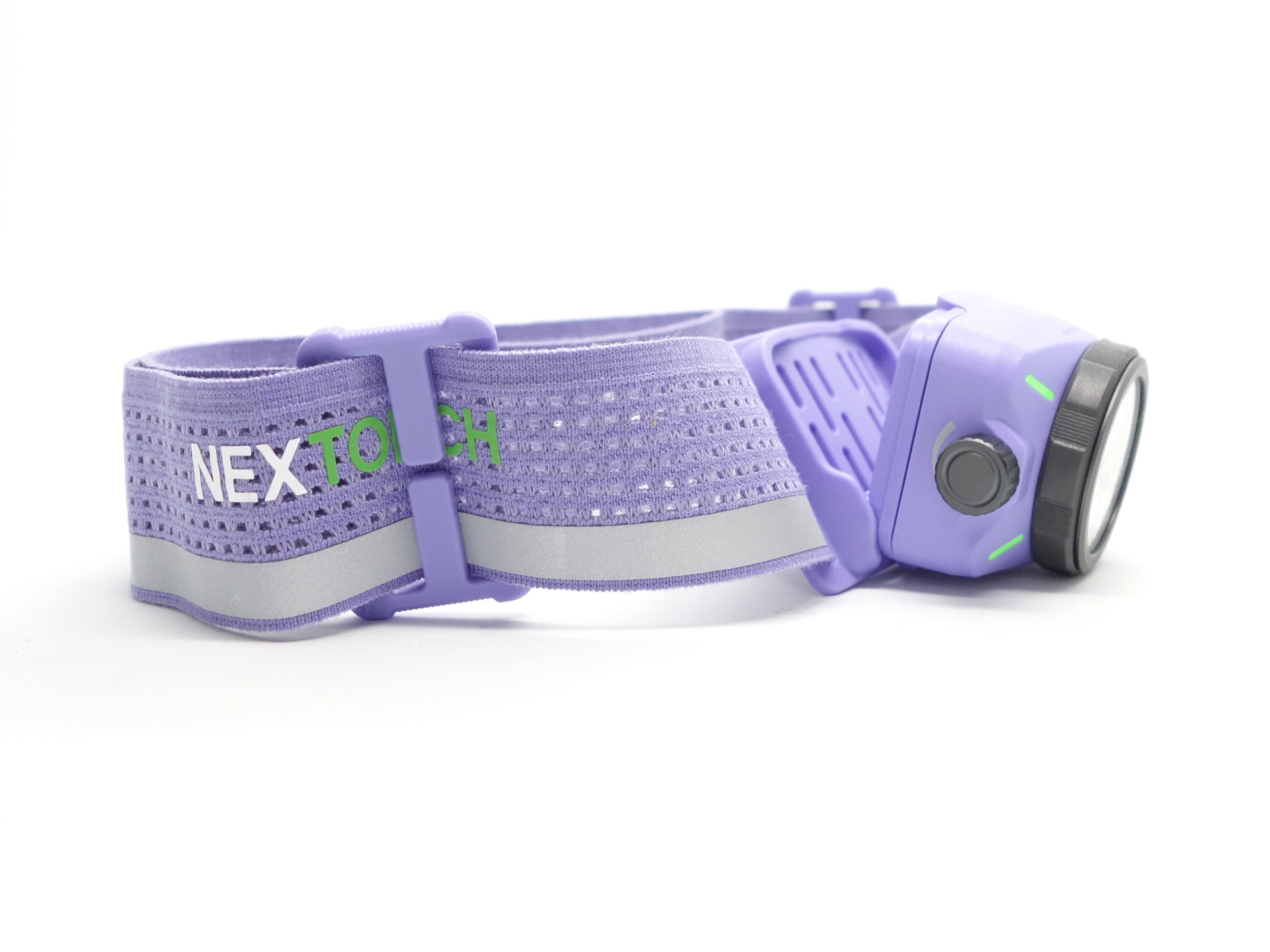
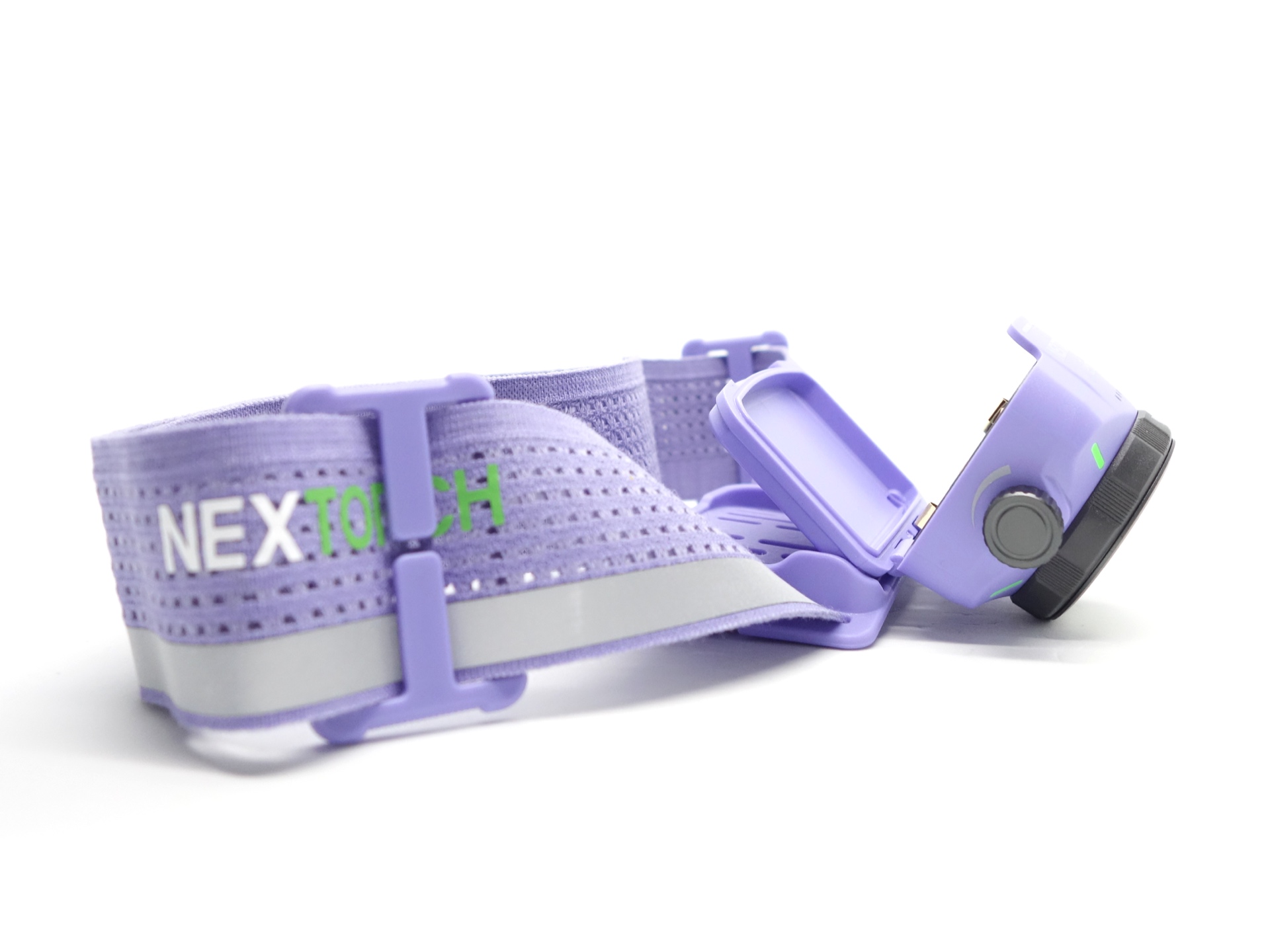
The side of the headband has a strip of reflective material.
The rotary dials make the headlamp easy to control.
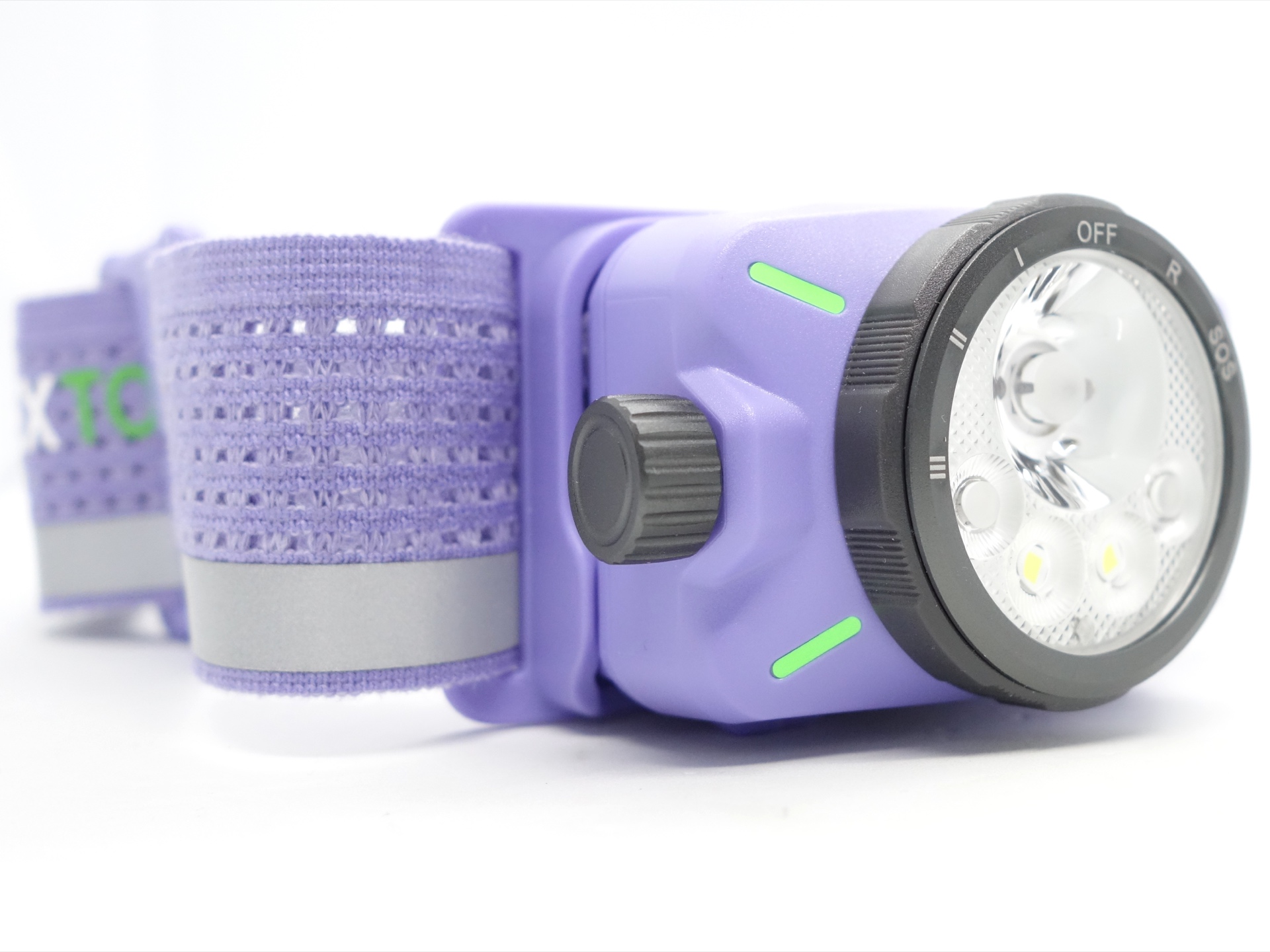
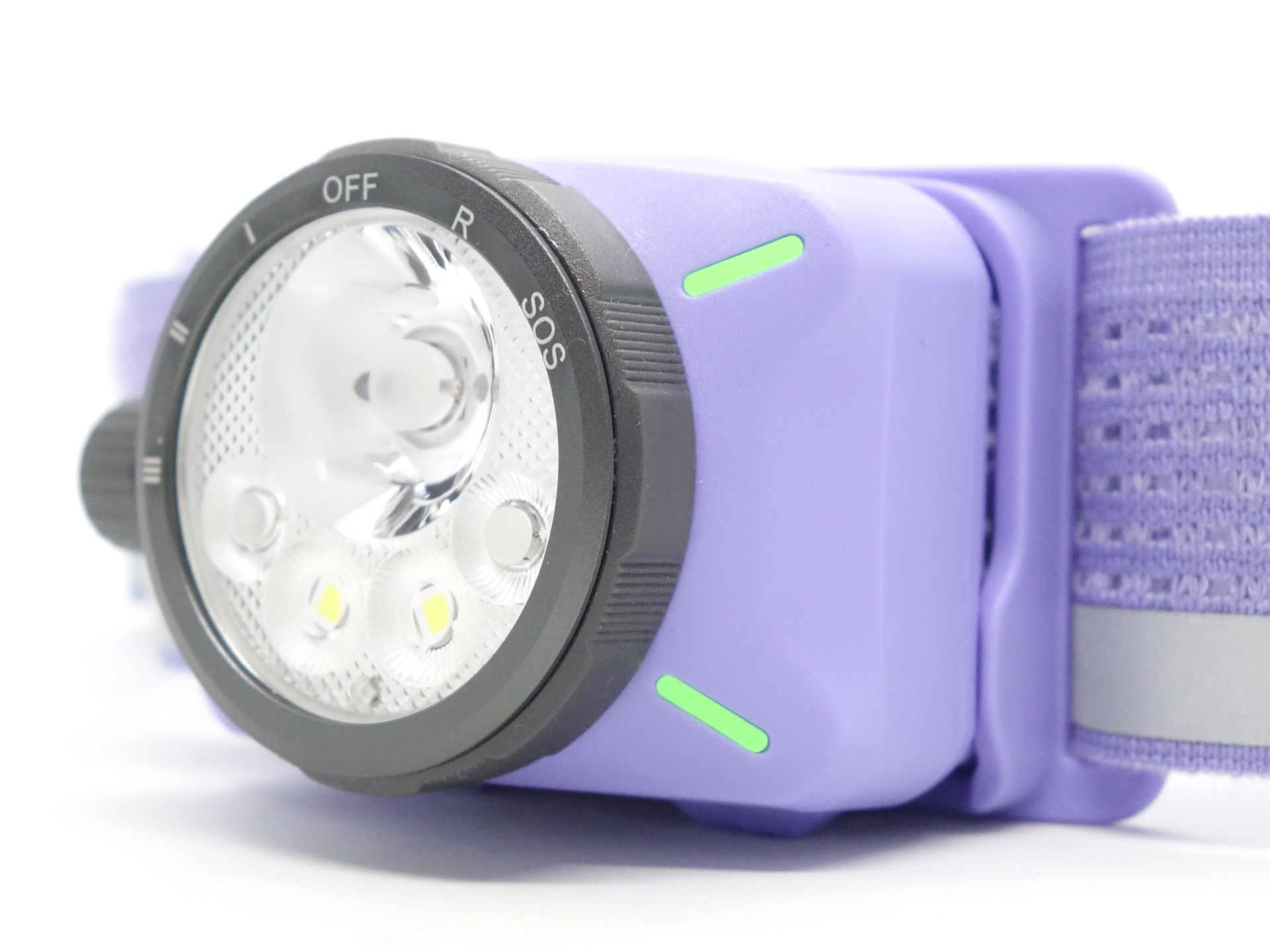
The large mode switch gives a satisfying click when rotated.
Build quality#
The NEXTORCH eStar is made of polycarbonate (PC), acrylonitrile butadiene styrene (ABS) and aluminium. It is available in purple and black.
The headband can be removed and washed.
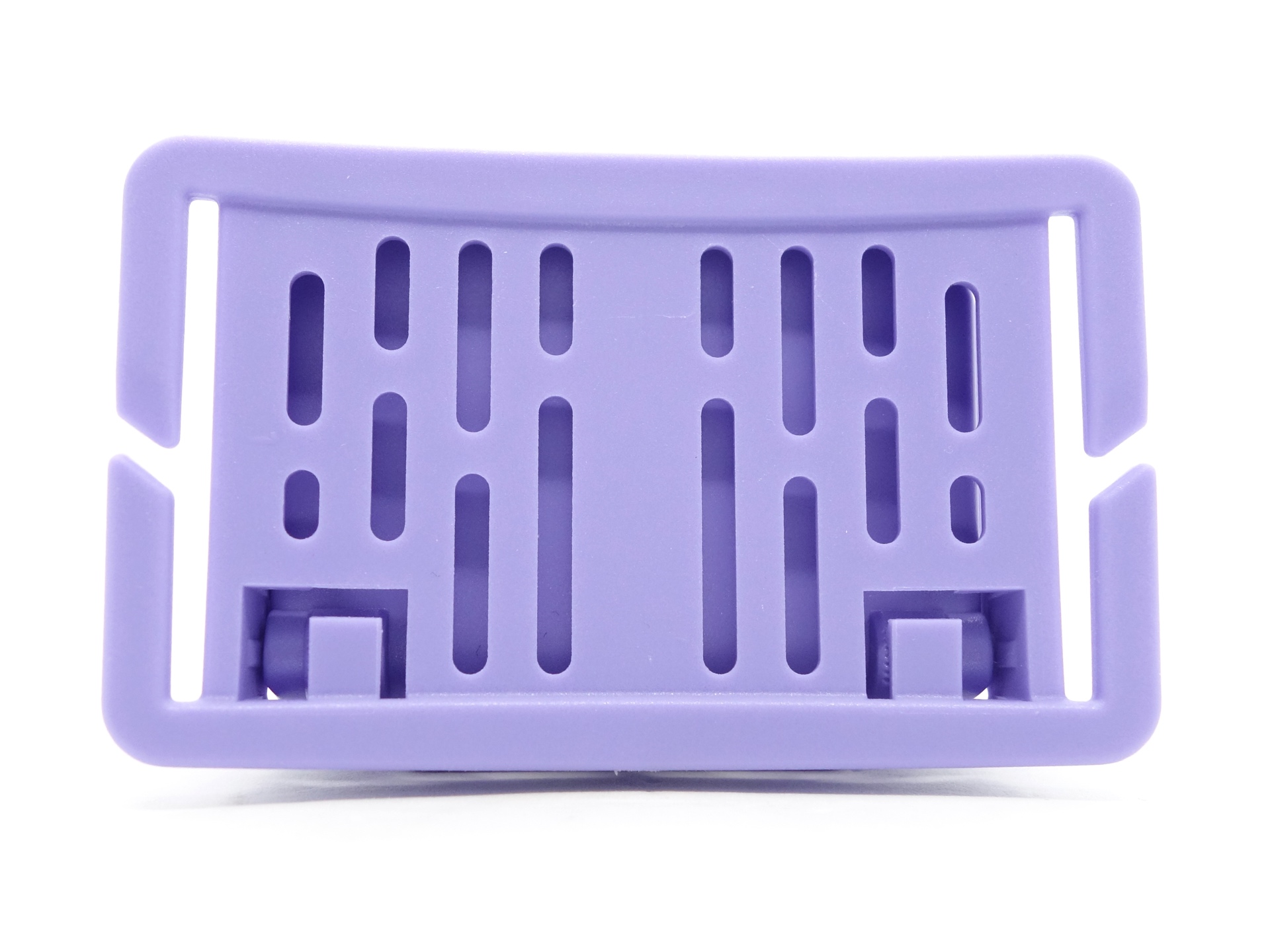
The hinge does not look very strong. I would avoid dropping it directly onto concrete or crushing it. Should I drop test it?
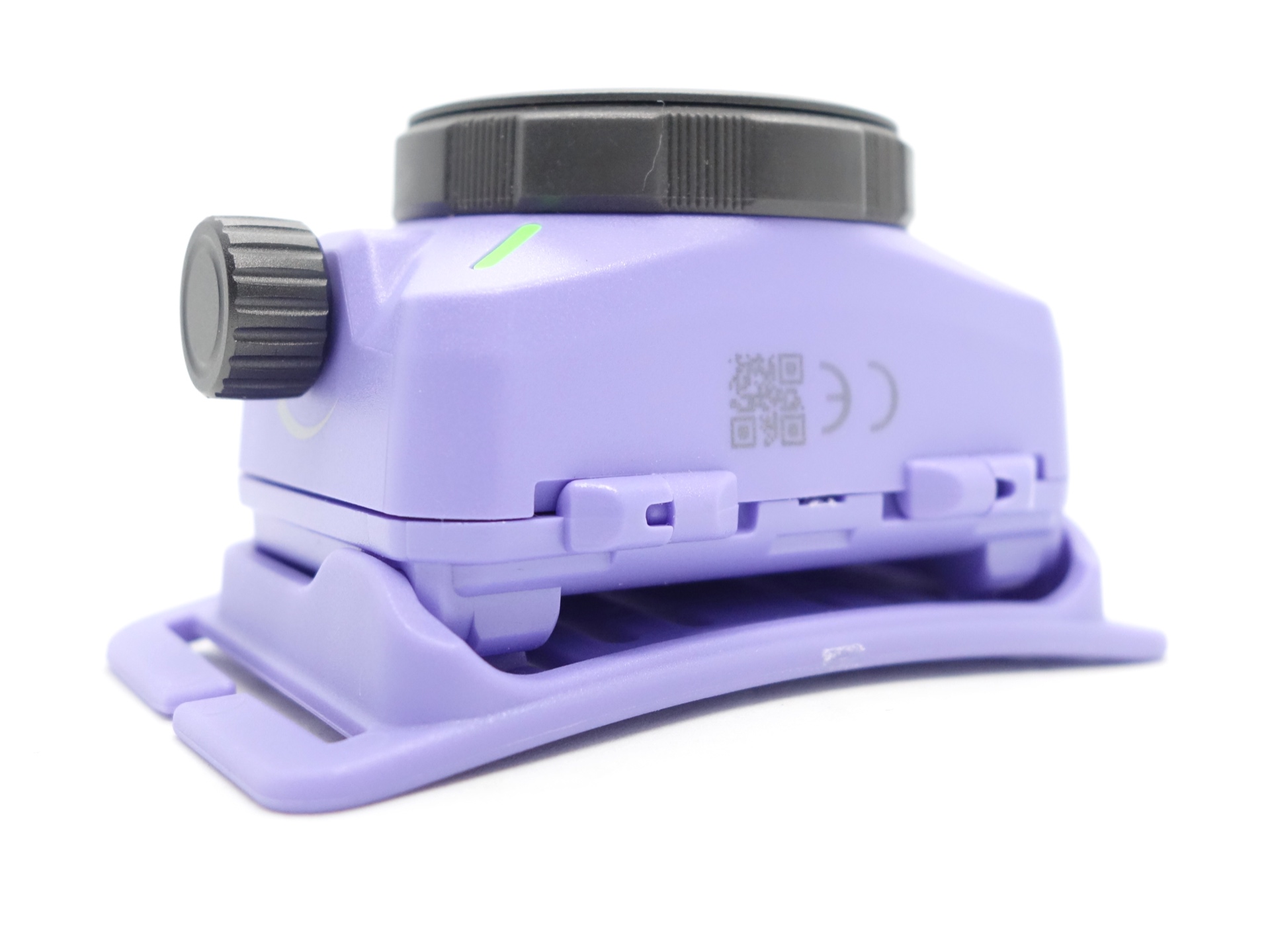
The battery compartment needs to be pushed forward by about 45 degrees before attempting to open and close it.
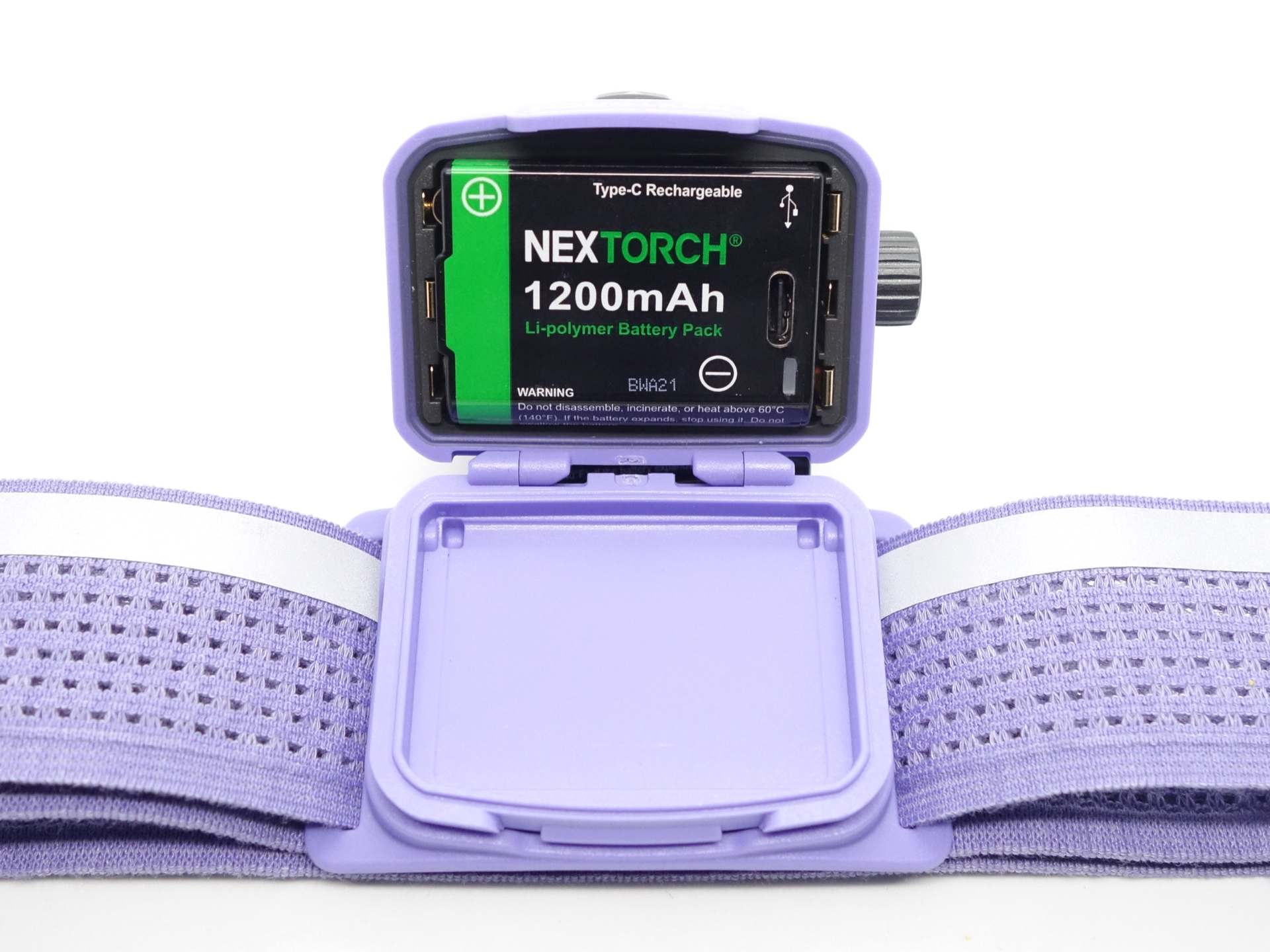
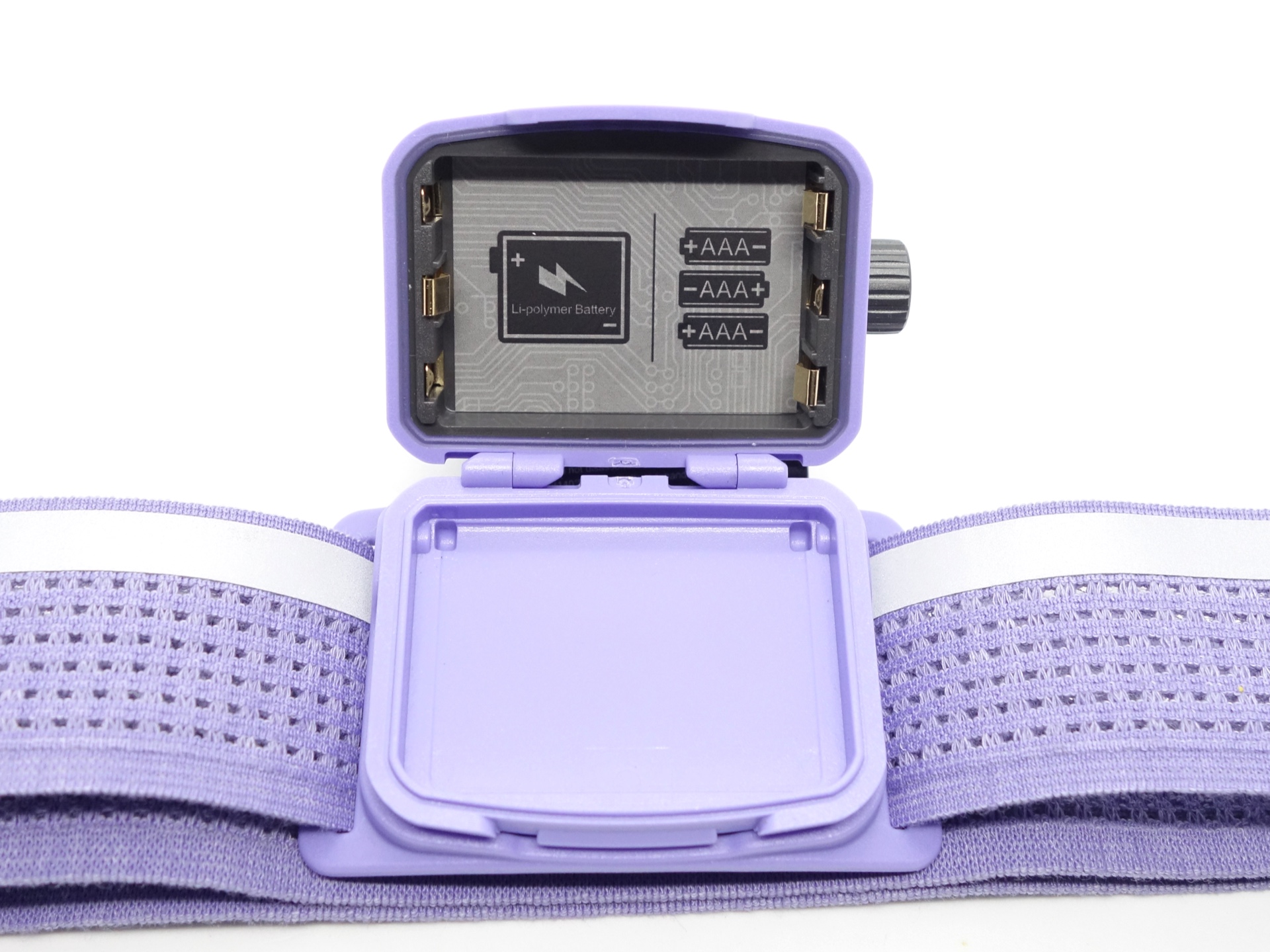
The positive and negative terminals look good.
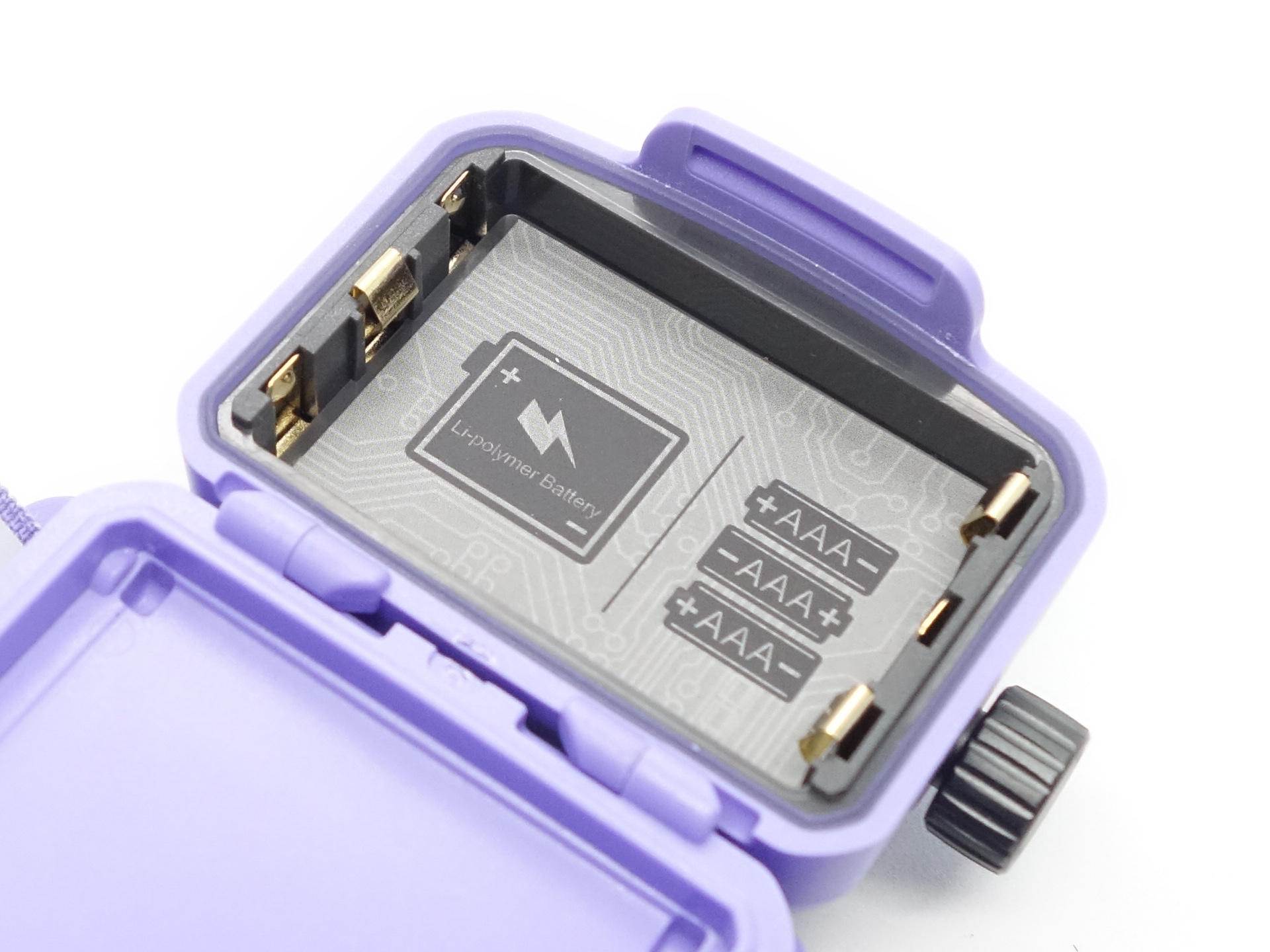
I have not tested reverse polarity protection.
LED, bezel, lens and reflector#
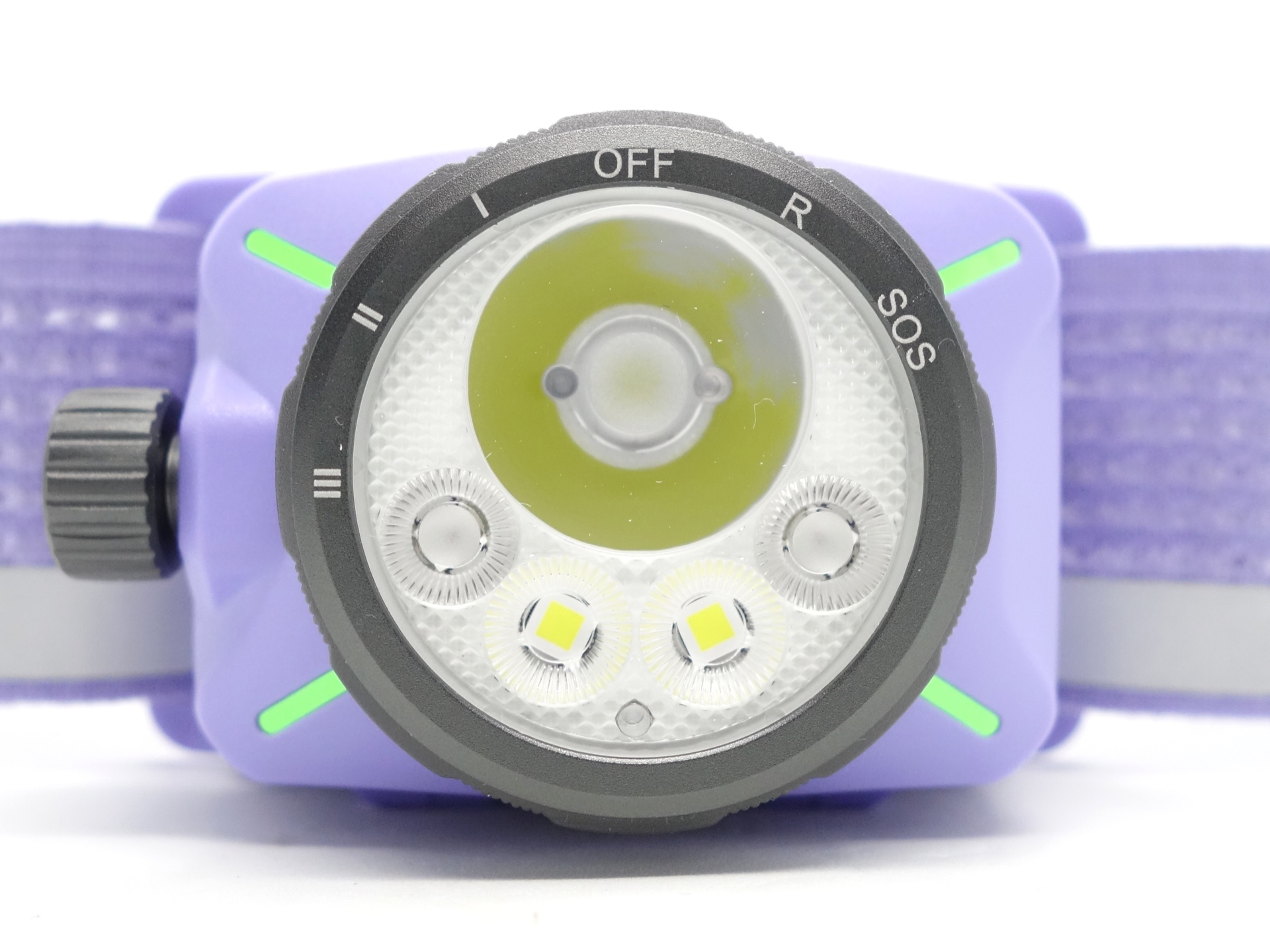
The NEXTORCH eStar has two white LEDs for the floodlight, one white LED for the spotlight and two red LEDs.
There is a TIR optic held down by an aluminium bezel. The TIR optic does not have glass to protect it from scratches.
CCT, CRI, and duv#
I have taken Correlated Colour Temperature (CCT) and Colour Rendering Index (CRI, RA of R1-R8) measurements with the torch positioned 0.2 metres away from an Opple Light Master Pro III (G3).
The CCT is around 6000K, the CRI is around 67 and the Delta u, v is slightly positive (green).
The Spotlight produces a beam with an intense white hotspot with a slight square shape and a green corona surrounded by a small spill with ring artefacts in the beam. The ring artefacts in the beam are not that noticeable unless you are looking at a white wall.
The Floodlight is very floody and produces a smooth white beam.
Floodlight#
| Mode | CCT (K) | CRI (Ra) | x | y | Duv |
|---|---|---|---|---|---|
| Low | 6019 | 69.2 | 0.3209 | 0.3435 | 0.0065 |
| High | 6035 | 68.7 | 0.3209 | 0.3389 | 0.0042 |
Spotlight#
| Mode | CCT (K) | CRI (Ra) | x | y | Duv |
|---|---|---|---|---|---|
| Low | 5848 | 66.7 | 0.3244 | 0.3475 | 0.0069 |
| High | 6062 | 67.9 | 0.3203 | 0.3389 | 0.0045 |
Both#
| Mode | CCT (K) | CRI (Ra) | x | y | Duv |
|---|---|---|---|---|---|
| Low | 5852 | 66.8 | 0.3243 | 0.3472 | 0.0068 |
| High | 6061 | 67.9 | 0.3203 | 0.3389 | 0.0045 |
Calculate Duv from CIE 1931 xy coordinates
Dimensions and size comparison#
Dimensions#
I took the following measurements using a digital caliper.
These measurements are of the headlamp and the bracket.
| Measurement | Unit (mm) |
|---|---|
| Length | 42.4 |
| Width | 73.48 |
| Height | 45.79 |
Weight#
I took the following measurements using a digital scale.
| Weight | Unit (g) |
|---|---|
| Headlamp with headband | 87.63 |
| Battery | 23.53 |
| Headlamp with headband and battery | 111.16 |
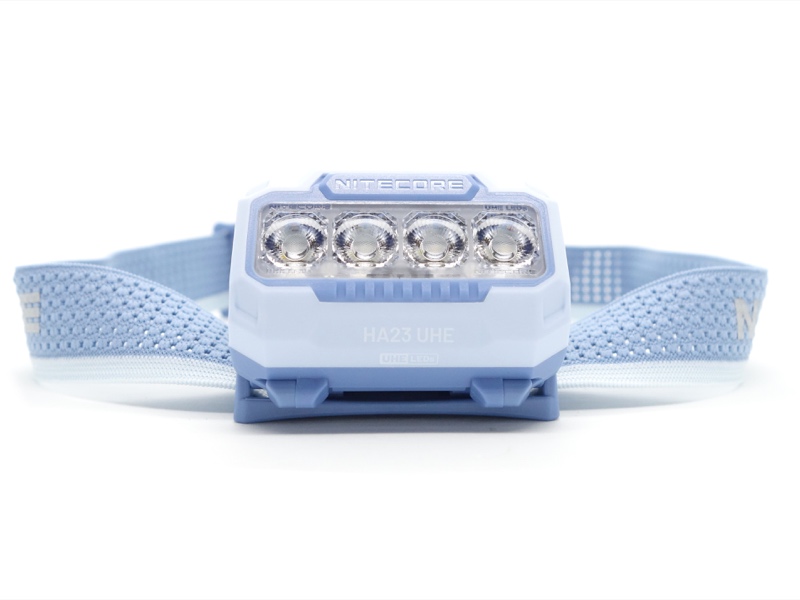
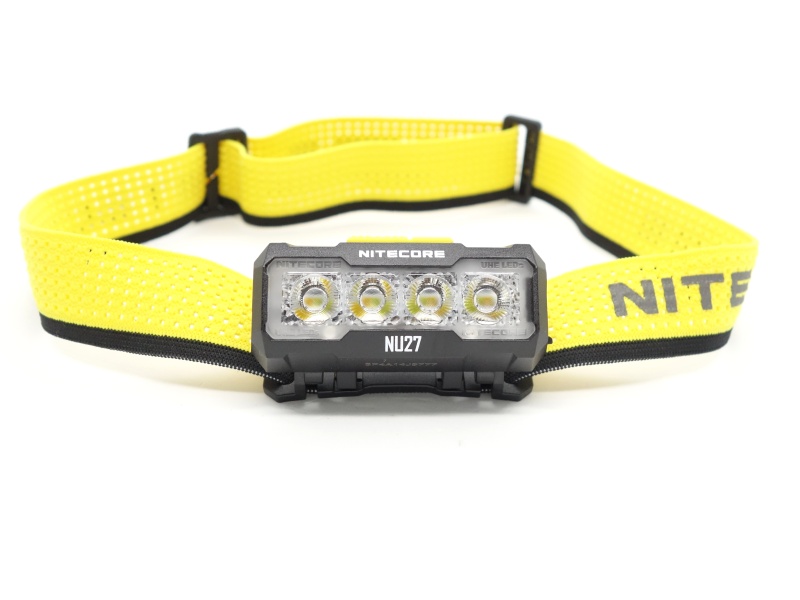
Size comparison with its competition#
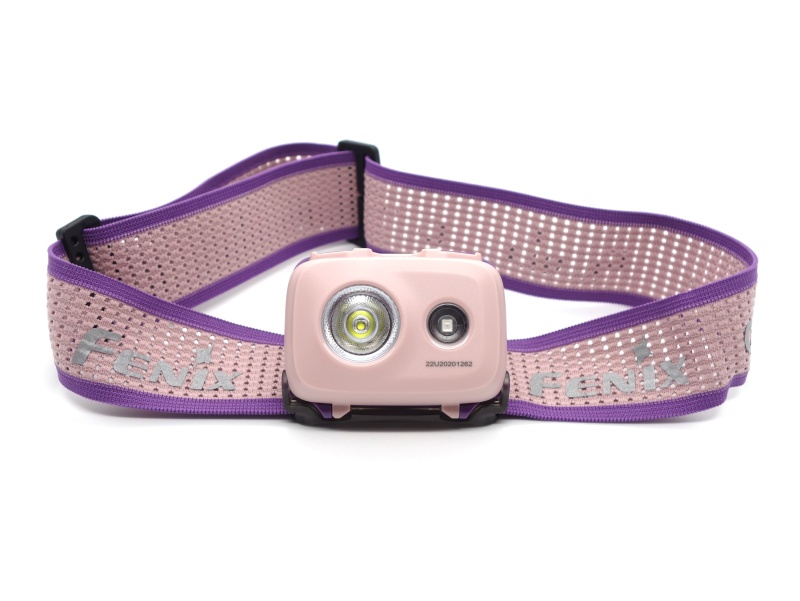
Nitecore HA23 UHE, Nitecore NU27
User interface#
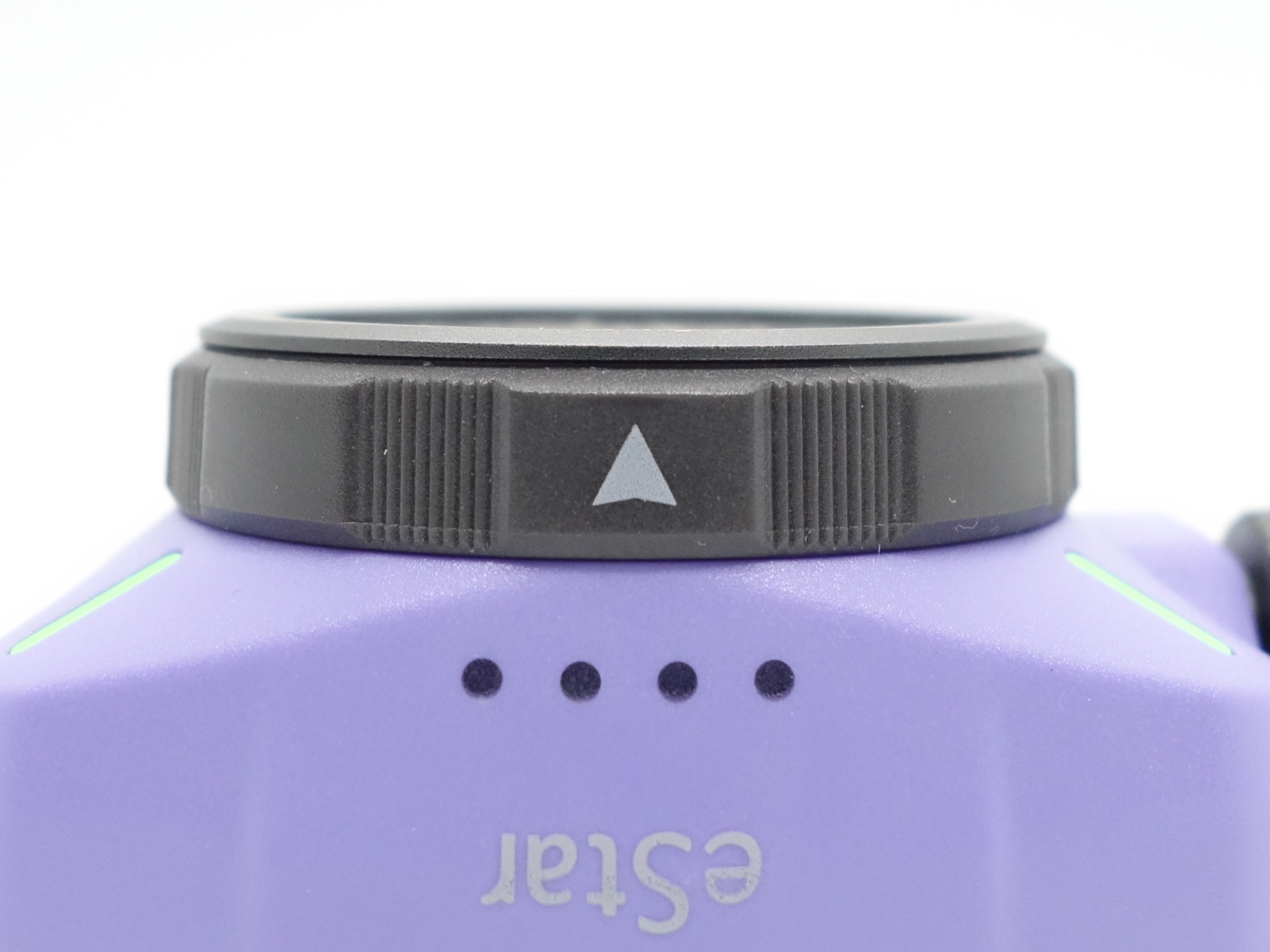
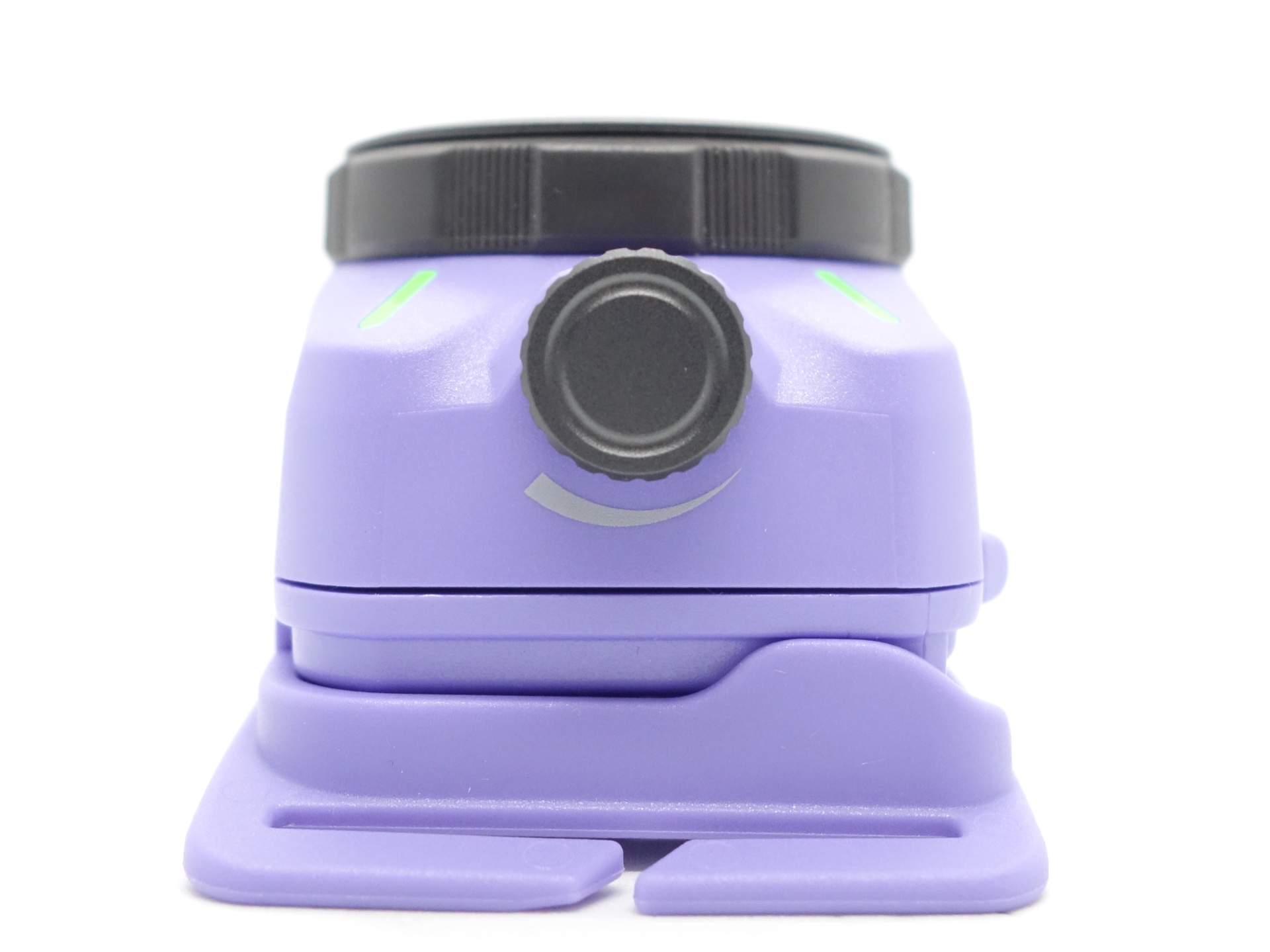
The NEXTORCH eStar is controlled by two rotary switches:
- A mode switch at the front and;
- A stepless dimming rotary dial at the side.
The mode switch is used to select: Both (Spot + Flood), Spotlight, Floodlight, Off, Red, Red SOS.
The stepless dimming rotary dial is used to adjust the brightness.
Mode memory#
There is mode memory. The brightness is memorised.
Strobe#
There is no Strobe mode.
There is an SOS mode with the red light.
Red Light (SOS)
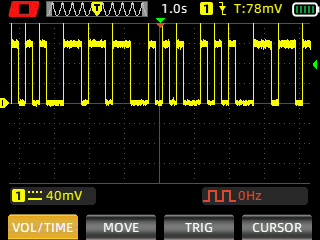
I measured SOS with a Zoyi ZT-706S oscilloscope using High Speed mode.
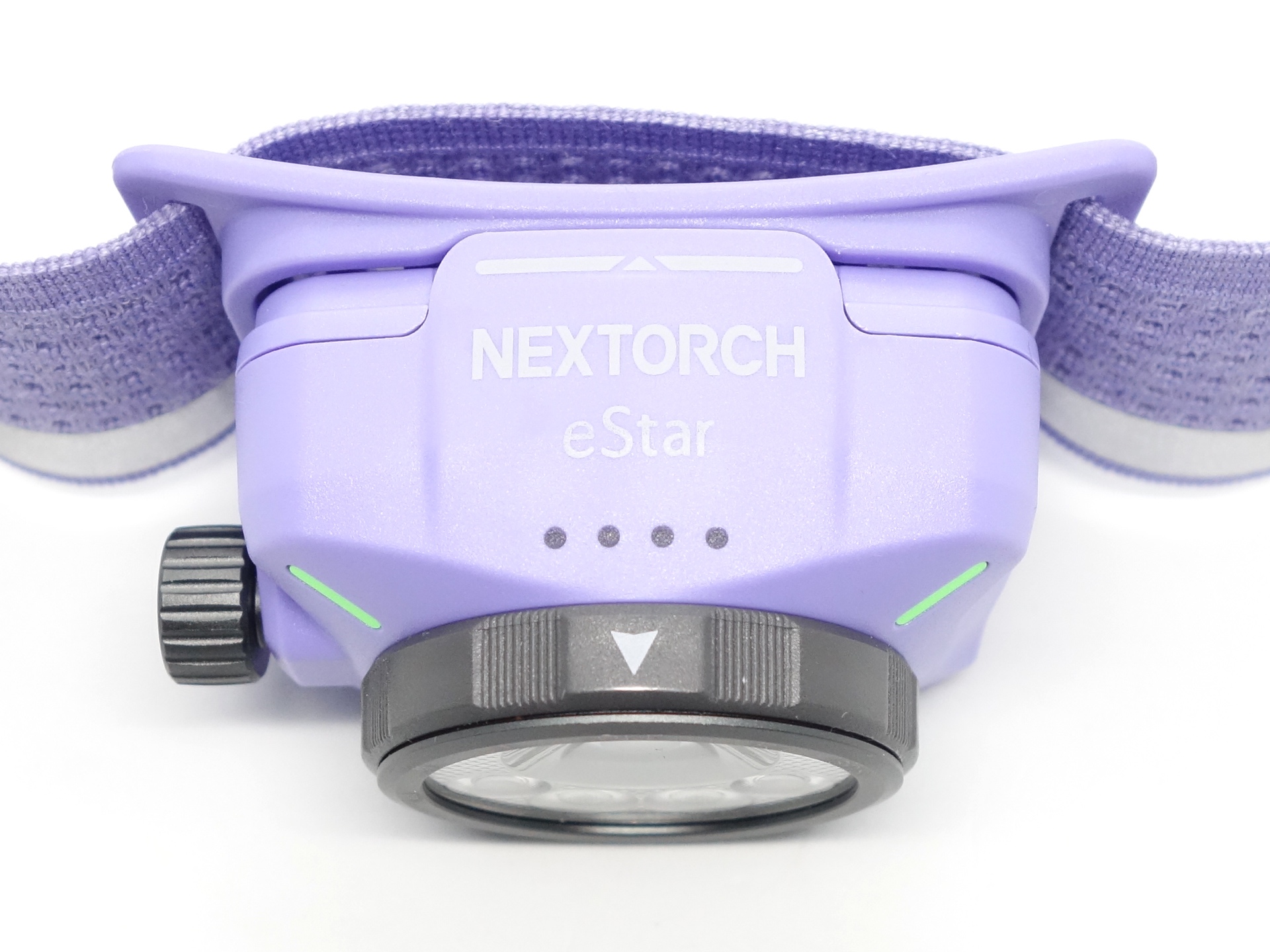
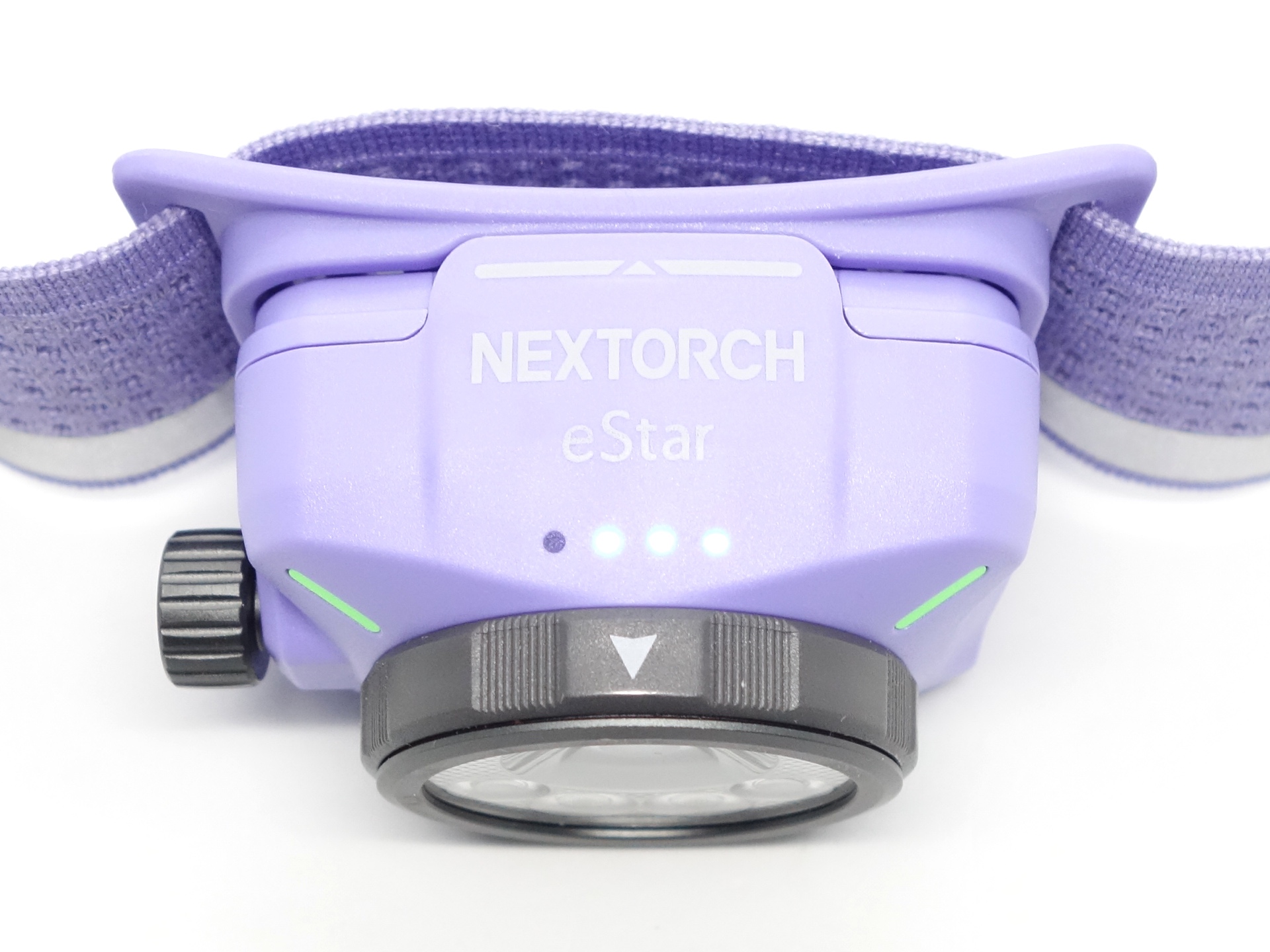
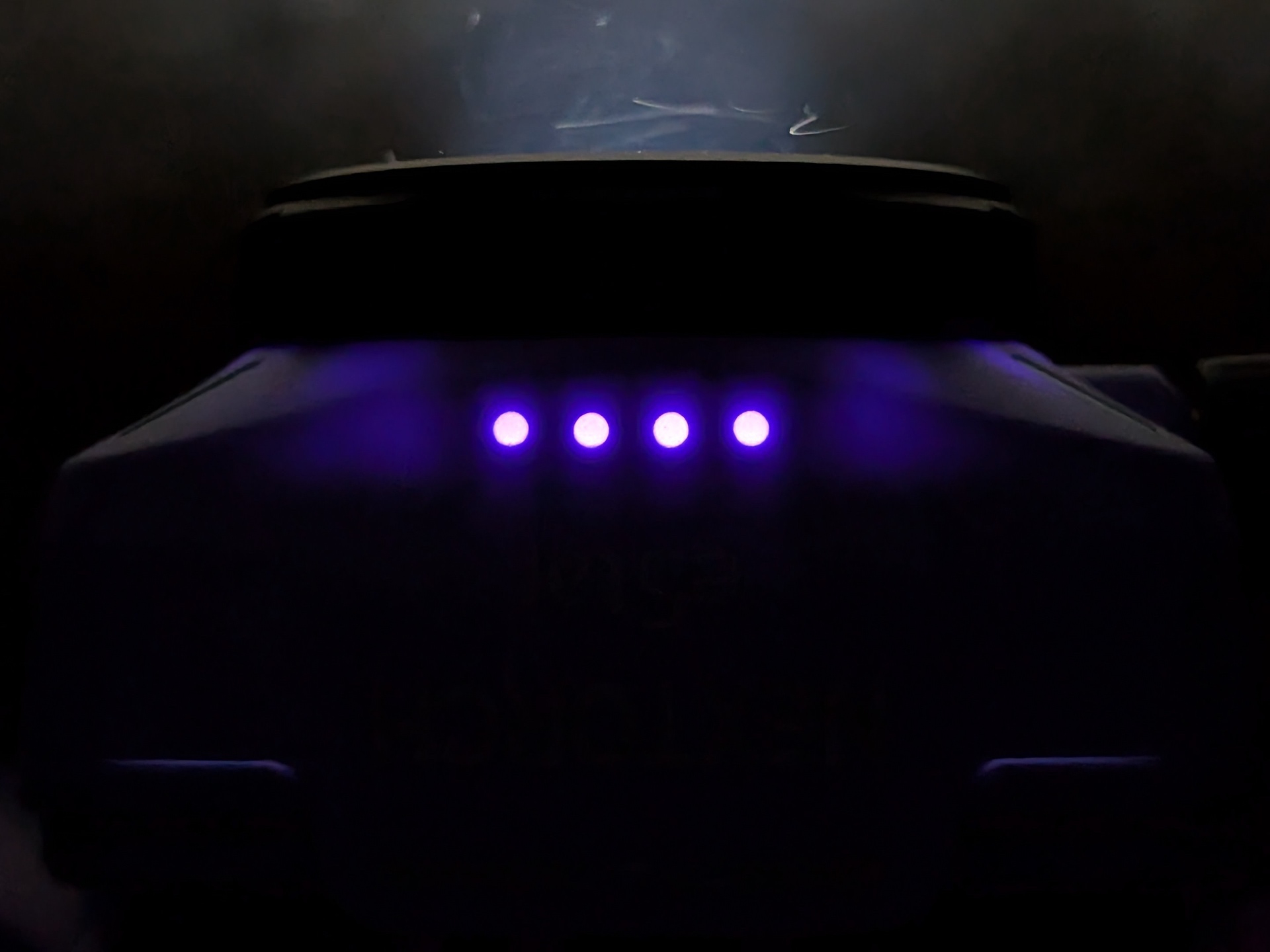
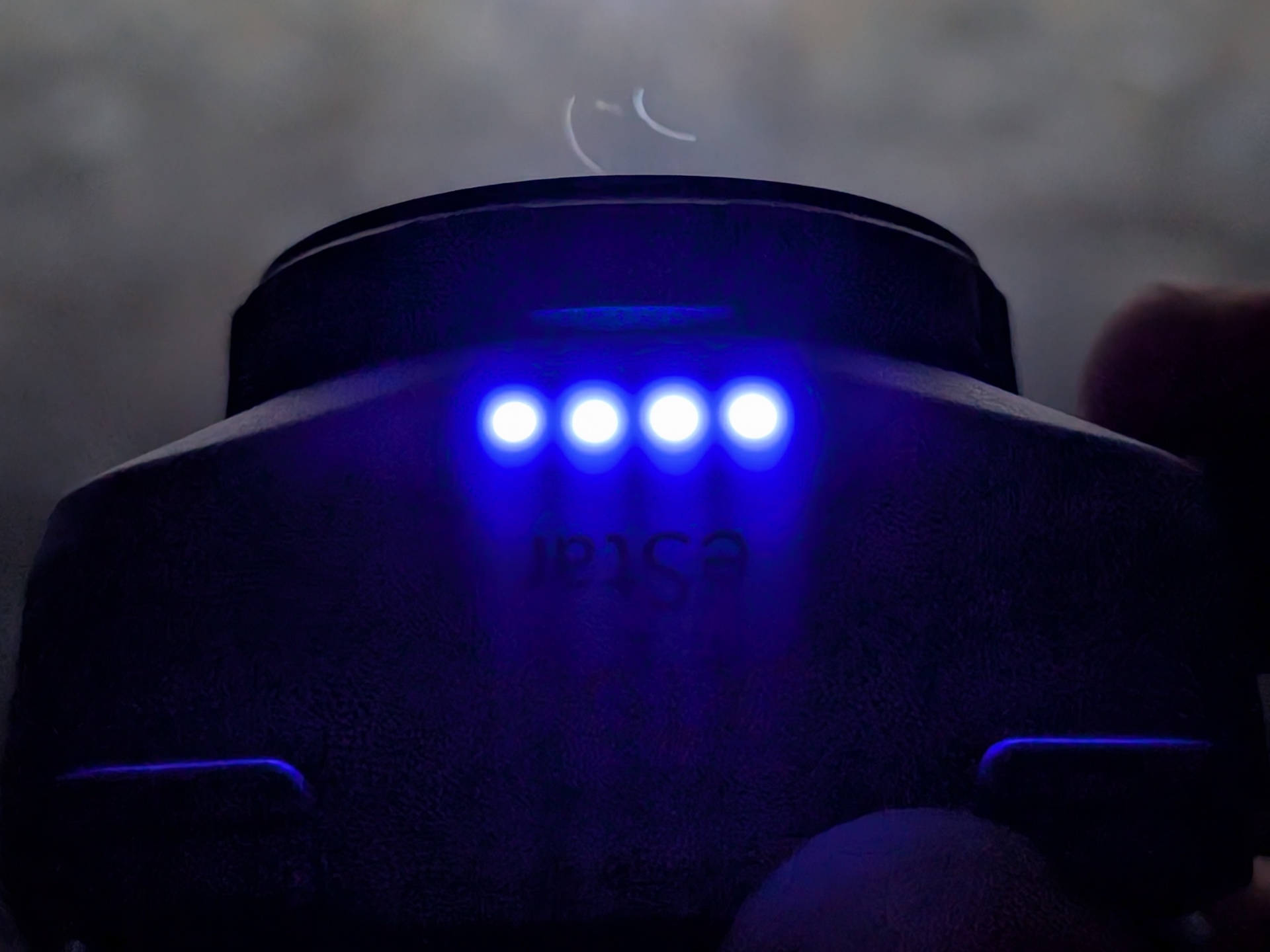
Battery capacity indicator#
The battery capacity indicator at the top of the headlamp will turn on for 2 seconds when a rotary switch is rotated.
| Indicator | Battery level |
|---|---|
| Four blue lights | 75% - 100% |
| Three blue lights | 50% - 75% |
| Two blue lights | 25% - 50% |
| One red light | 10% - 25% |
| One red flash | 0% - 10% |
Low voltage protection#
The LiPo battery appears to have low voltage protection built-in.
I tested low voltage protection of the headlamp by connecting the headlamp to a bench power supply and by decreasing the voltage from 4.4V until the light turned off at 2.55V.
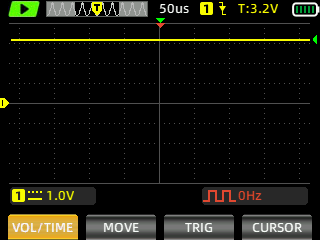
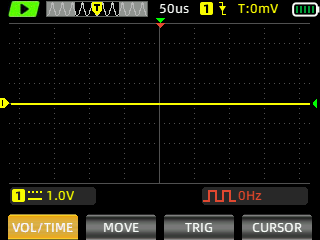
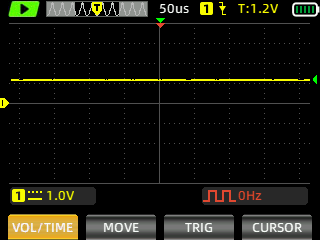
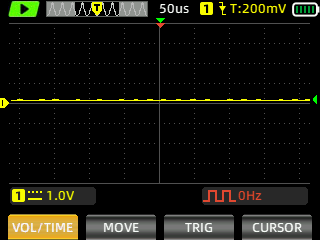
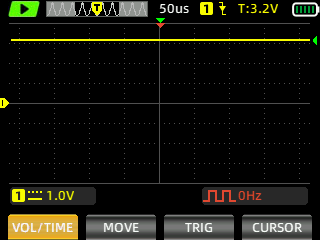
Pulse Width Modulation#
I did not notice any visible PWM (flickering).
I measured the PWM of the light with a Zoyi ZT-706S oscilloscope.
Both (Low, High)
Floodlight (Low, High)
Spotlight (Low, High)
What I like about the UI#
- Simple to use.
- The brightness level is memorised.
What could be improved#
It would be nice if the brightness could be adjust more quickly with less rotations while also having smaller steps for more control.
It takes about three half rotations to go from the bottom of the ramp to the top of the ramp and three half rotations to go back down to the bottom.
Batteries and charging#
Battery#
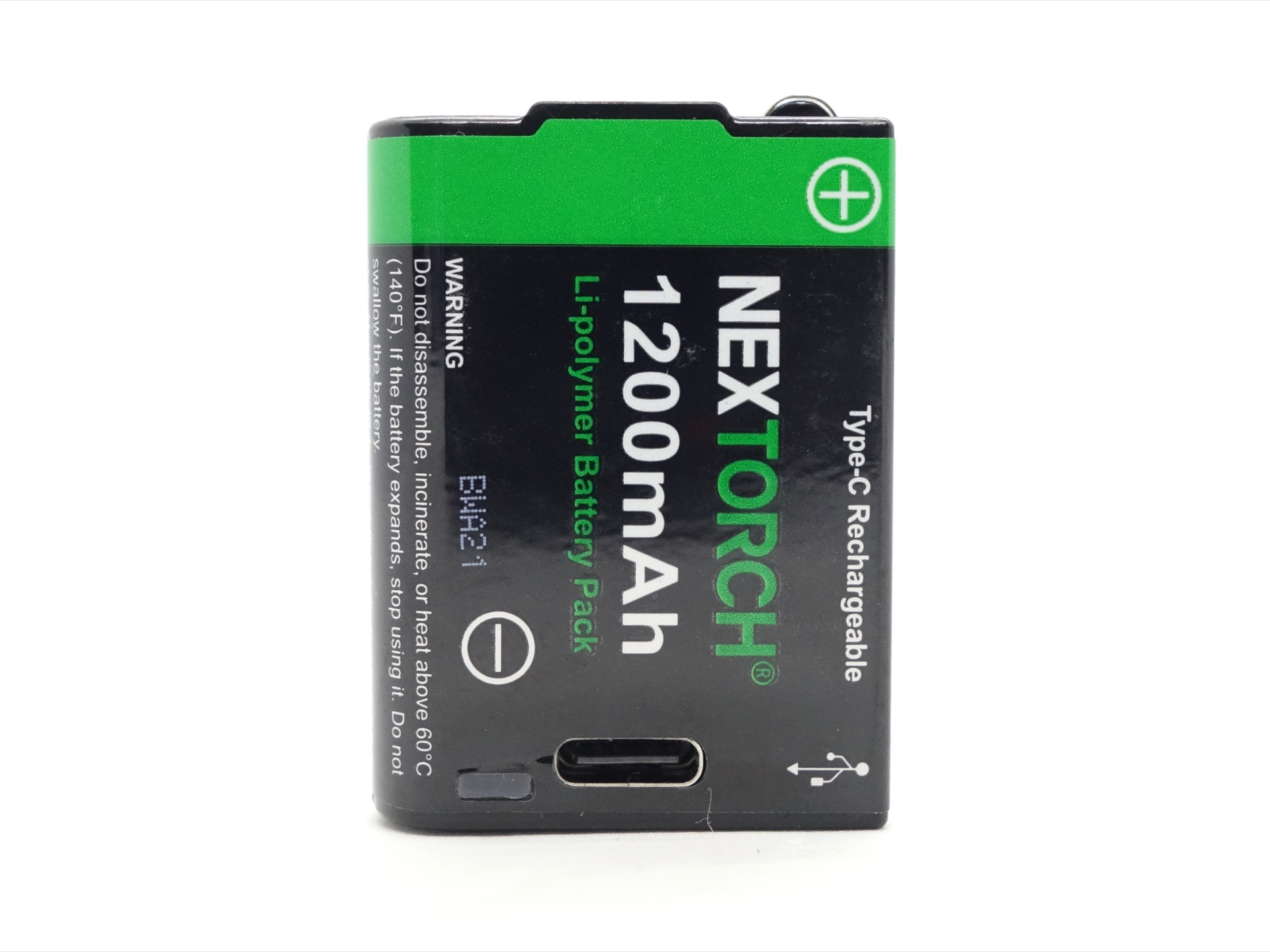
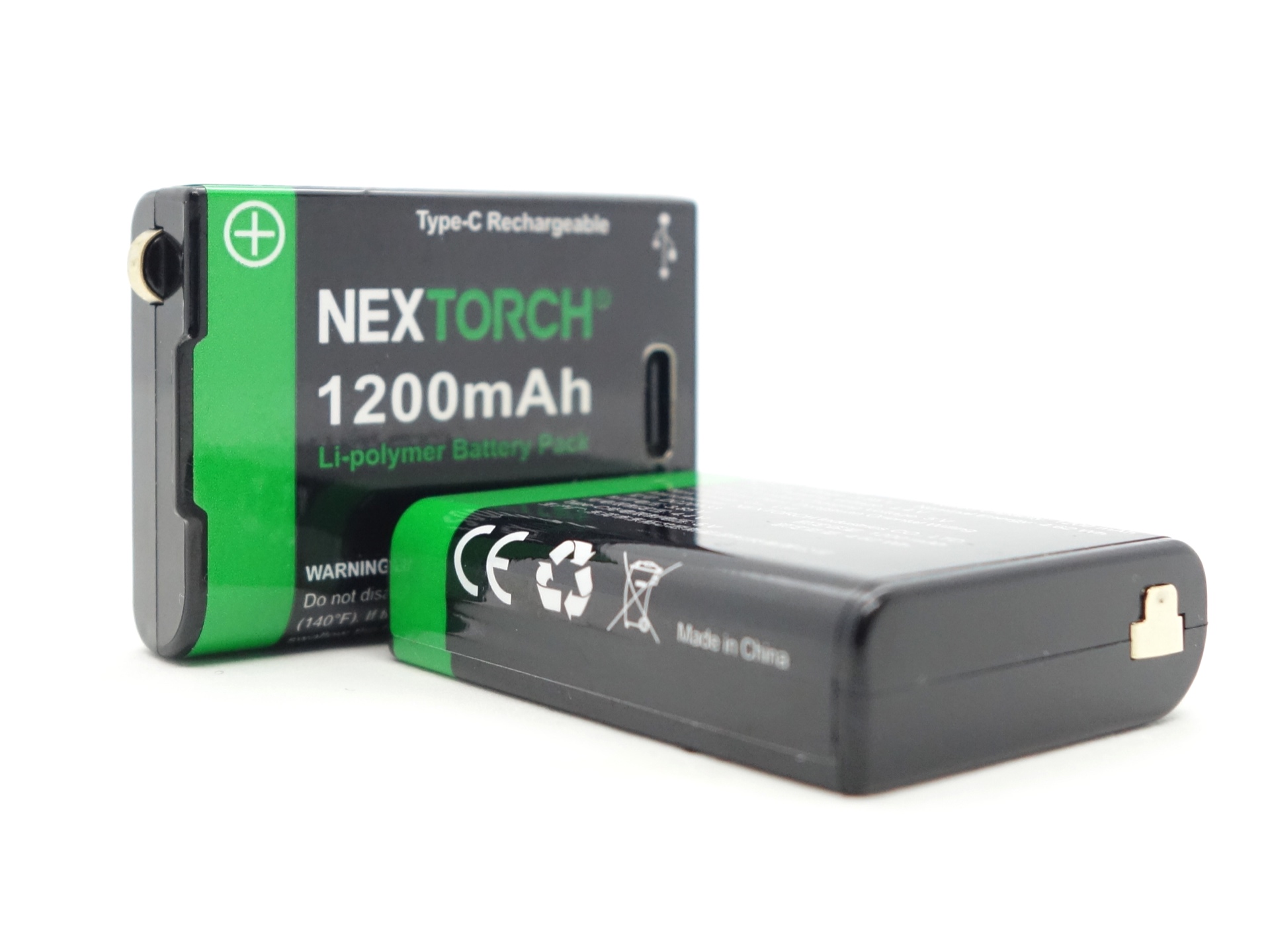
The headlamp can be powered by three 1.5V Alkaline AAA batteries, or by the included 3.85V LiPo 1200mAh battery.
The NEXTORCH eStar arrived with two 3.85V LiPo 1200mAh batteries with built-in USB-C charging. Each battery was approximately 3.81V upon arrival. I measured an internal resistance of 66 mOhms at 4.36V with a Zoyi ZT-XR1 Battery Tester Multimeter.
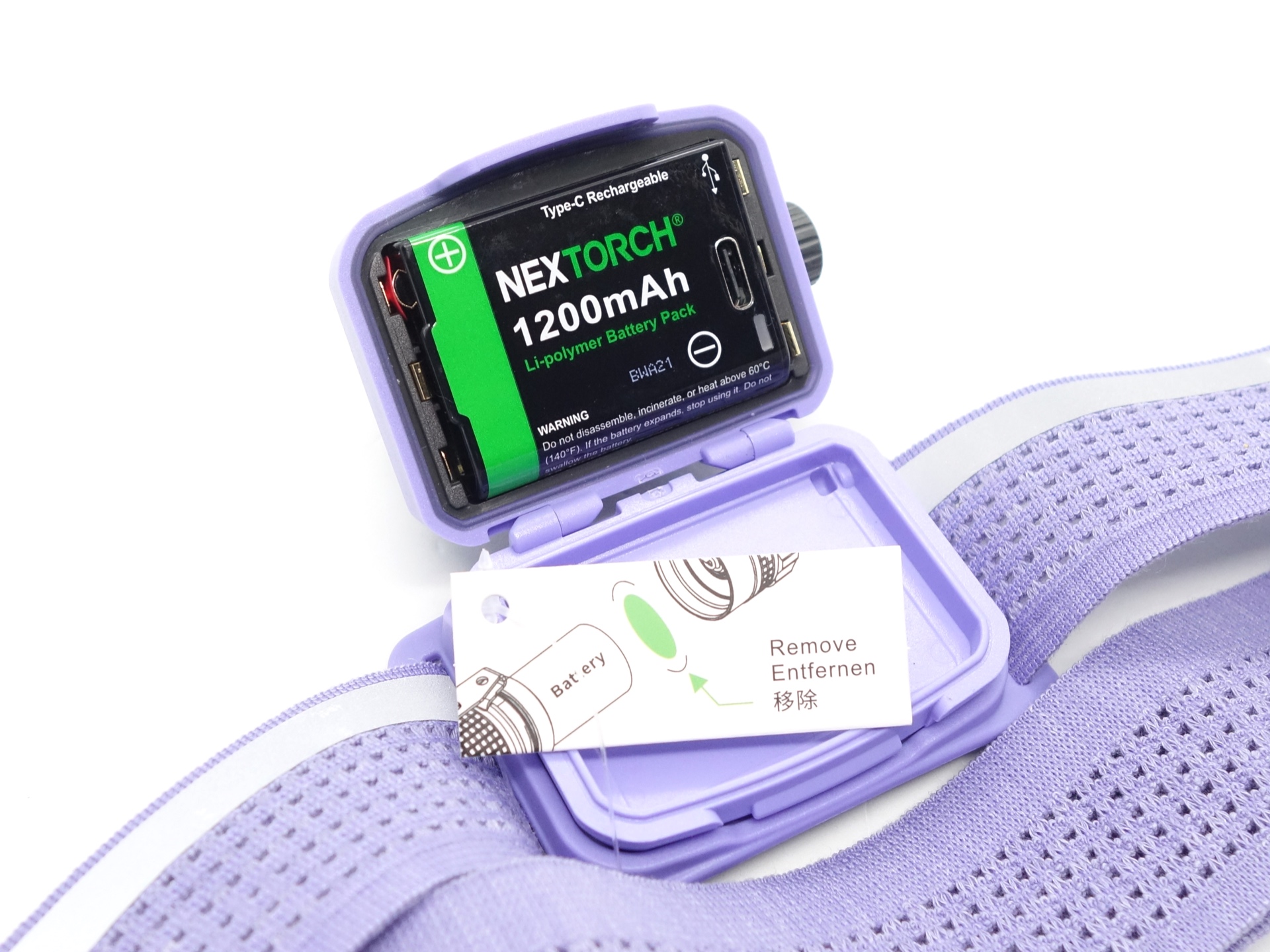
The battery in the headlamp was isolated with a piece of plastic to prevent accidentally turning the torch on.
Charging#
The headlamp does not have built-in charging.
The 3.85V LiPo 1200mAh battery has USB-C charging.
Power supply: PinePower Desktop USB-C
USB Meter: ChargerLAB Power-Z KM003C Amazon Australia
Room temperature: 25 C
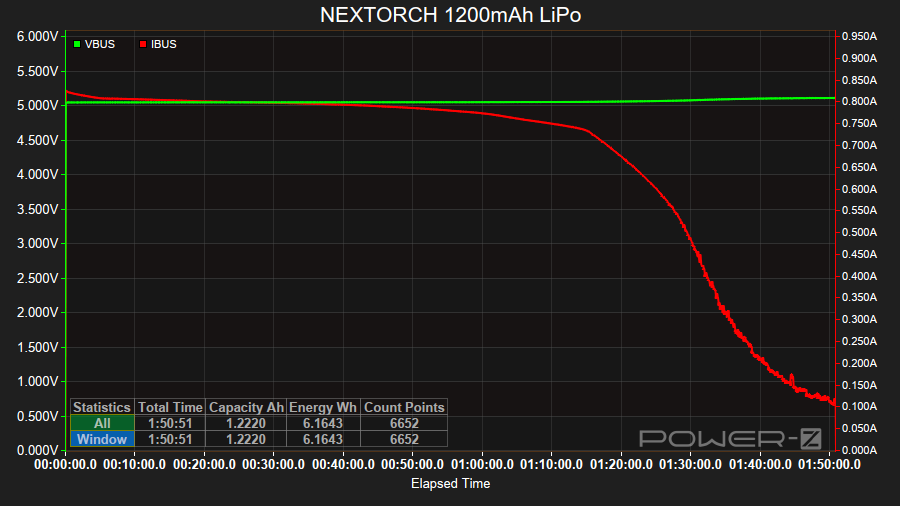
It took 1 hours 50 minutes to charge the included LiPo battery from 3.27V to 4.36V at a rate of 5V/0.8A.
Power supply compatibility#
I tried the following power supplies with the USB-A magnetic charging cable:
| Power supply | USB Type | Protocol | Does it charge? |
|---|---|---|---|
| Apple 61W Power Adapter | USB-C | PD | Yes |
| PinePower Desktop | USB-C | PD | Yes |
| PinePower Desktop | USB-A | QC | Yes |
| PinePower Desktop | USB-A | Yes |
USB-C to USB-C charging works.
Performance#
Specifications from the manual:
1200mAh LiPo Battery#
| ANSI / PLATO-FL1 | Spot and Flood | Spotlight | Floodlight | Red | SOS |
|---|---|---|---|---|---|
| Output (lumens) | 1,300 - 10 | 650 - 5 | 650 - 5 | 50 - 1 | 50 - 1 |
| Runtime | 1h 45min - 65h | 3h 15min - 110h | 3h 15min - 110h | 5h 15min - 160h | |
| Beam Distance (metres) | 205 - 19 | 200 - 19 | 43 - 4 | ||
| Beam Intensity (cd) | 10,506 - 90 | 10,000 - 90 | 462 - 4 |
3x Alkaline Batteries#
| ANSI / PLATO-FL1 | Spot and Flood | Spotlight | Floodlight | Red | SOS |
|---|---|---|---|---|---|
| Output (lumens) | 1,200 - 10 | 650 - 5 | 650 - 5 | 50 - 1 | 50 - 1 |
| Runtime | 45min - 65h | 2h 30min - 115h | 2h 30min - 115h | 3h 15min - 170h | |
| Beam Distance (metres) | 180 - 19 | 200 - 19 | 43 - 4 | ||
| Beam Intensity (cd) | 8,100 - 90 | 10,000 - 90 | 462 - 4 |
I used the included LiPo battery for the following tests.
Lumen measurements#
I used a bench power supply to measure the current at turn on.
| LED | Mode | Amps at start | Specs | Lumens @turn on | Lumens @30 sec | Lumens @10 min |
|---|---|---|---|---|---|---|
| Red | 100% | 0.26 A | 50 | 58 | 56 | 51 |
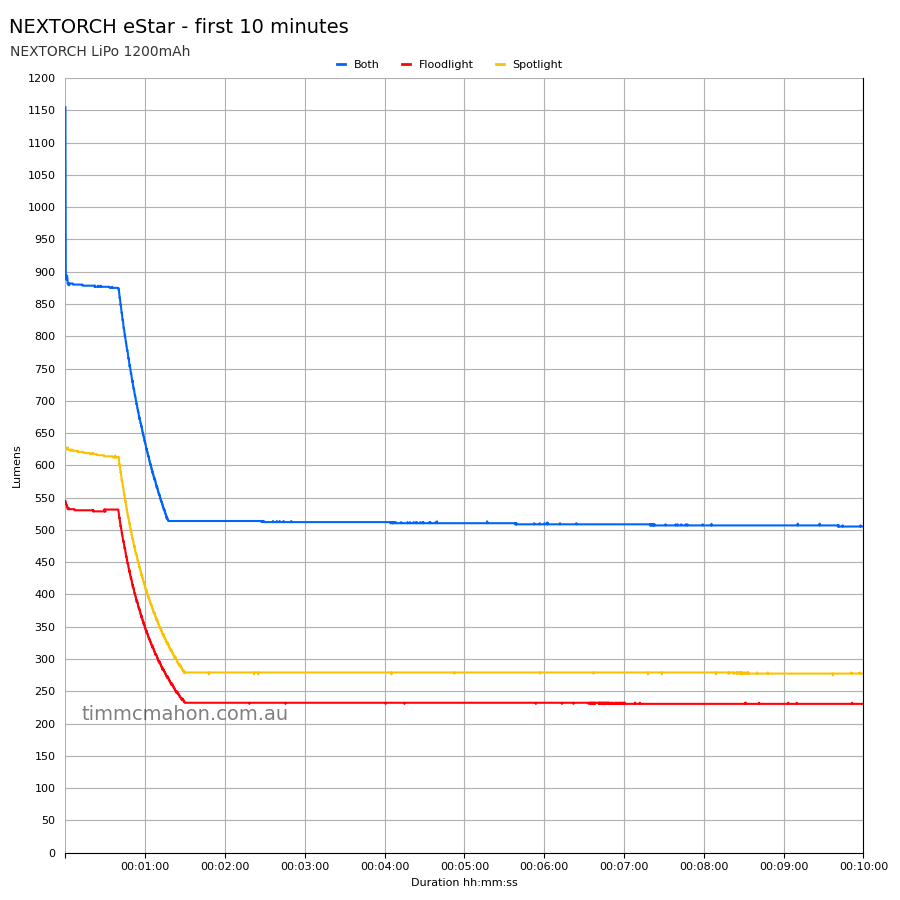
| Floodlight | 100% | 0.94 A | 650 | 544 | 528 | 230 |
| Spotlight | 100% | 1.00 A | 650 | 628 | 614 | 277 |
| Both | 100% | 2.00 A | 1,300 | 1,154 | 876 | 505 |
Note: Lumen measurements may be off by 10% with my DIY lumen tube.
Standby drain#
I measured a standby current of 28 µA with a Zoyi ZT-706S Oscilloscope Multimeter.
Runtime graphs#
I used my own DIY lumen tube with a TSL2591 sensor and forked bmengineer’s project RuTiTe to record runtimes.
The room temperature was approximately 25 C.
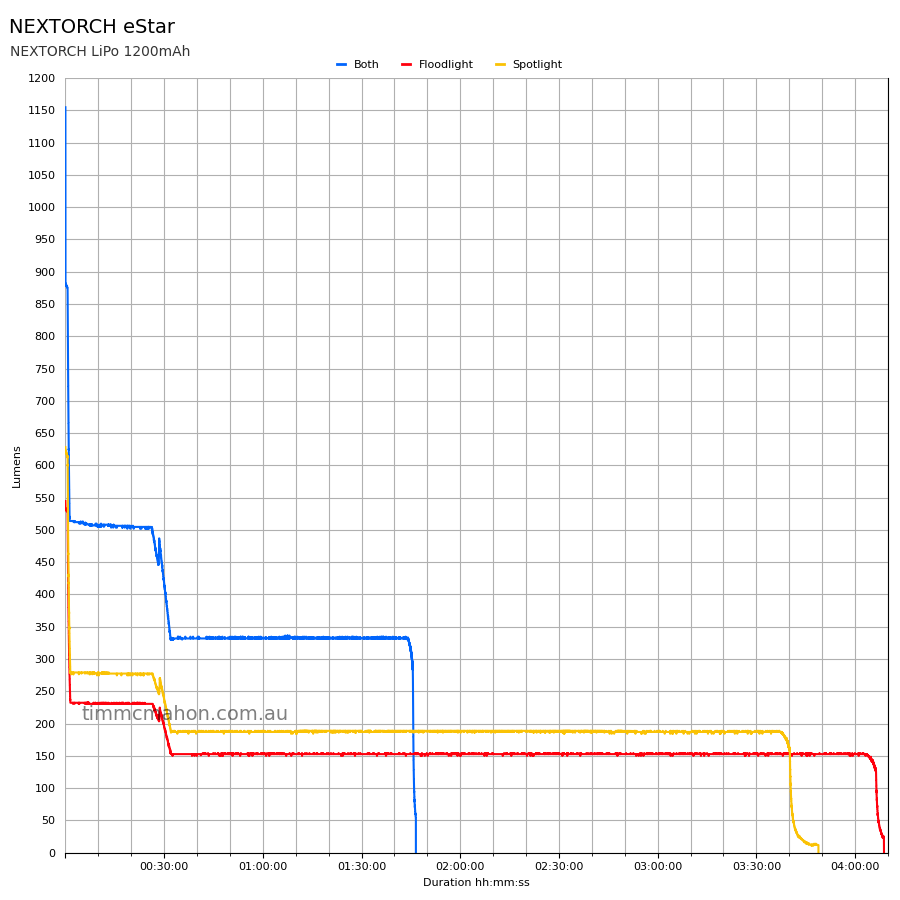
White Light 100%#

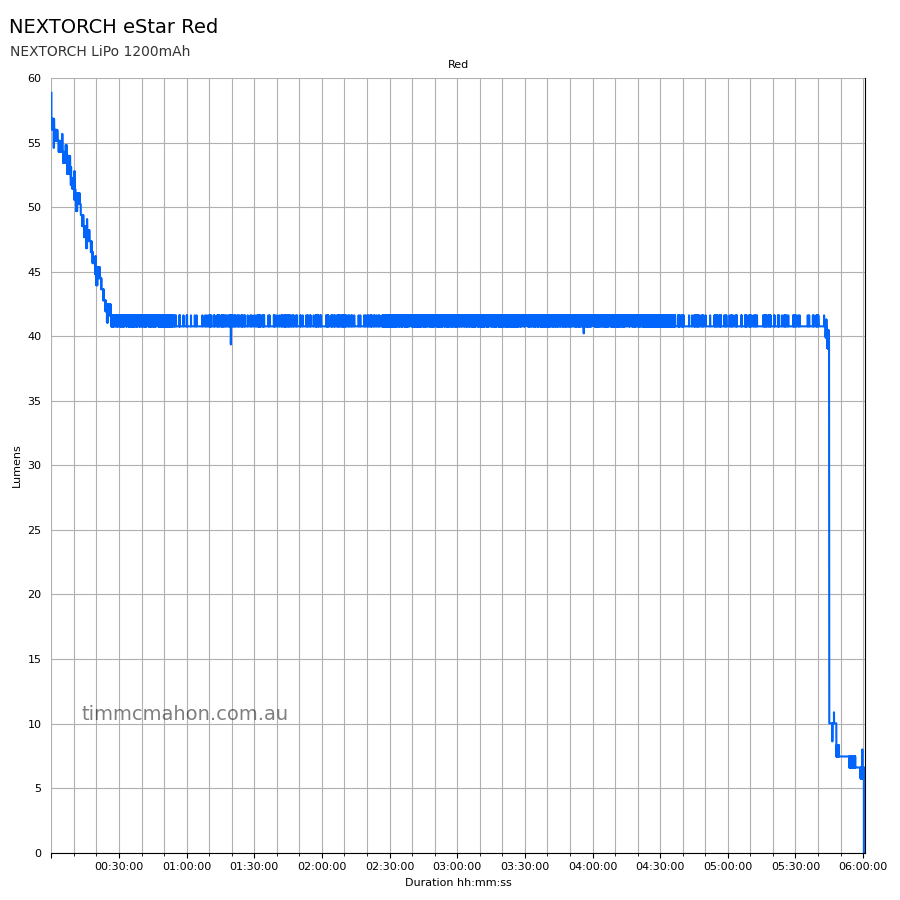
Red Light 100%#
Runtime#
Here is a summary of the runtime results:
| LED | Mode | User manual | Runtime | Turn off | Final voltage |
|---|---|---|---|---|---|
| Both | 100% | 1h 45min | 1h 46min 3s | 1h 46min 31s | 3.17 |
| Spotlight | 100% | 3h 15min | 3h 40min 53s | 3h 48min 51s | 3.27 |
| Floodlight | 100% | 3h 15min | 4h 7min 2s | 4h 8min 47s | 3.30 |
| Red | 100% | 5h 15min | 6h 0min 22s | 6h 0min 22s | 3.26 |
“Runtime” is the time until the output reduces to 10% of the output at 30 seconds (as per the ANSI/PLATO FL1 2019 Standard).
“Turn off” is the time until my DIY lumen tube no longer detects more than 1 lumen.
“+” indicates that the light remained on after recording had stopped.
The runtimes are slightly better than expected and the output is well regulated.
Throw#
I took lux measurements with a UNI-T UT383BT at 30 seconds from a distance of five metres.
| LED | Mode | Specs (cd) | Specs (m) | Candela measured (cd) | Distance (m) |
|---|---|---|---|---|---|
| Floodlight | 100% | 462 | 43 | 575 | 47 |
| Spotlight | 100% | 10,000 | 200 | 10,750 | 207 |
| Both | 100% | 10,506 | 205 | 11,375 | 213 |
Beamshots#
I went to a local park and aimed the NEXTORCH eStar at a tree 70 metres away while using 100% brightness.
Beamshots were taken using a Sony RX100M2 using 3.2", f3.2, ISO 100, 5000K WB.
NEXTORCH eStar Both (100%)#
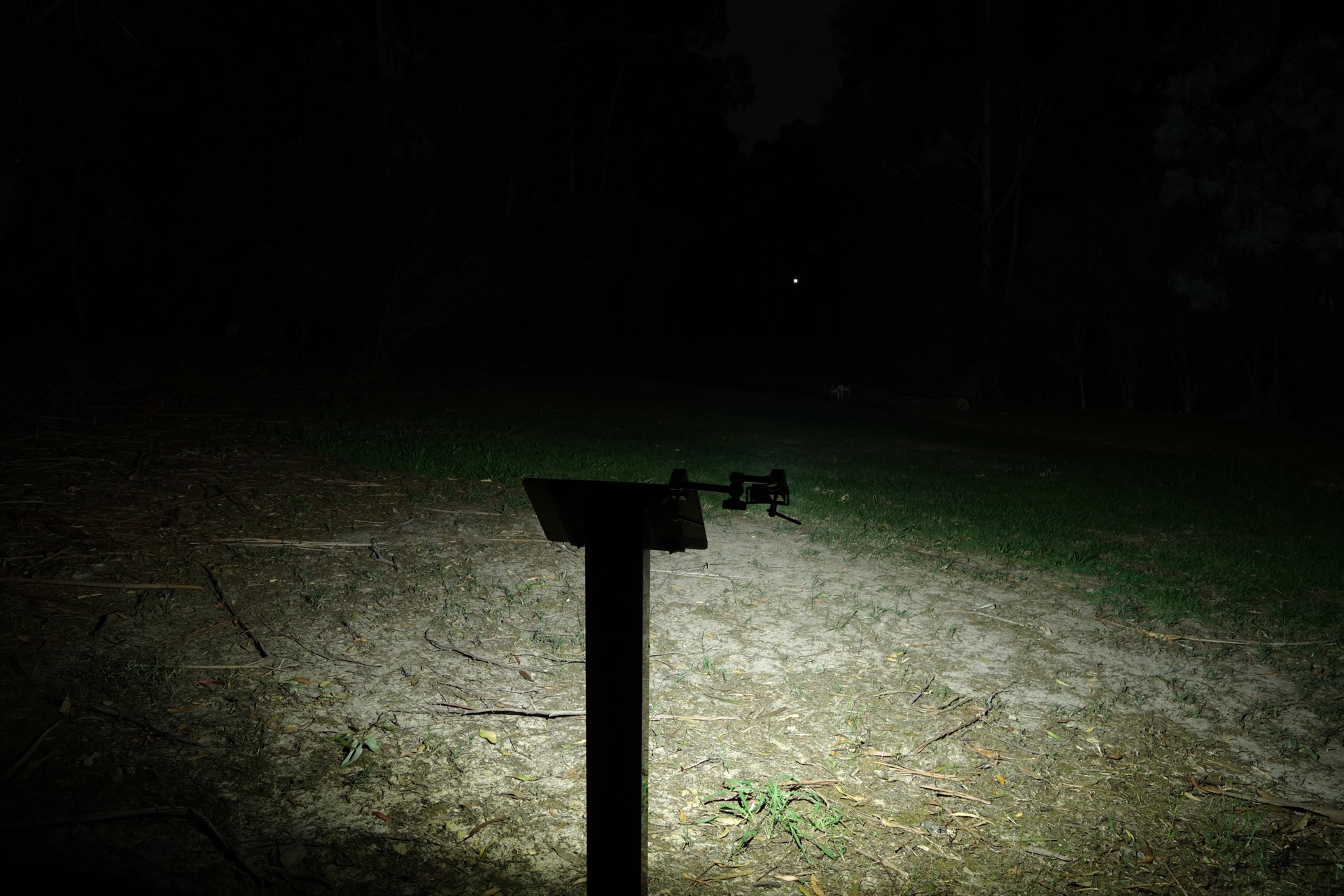
NEXTORCH eStar Spotlight (100%)#
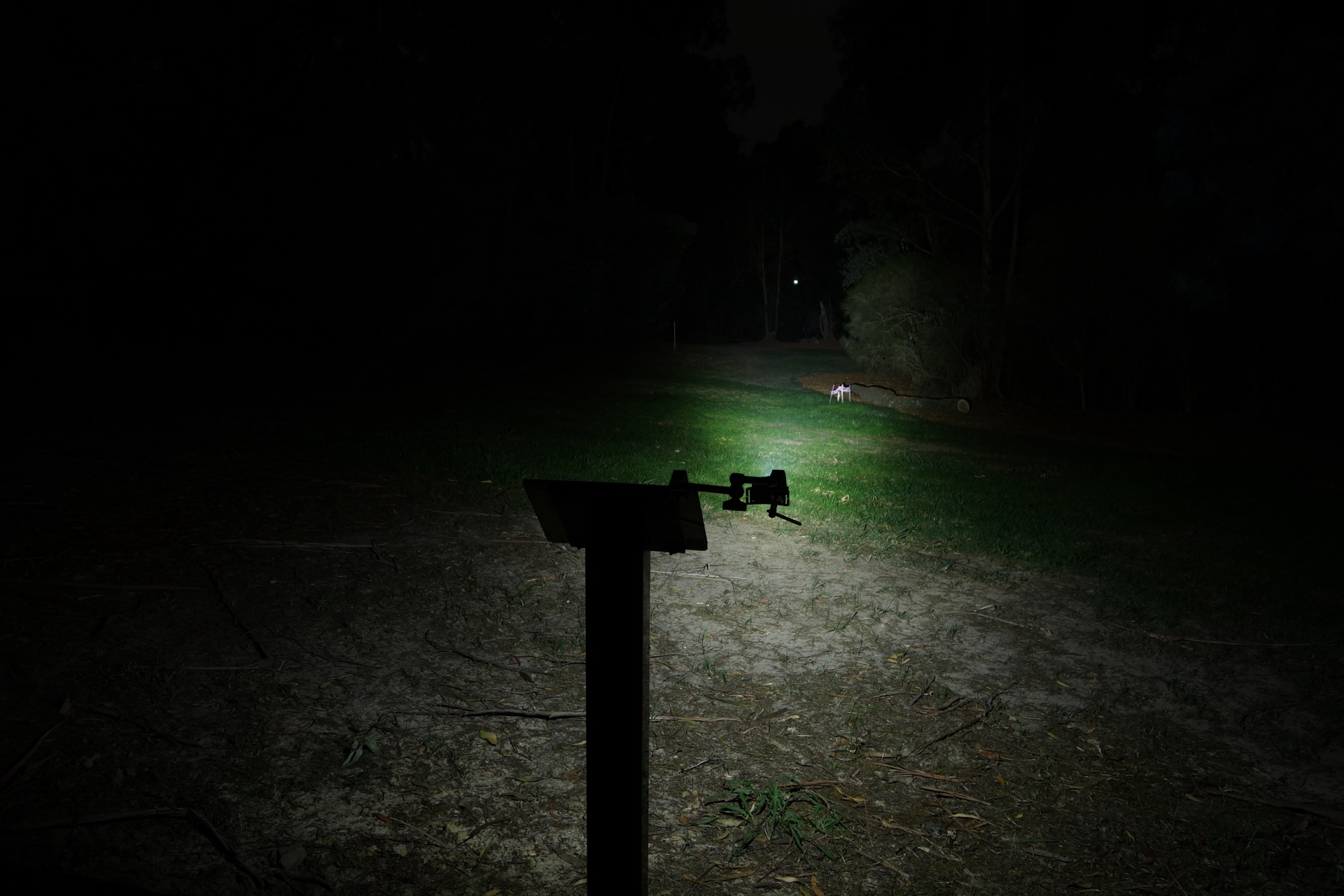
NEXTORCH eStar Floodlight (100%)#
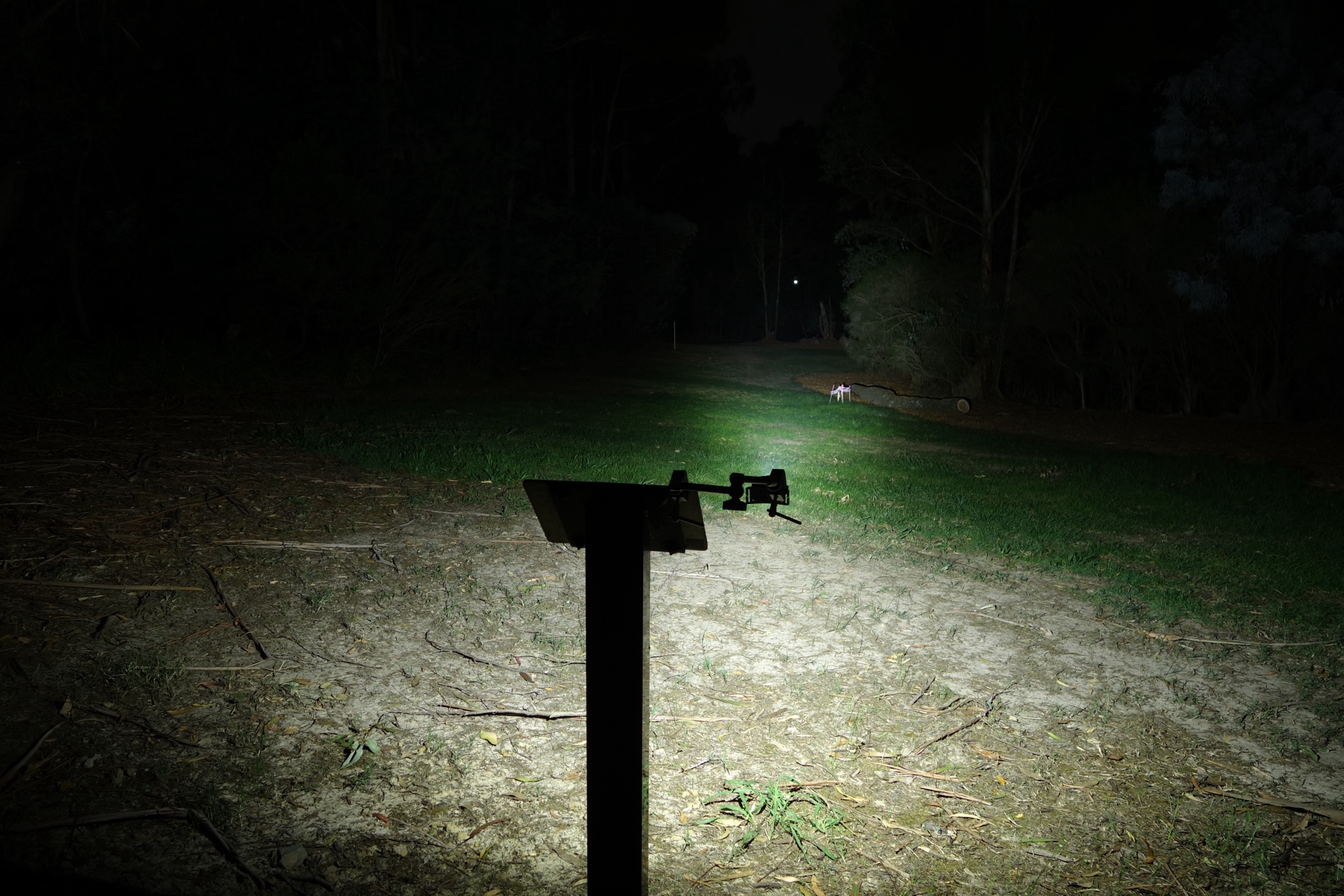
Nitecore HA23 UHE (High) Neutral#
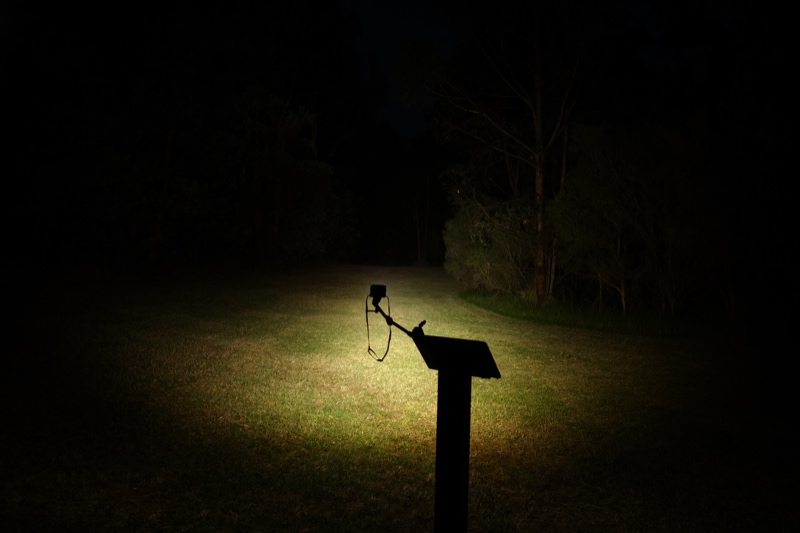
Nitecore HA23 UHE (High) Warm#
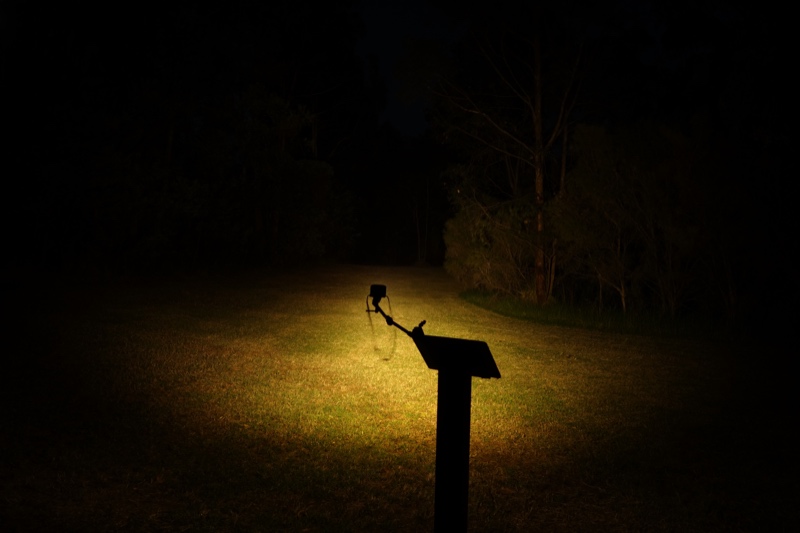
Nitecore HA23 UHE (High) Cool#
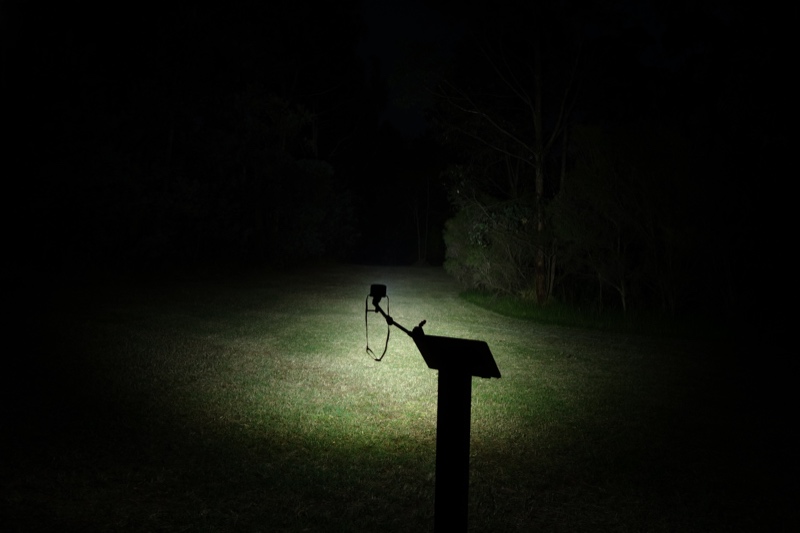
Nitecore NU27 (Turbo) Neutral#
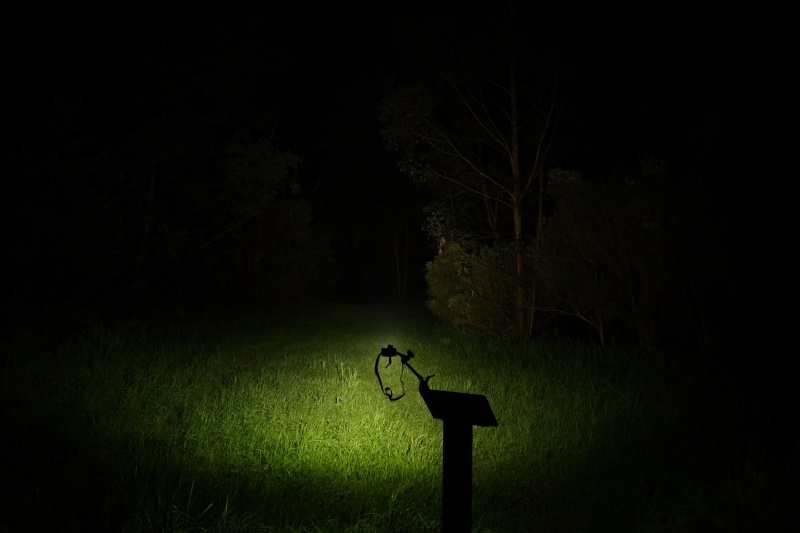
Nitecore NU27 (Turbo) Warm#
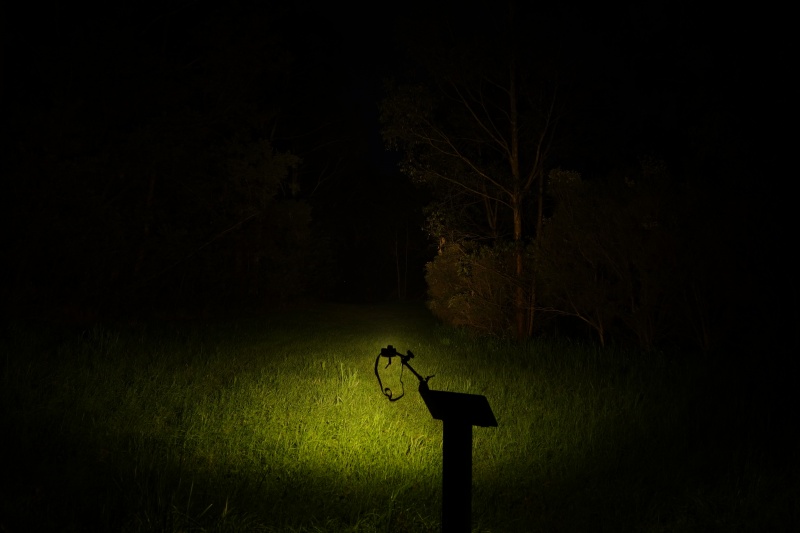
Nitecore NU27 (Turbo) Cool#
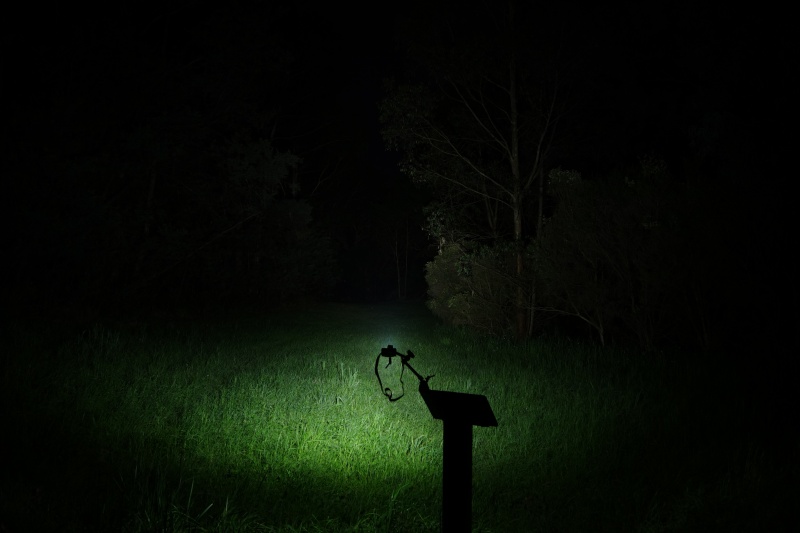
SPERAS B7 (S-High + F-High)#
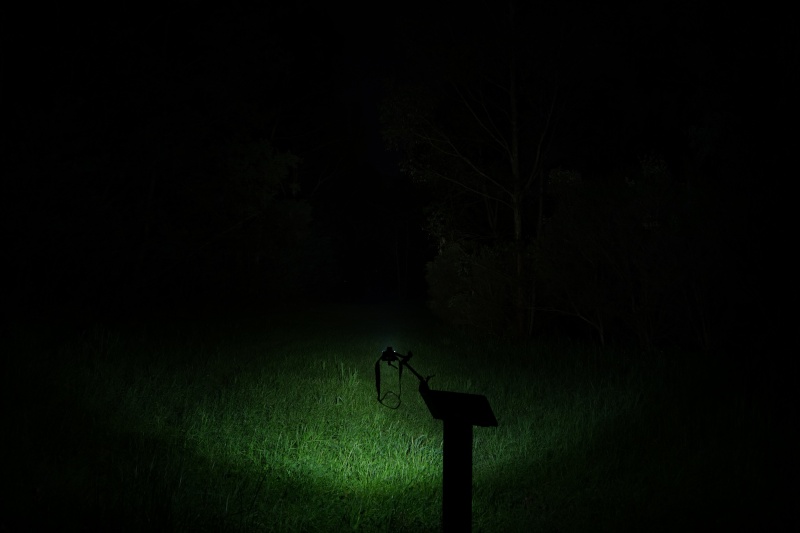
Fenix HL16 (Turbo)#
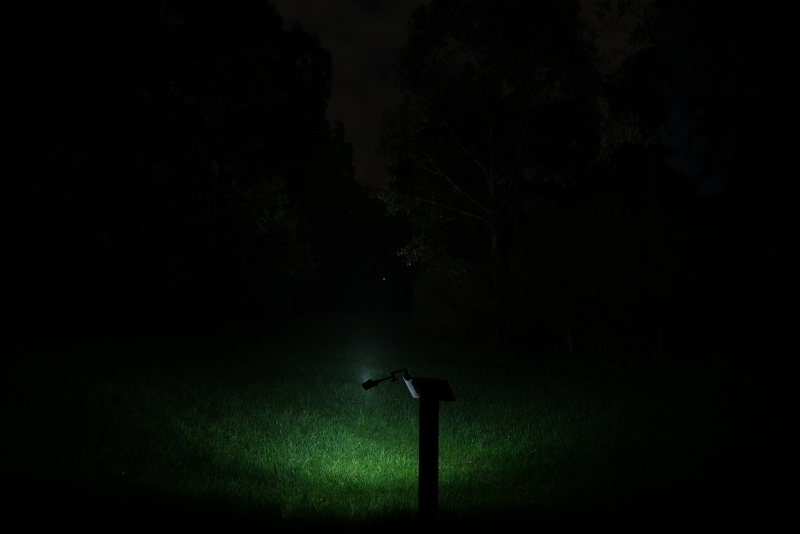
ZebraLight H53Fc N (H1)#
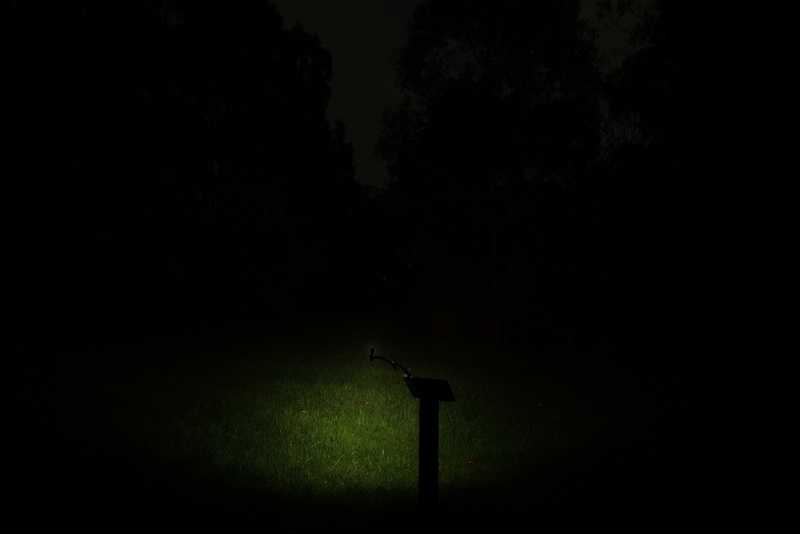
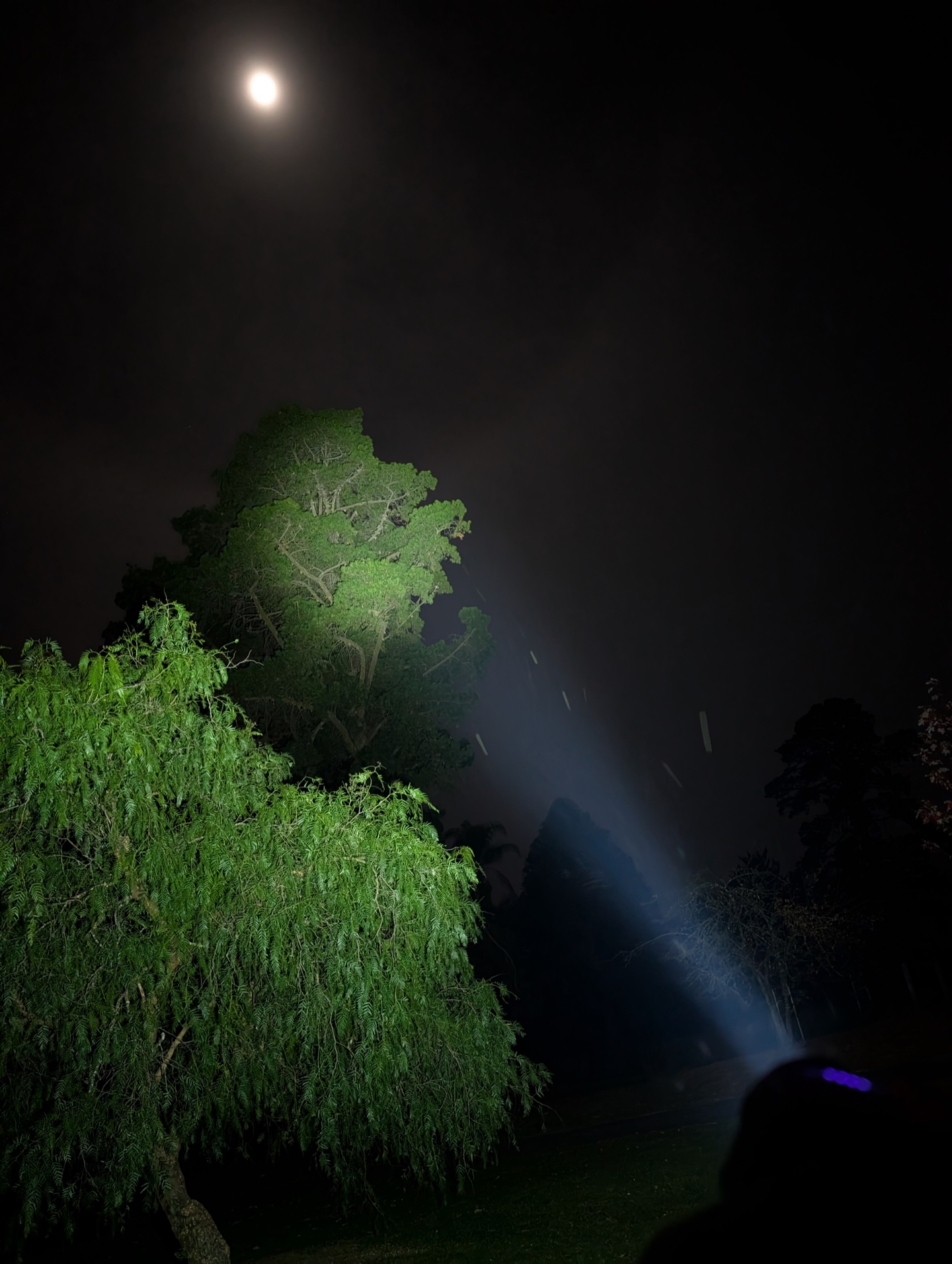
Here is another beamshot of the NEXTORCH eStar:
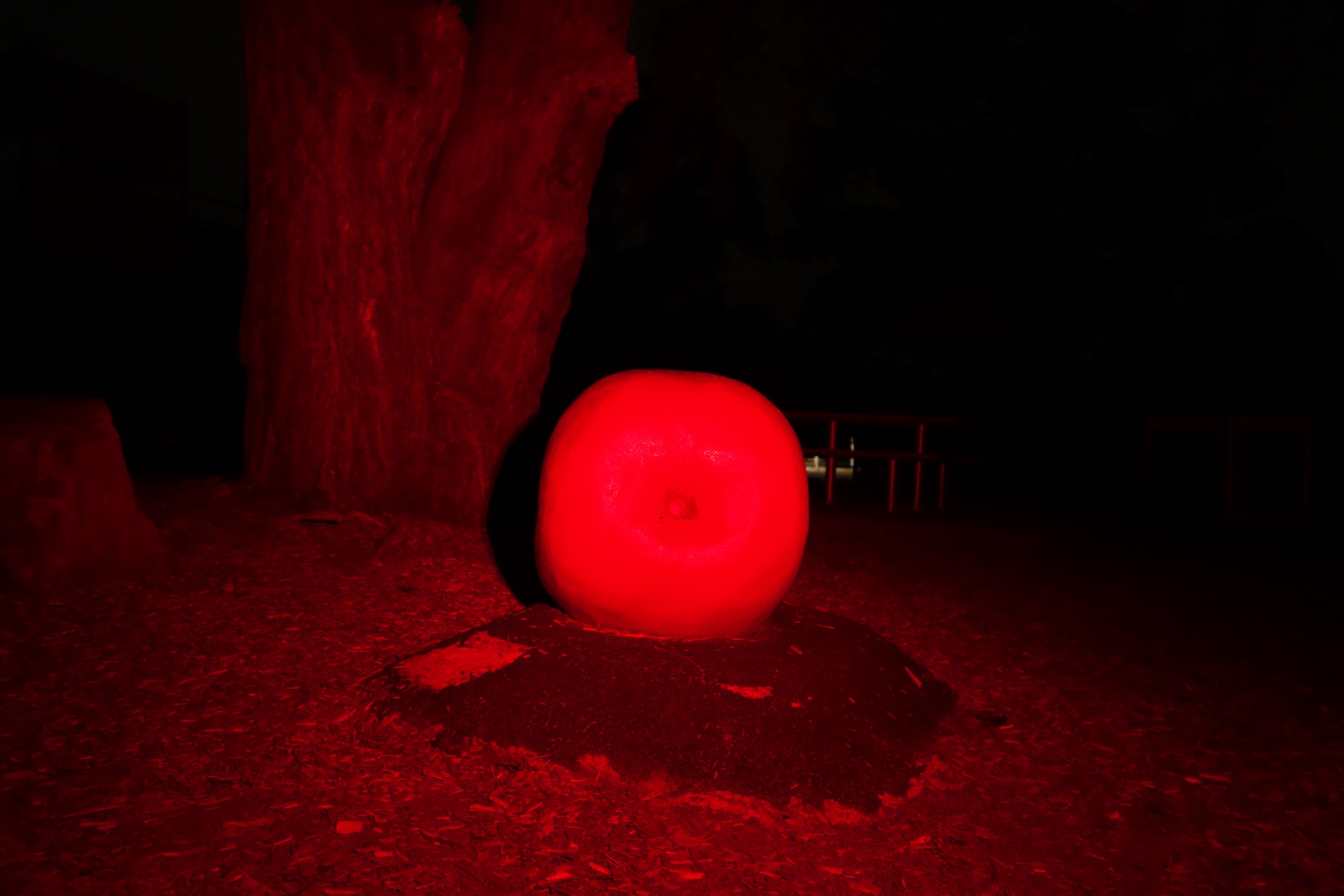
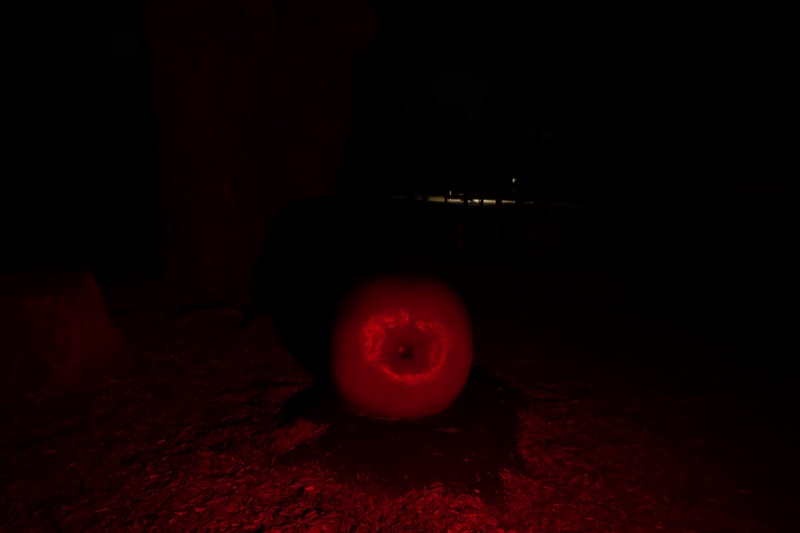
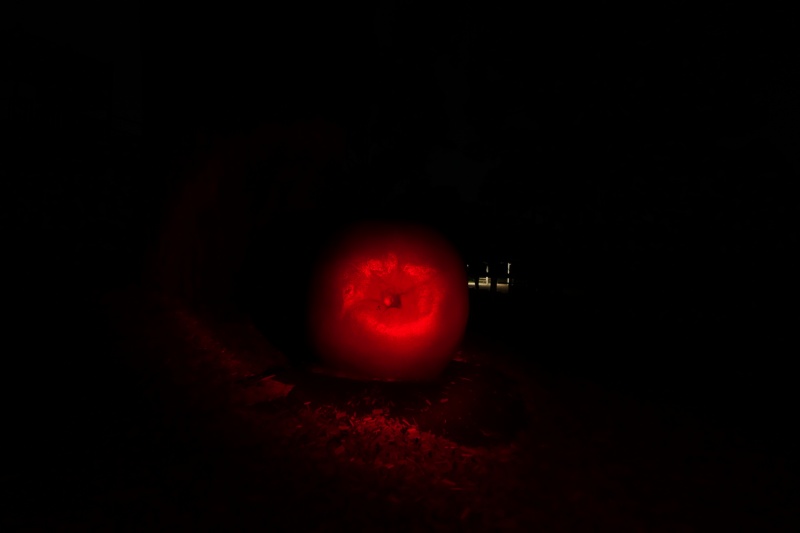
I later visited a playground and I aimed the headlamp at a big apple approximately 2 meters away while using the red emitter.
Red beamshots were taken using a Sony RX100M2 using 0.25 second shutter, f3.2, ISO 800, 5000K WB.
NEXTORCH eStar Red (100%)#
Nitecore HA23 UHE (Red) High#
Nitecore NU27 (Red) High#
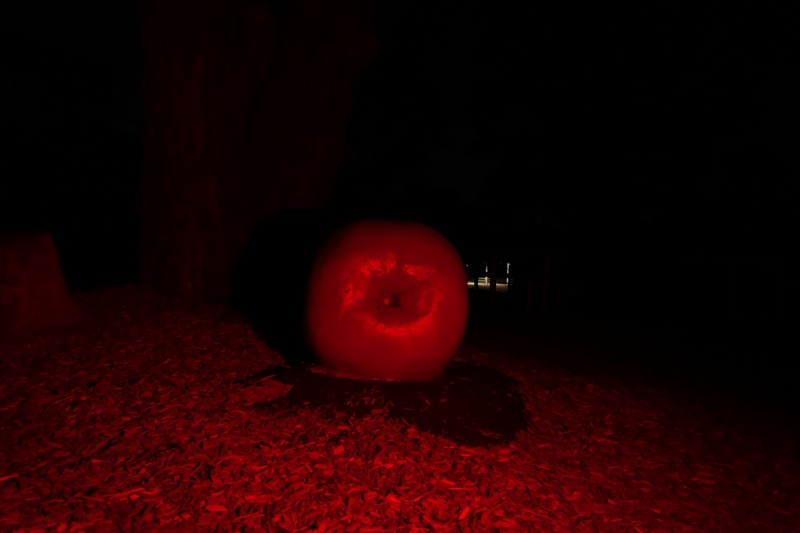
SPERAS B7 (Red)#
Thermal Images#
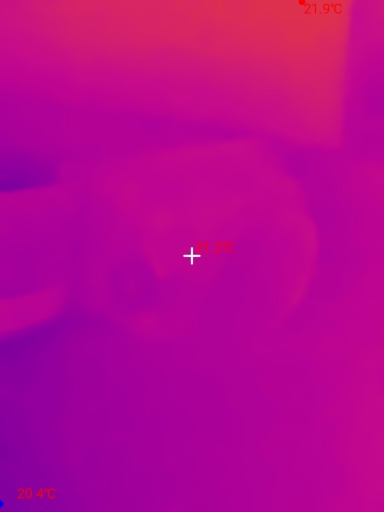
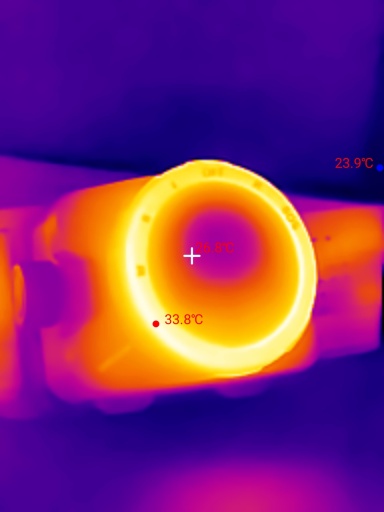
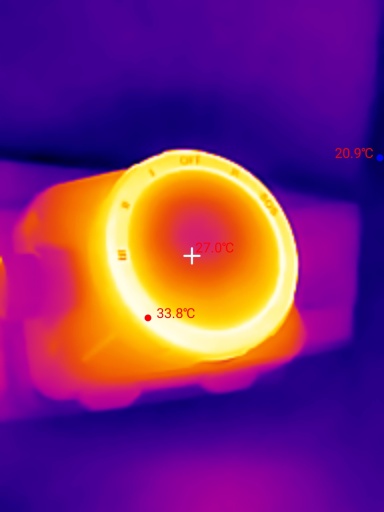
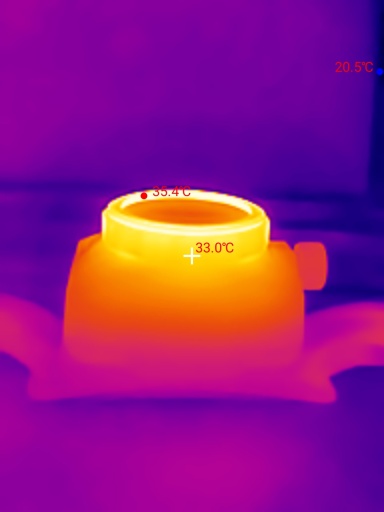
I used a Thermal Master P3 to take thermal images of the torch while using the Both at 100%. Get 10% off the Thermal Master P3 with code Mcmahon10
Room temperature: 21 C
| Time (mm:ss) | Max Temperature |
|---|---|
| 00:00 | 21.2 C |
| 02:00 | 33.8 C |
| 04:00 | 33.8 C |
| 06:00 | 35.4 C |
The back of the headband remained around 21 C while the aluminium rotary ring reached 35 C after 6 minutes.
Conclusion#
The NEXTORCH eStar headlamp is better than I expected.
It looks basic but it performs quite well.
The runtimes are better than expected and the output is well regulated.
The user interface is simple and intuitive to use. There are no complicated button presses. You just have to twist a few knobs.
The lumen output on the highest brightness setting was slightly lower than expected (1,154 dropped to 876 lumens instead of 1,300 lumens at 30 seconds).
The battery options are pretty common for this type of headlamp: three 1.5V Alkaline AAA batteries or one LiPo battery. This is nothing new but the quality of the LiPo battery and of the positive and negative terminals looks good.
If you just want a knob controlled headlamp that is simple to use and performs well, then this NEXTORCH eStar is worth considering.
Pros:#
- Good beam distance.
- Good runtimes.
- Output is well regulated.
- Simple user interface.
- Comfortable headband.
- Takes USB-C rechargeable LiPo batteries or three Alkaline AAA batteries.
Cons:#
- Lumen output is slightly lower than expected for the highest mode.
Price#
The NEXTORCH eStar is US$54.99 with three Alkaline batteries at nextorch.com.
The NEXTORCH eStar is US$69.99 with two 1200mAh LiPo batteries at nextorch.com
Product page#
Promo code: TIM
eStar at nextorch.com (affiliate link)
eStar Black LiPo at amazon.com (affiliate link)
eStar Black AAA at amazon.com (affiliate link)
Promo code: AVNPKOX6DI09X
eStar Purple LiPo at amazon.com (affiliate link)
Promo code: A1X3213MEGQRTD
eStar Purple AAA at amazon.com (affiliate link)
I may earn a commission if you use an affiliate link or a promo code. This will help fund future torch reviews and tutorials.