CUKTECH 10 PB100P Power Bank P Series 10000mAh 150W Review
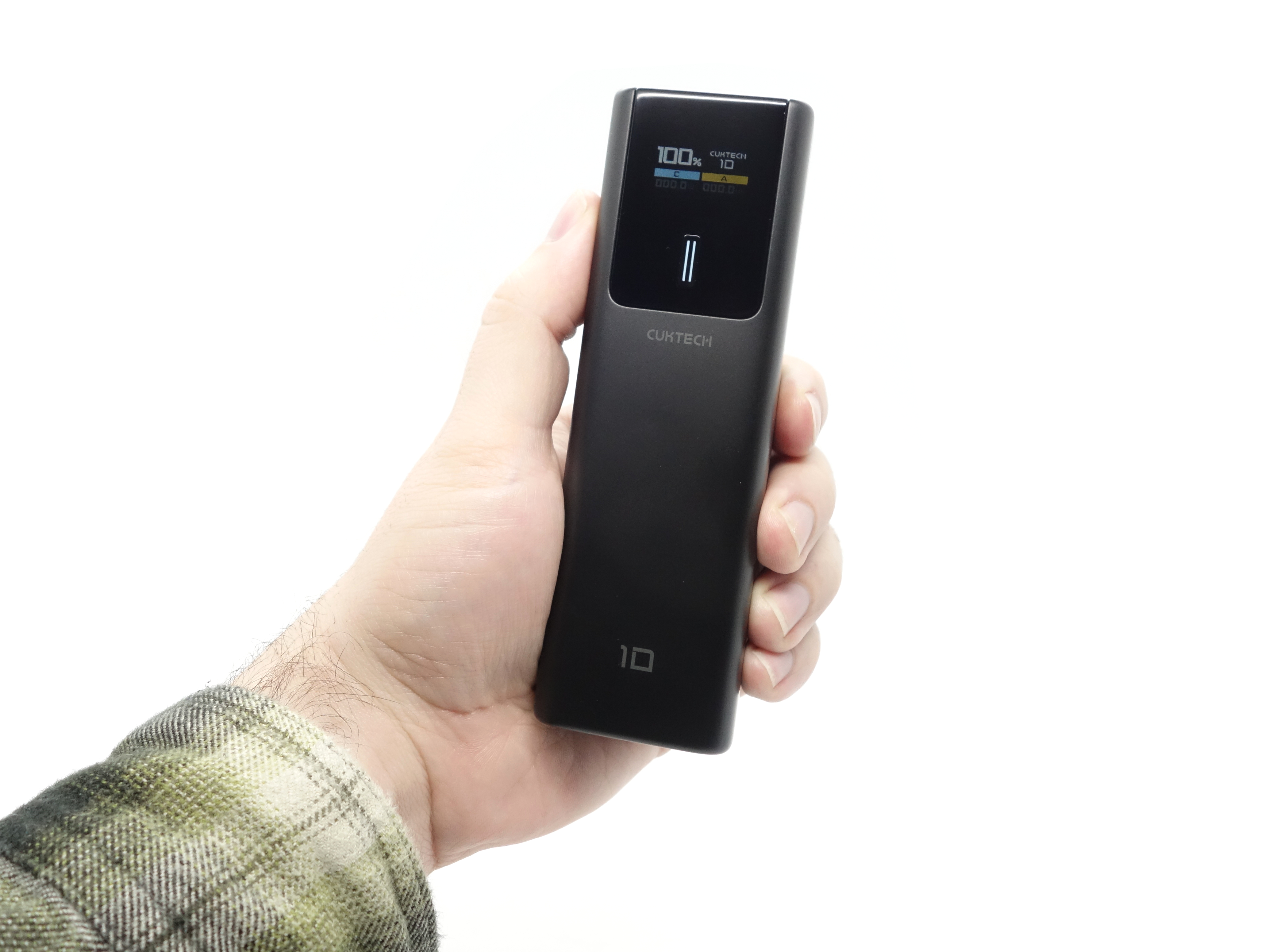
CUKTECH PB100P#
- Specifications
- Introduction
- Powerbank in use
- Cable
- Size and comparison
- Compatibility
- User interface
- Tests
- Thermal Images
- Conclusion
- Price
- Product page
Specifications#
| Brand/model | CUKTECH 10 PB100P |
|---|---|
| Batteries | 4* 18650 Li-ion cells |
| Capacity | 10,000 mAh |
| Energy (Rated/Typical) | 35.28Wh/36Wh (14.4V 2.45Ah/2.5Ah) |
| Rated Capacity | 5,500 mAh (5V/4A) |
| Input (USB-C) | 5V/3A, 9V/3A, 12V/3A, 15V/3A, 20V/4.5A 90W MAX |
| Output (USB-C) | 5V/3A, 9V/3A, 12V/3A, 15V/3A, 20V/6A 120W MAX |
| Output (USB-A) | 5V/3A, 9V/3A, 5-11V/3A 33W MAX |
| Multi-port | 5V/4A 20W (USB-C 5V/2A, USB-A 5V/2A), 9V/6A 54W (USB-C 9V/3A, USB-A 9V/3A) |
| Cable | CUKTECH 0.5m USB-C to USB-C 6A with e-marker (50V 5A, 240W EPR) |
| Low-current mode | Yes |
| Pass-through charging | Yes |
| 3C mark | No |
| Dimensions | 143*45*33.4mm |
| Weight | 285g |
| Review date | August 2025 |
Introduction#
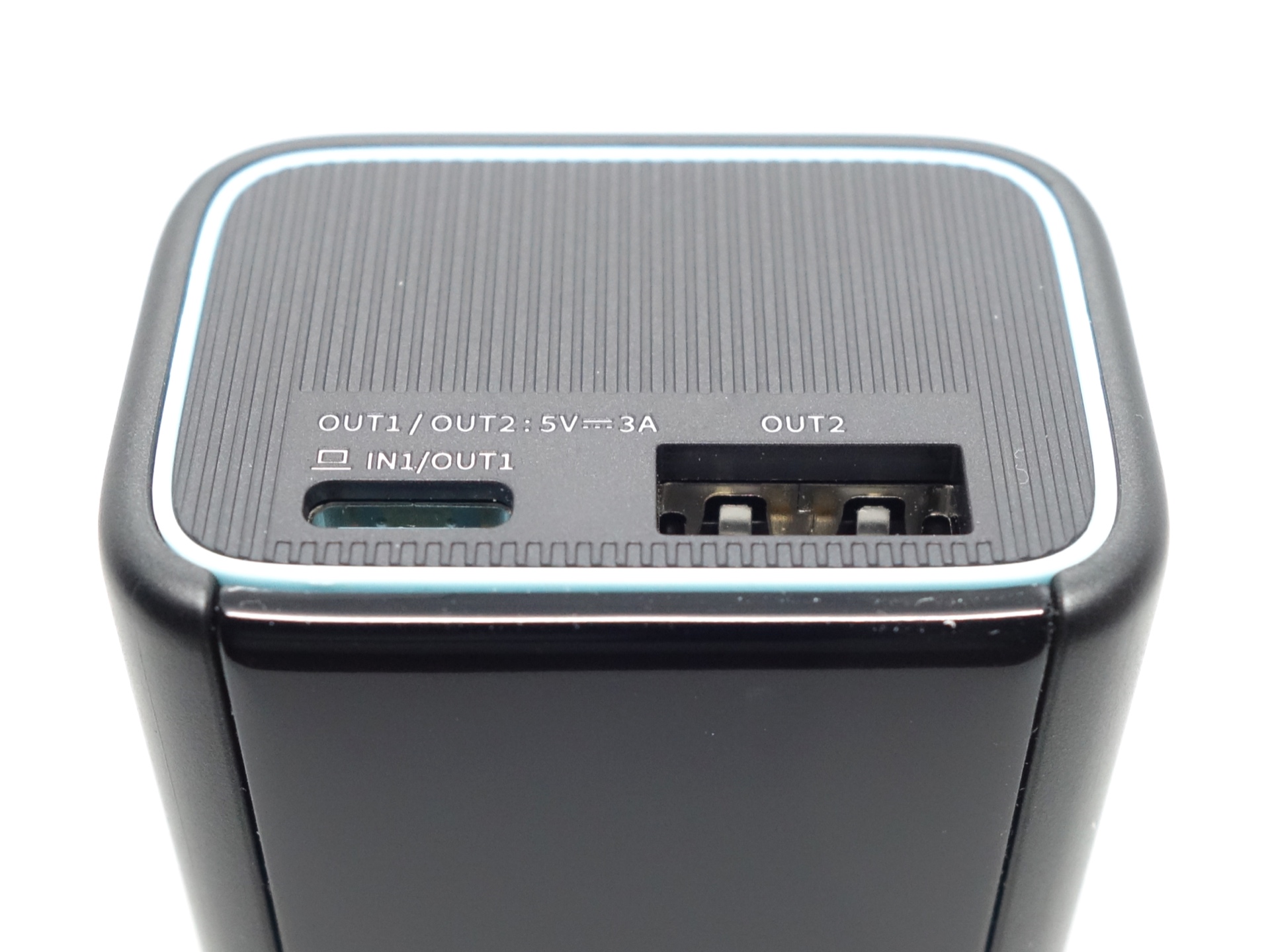
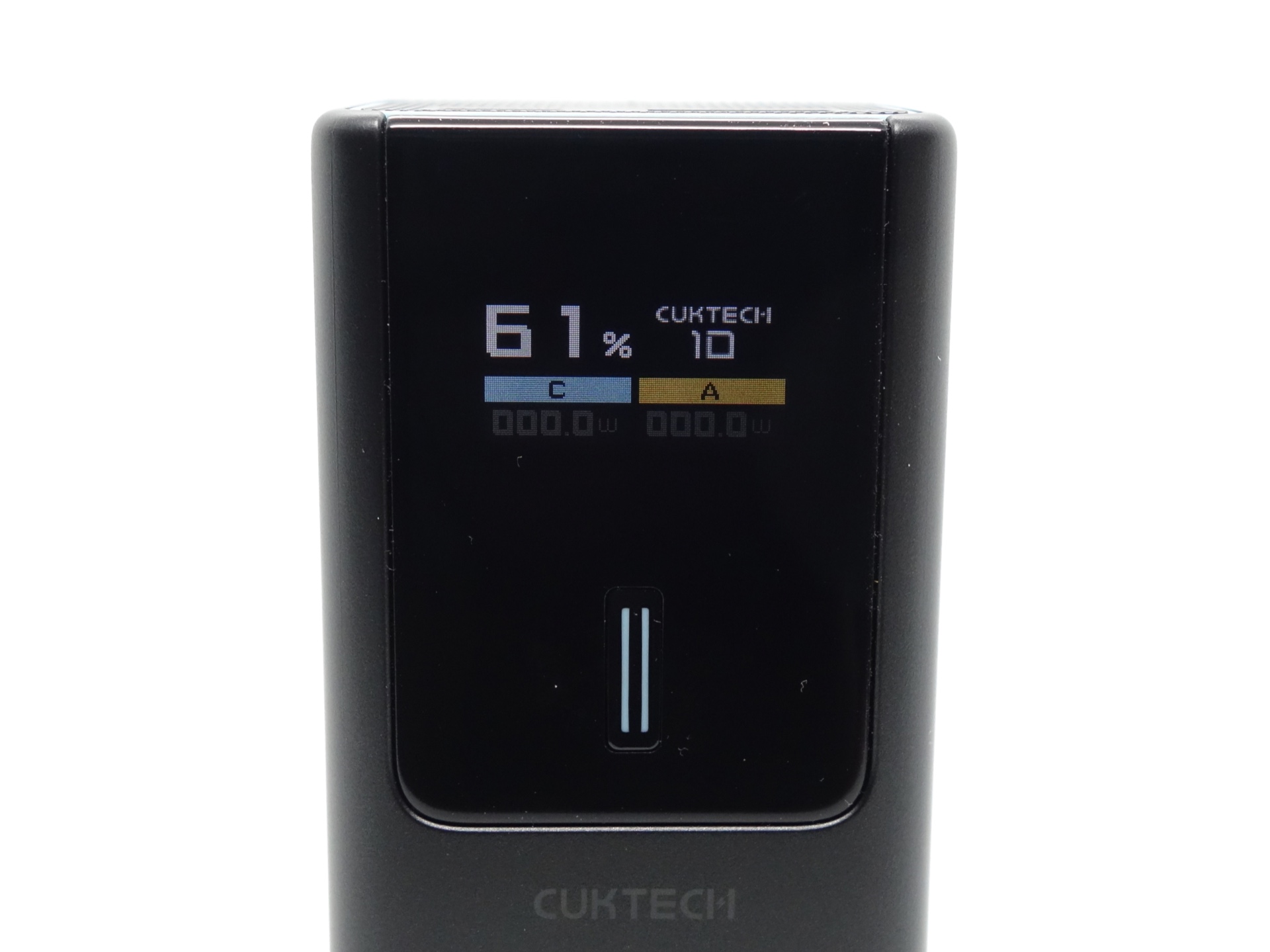
The CUKTECH 10 P Series PB100P is a relatively pocketable power bank with USB-C input/output (90W/120W), USB-A output (33W), a colour display, and a button to control it.
What is up with the name CUKTECH?#
Android Authority has an article where they say that the CUK in CUKTECH is named after the Serbian engineer, Slobodan Ćuk, who invented the DC-DC Ćuk converter.
CUK is pronounced like “Chook” (🐓).
Okay, back to the review:#
A lot of marketing numbers are being thrown around. I will try to make sense of it all and perform a bunch of tests to find out.
“10000mAh” is what you get if you add four 2500mAh cells in parallel. In reality, it has four 18650 3.6V Li-ion 2500mAh cells connected in series with a nominal combined voltage of 14.4V (16.8V when full). The higher voltage is great if you want to fast charge devices with USB-C PD.
“150W” is what you get if you add the individual maximum outputs for USB-C (120W) and USB-A (30W). The USB-A output can actually do 33W but 153W does not look as neat. In reality, the maximum combined output when using both ports at the same time is is 54W (USB-C 9V/3A, USB-A 9V/3A).
So what are some useful numbers?#
90W (20V/4.5A) USB-C input to charge the power bank quickly. It takes less than an hour to fully charge!
120W (20V/6A) USB-C output to charge a device quickly.
The typical energy is 36 Wh (14.4V*2.5Ah), as noted on the power bank, the box and the user manual. This is useful for airlines. That said, the power bank does not have a 3C mark for flying within China.
76.3% is the conversion efficiency when charging something with a theoretical output of 5V/4A.
Battery pack: 14.4 V * 2.5 Ah = 36 Wh total energy.
USB output: 5 V * 5500 mAh = 27.5 Wh usable energy.
Conversion efficiency: 27.5 Wh / 36 Wh = 76.3%
Disclosure#
I recently noticed a deal on ozbargain for ZMI and CUKTECH brands of power banks. ZMI caught my eye because I already have a ZMI QB826G.
In the comment section, Mostly Melbourne asked if any technical writers would be interested in reviewing some samples.
I have been testing and reviewing flashlights and battery chargers for a few years now. With a dozen power banks at home, I figured that I should review power banks too.
Here is a video review:
Mostly Melbourne kindly sent this power bank for review. I have not been paid for this review nor have I held back my opinions of this power bank.
Packaging#
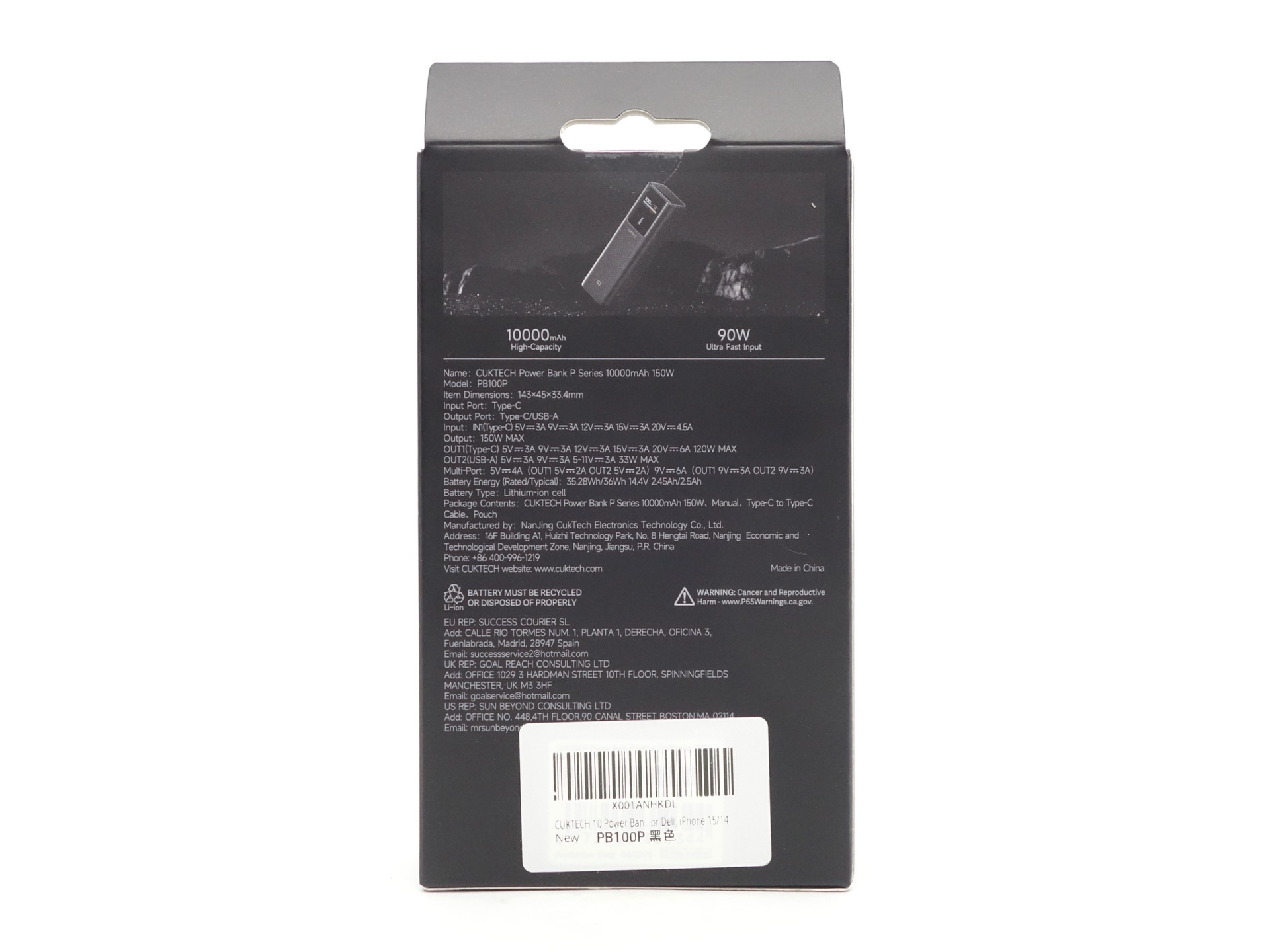
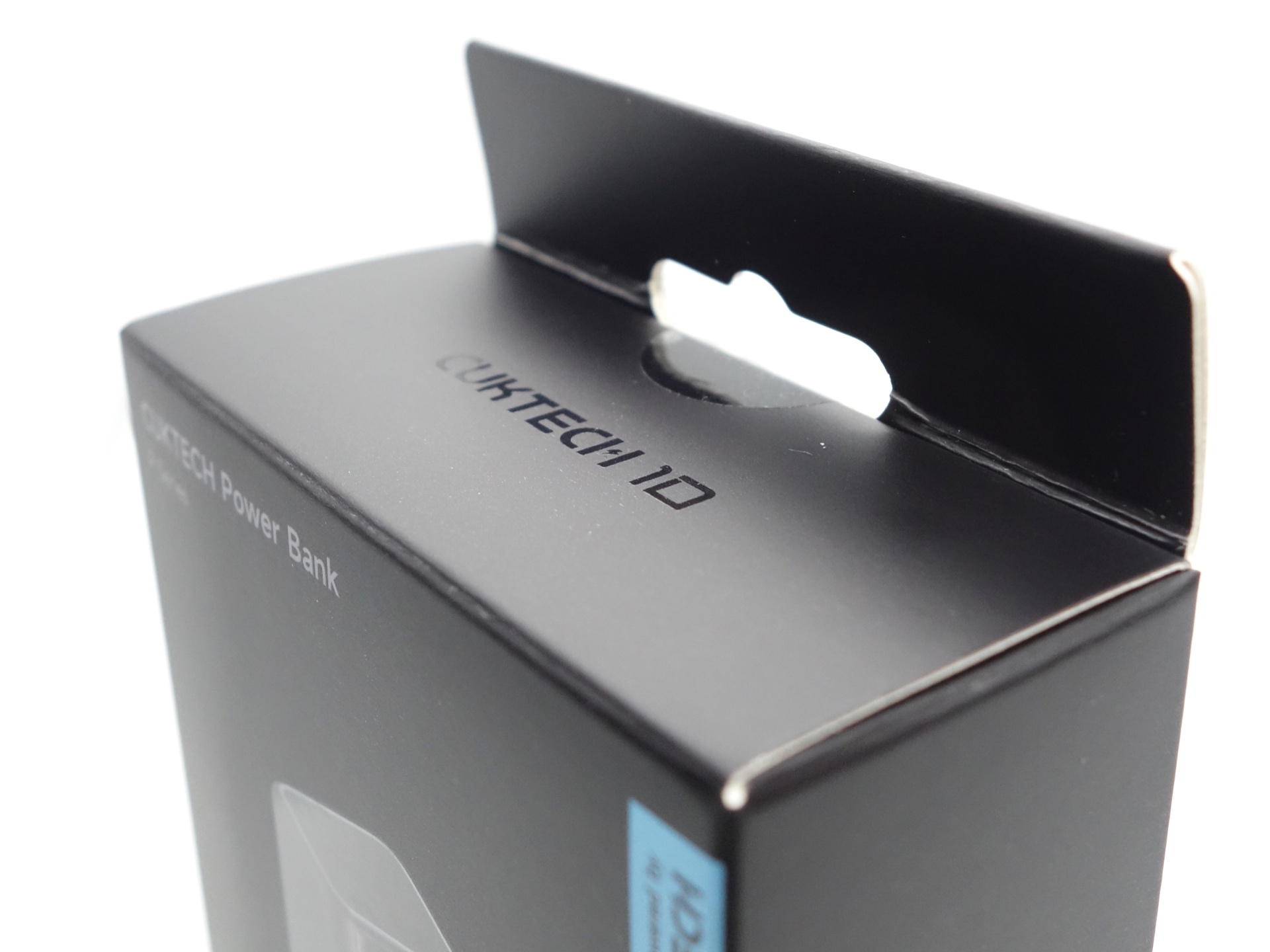
The CUKTECH PB100P comes in a black cardboard box with an image of the power bank on the front and specifications on the back.
A shiny “Powered by CUKTECH” and the glossy image make the packaging look premium.
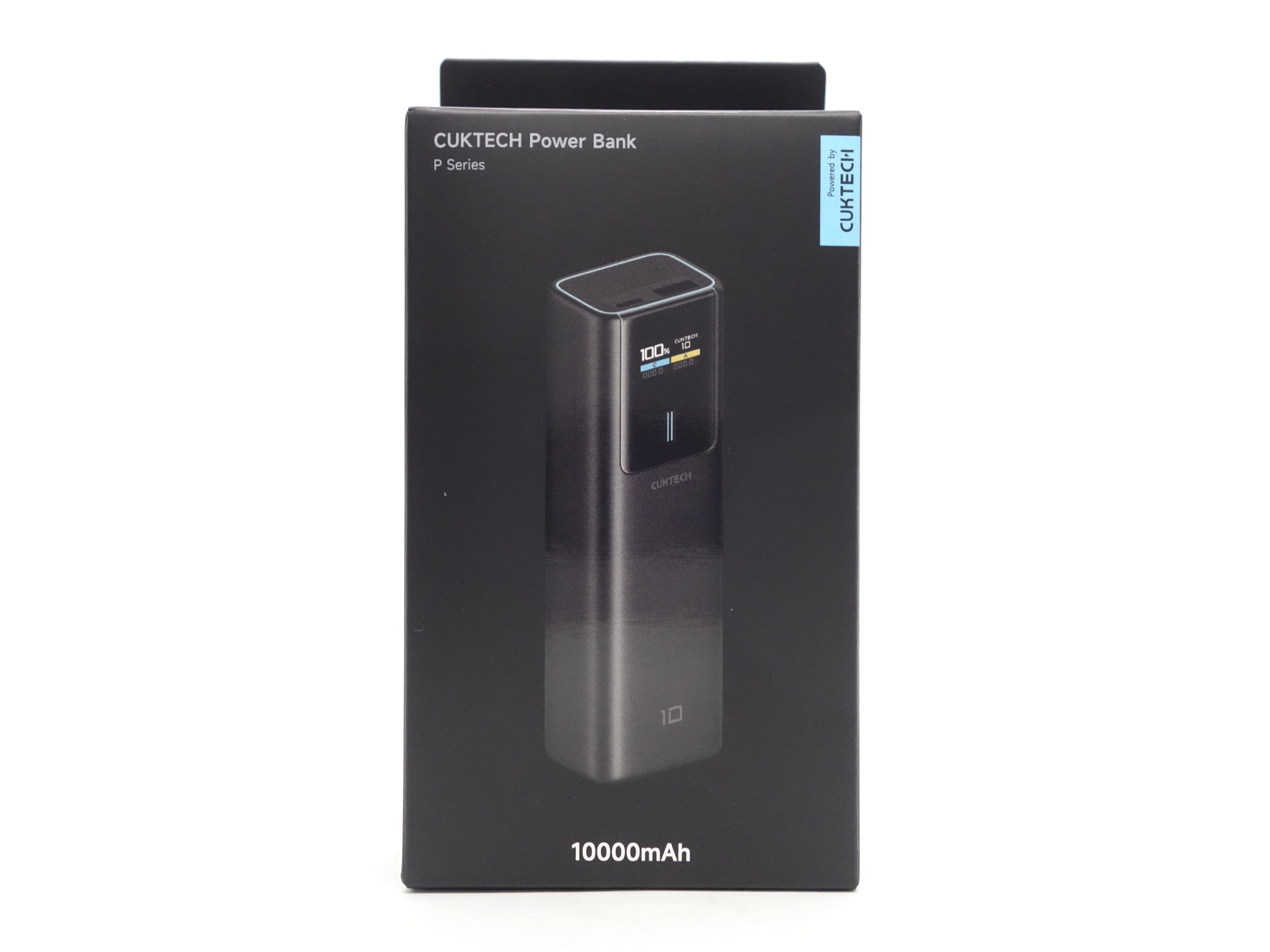
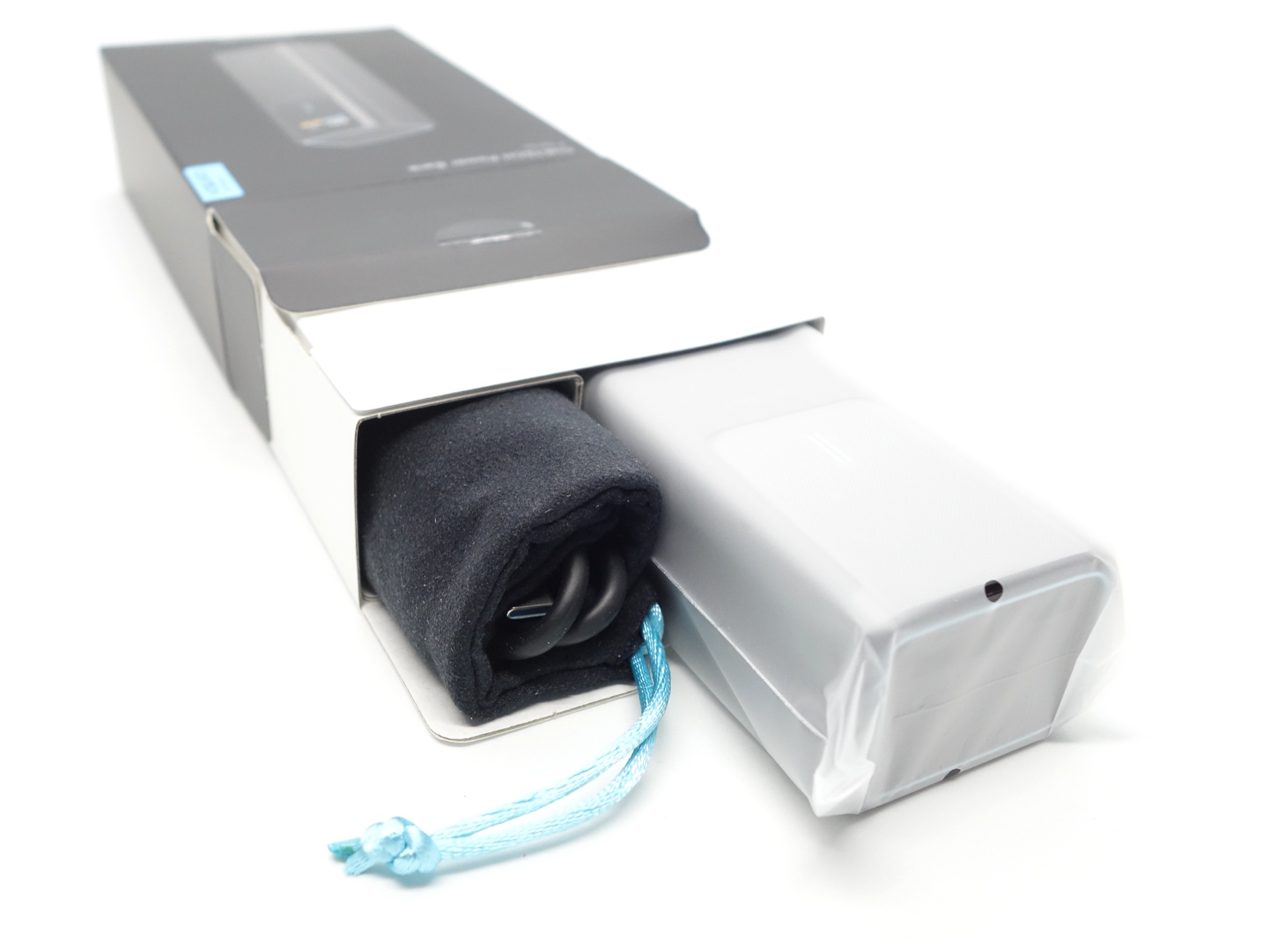
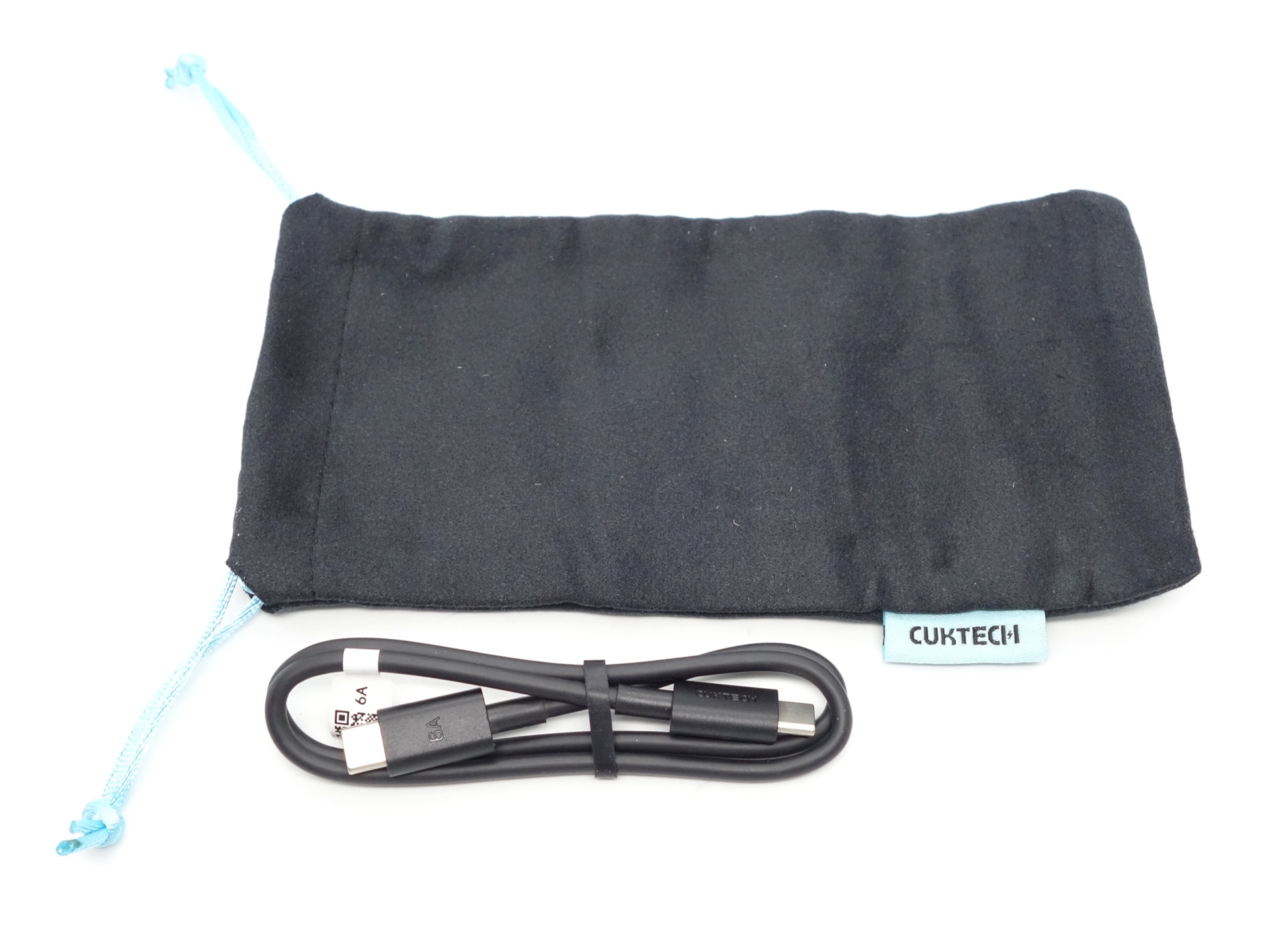
The following is included in the box:
- CUKTECH PB100P.
- USB-C to USB-C 6A cable.
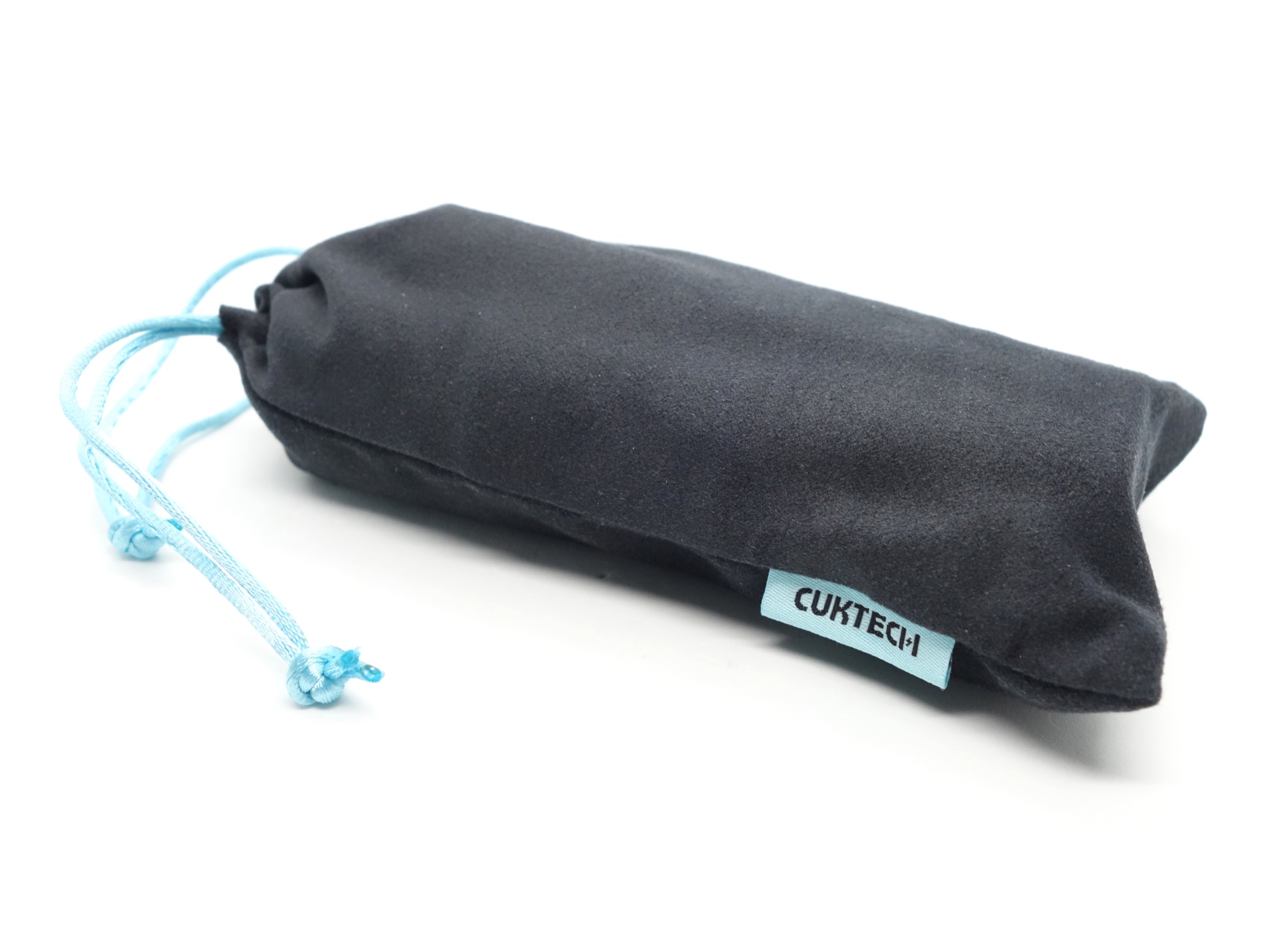
- Carry bag.
- User manual.
User Manual#
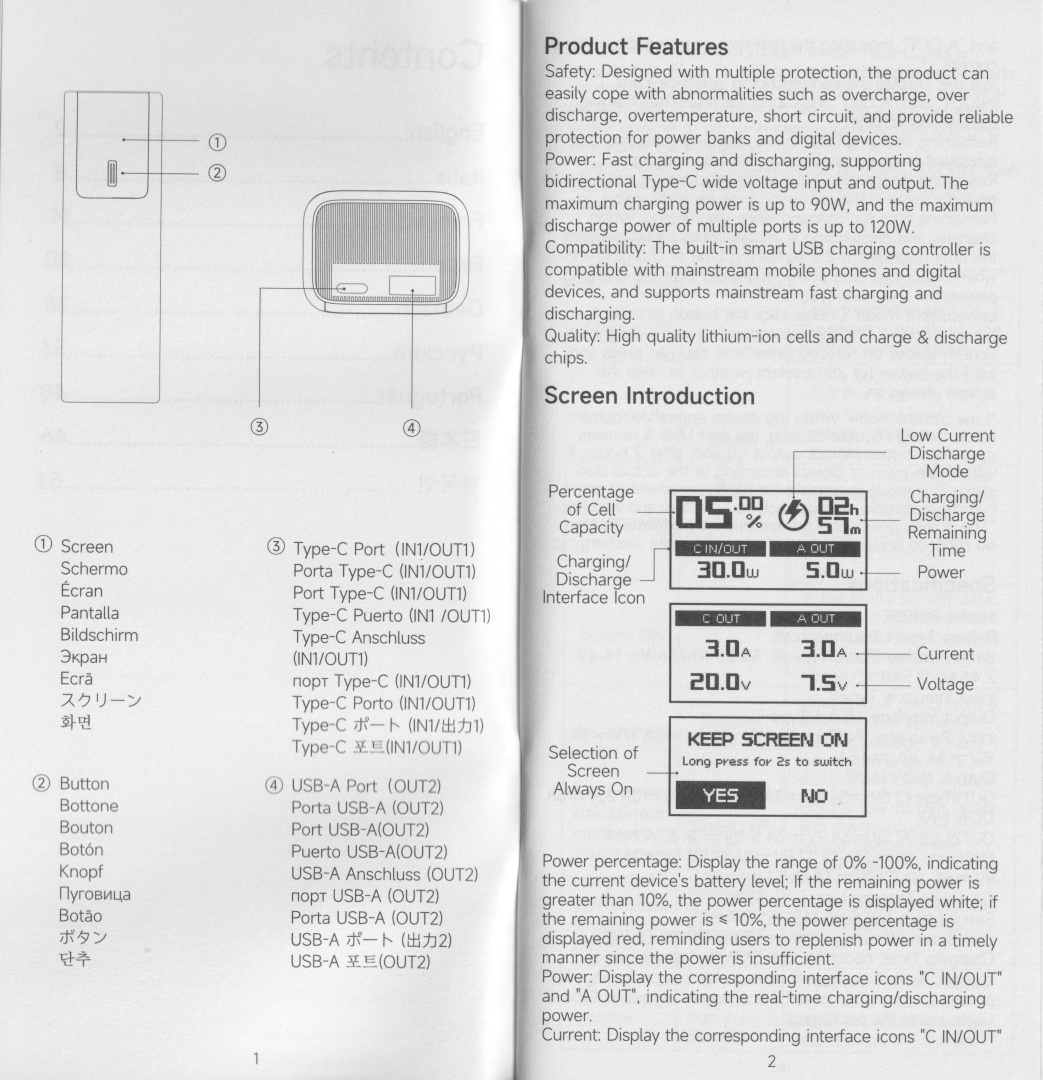
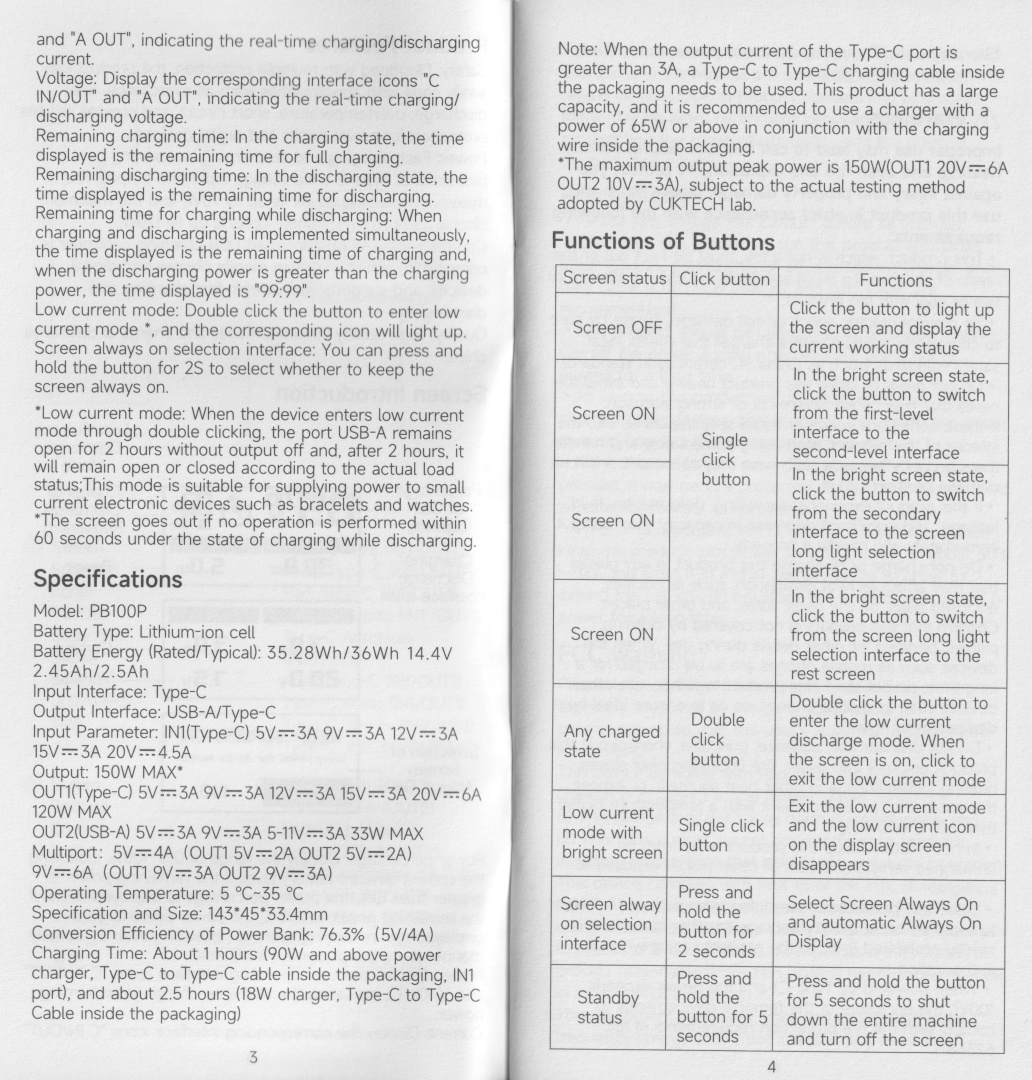
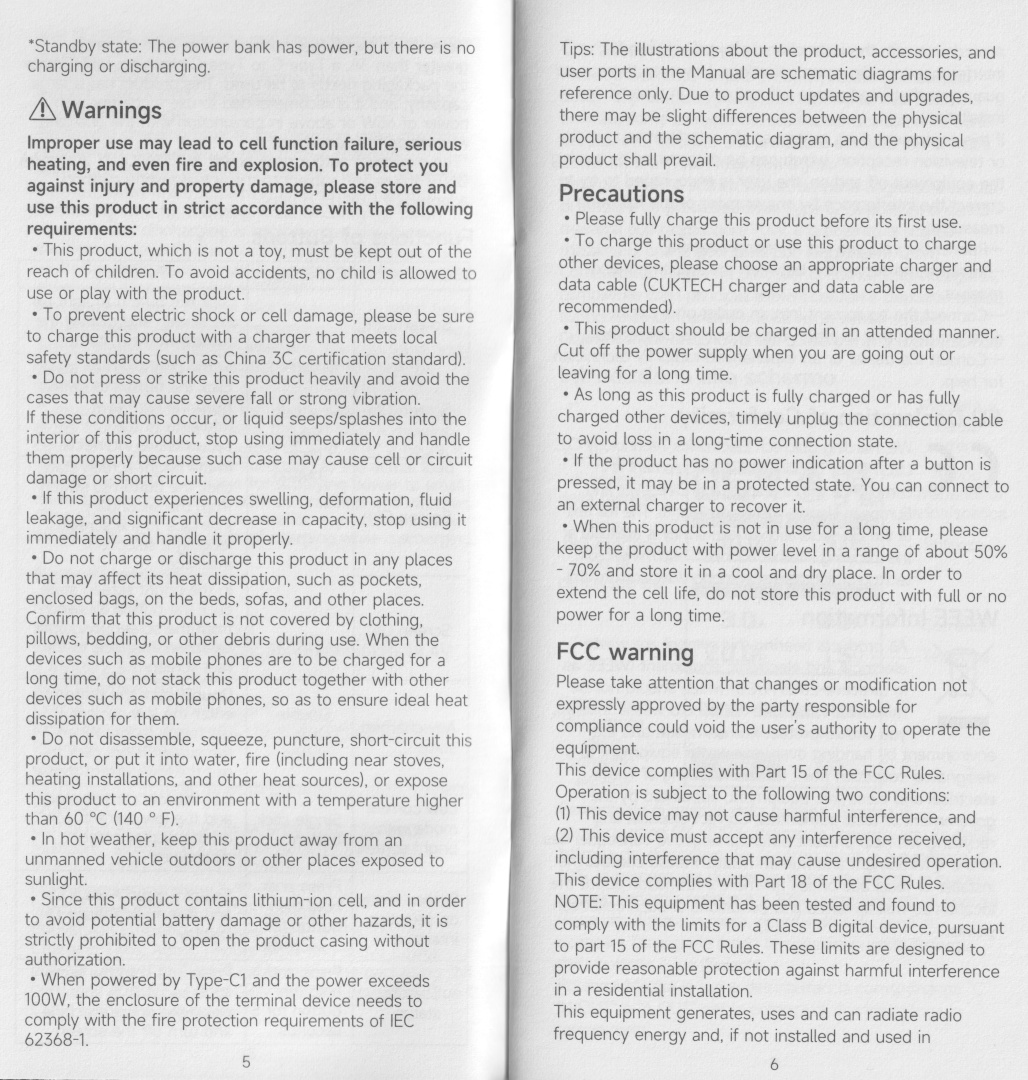
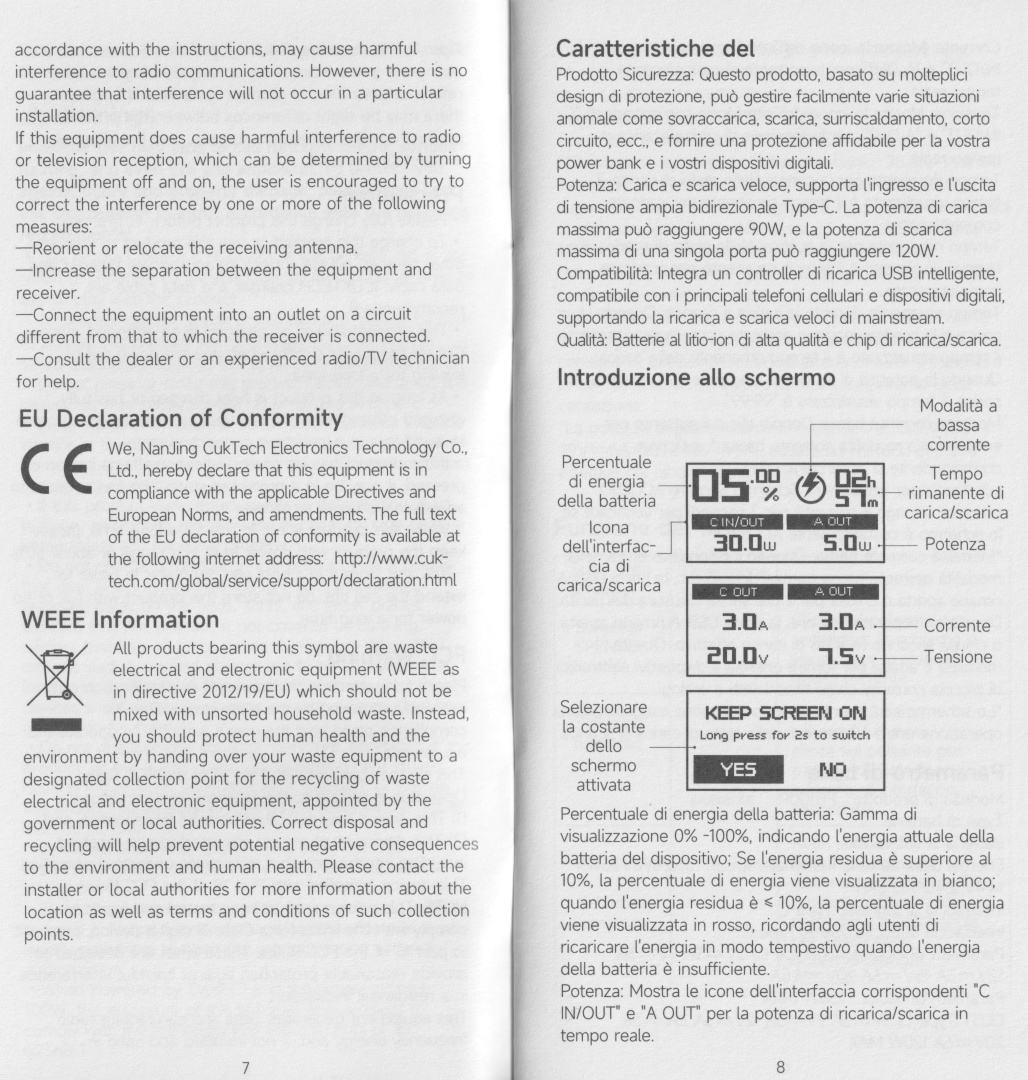
Powerbank in use#
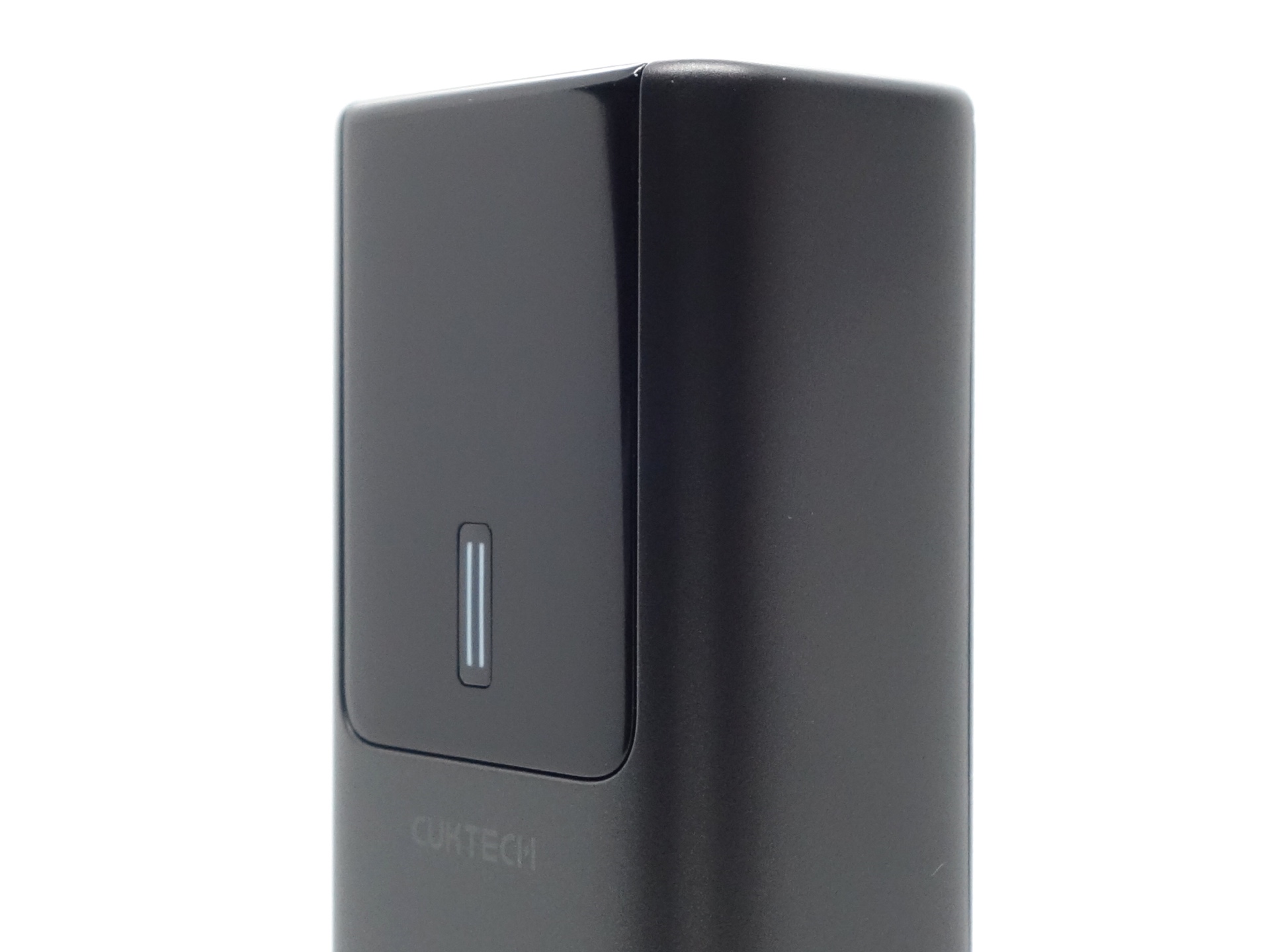
The colour display has protective film to remove.
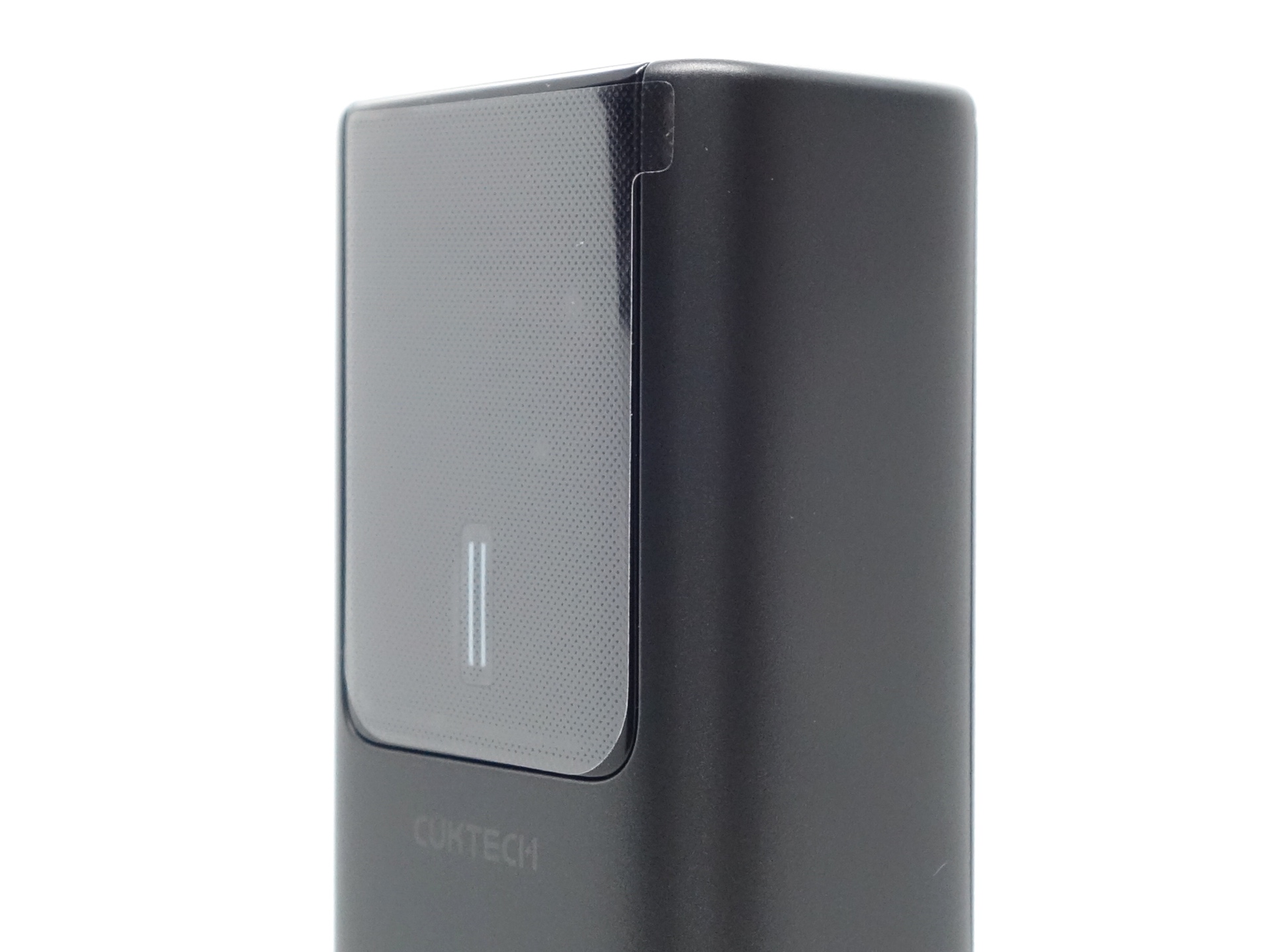
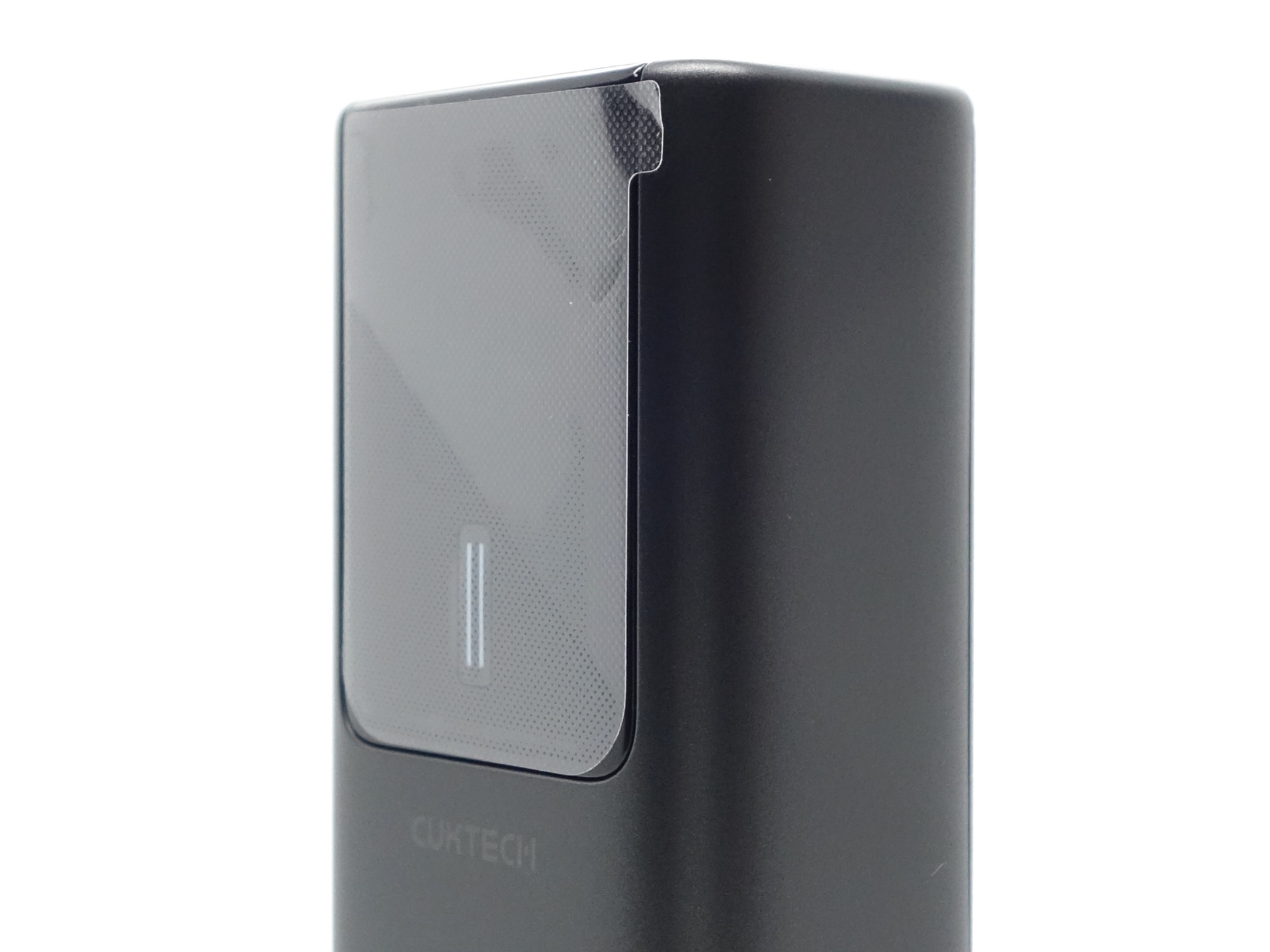
The protective film must be removed!
The USB-C port is for input and output while the USB-A port is for output only.
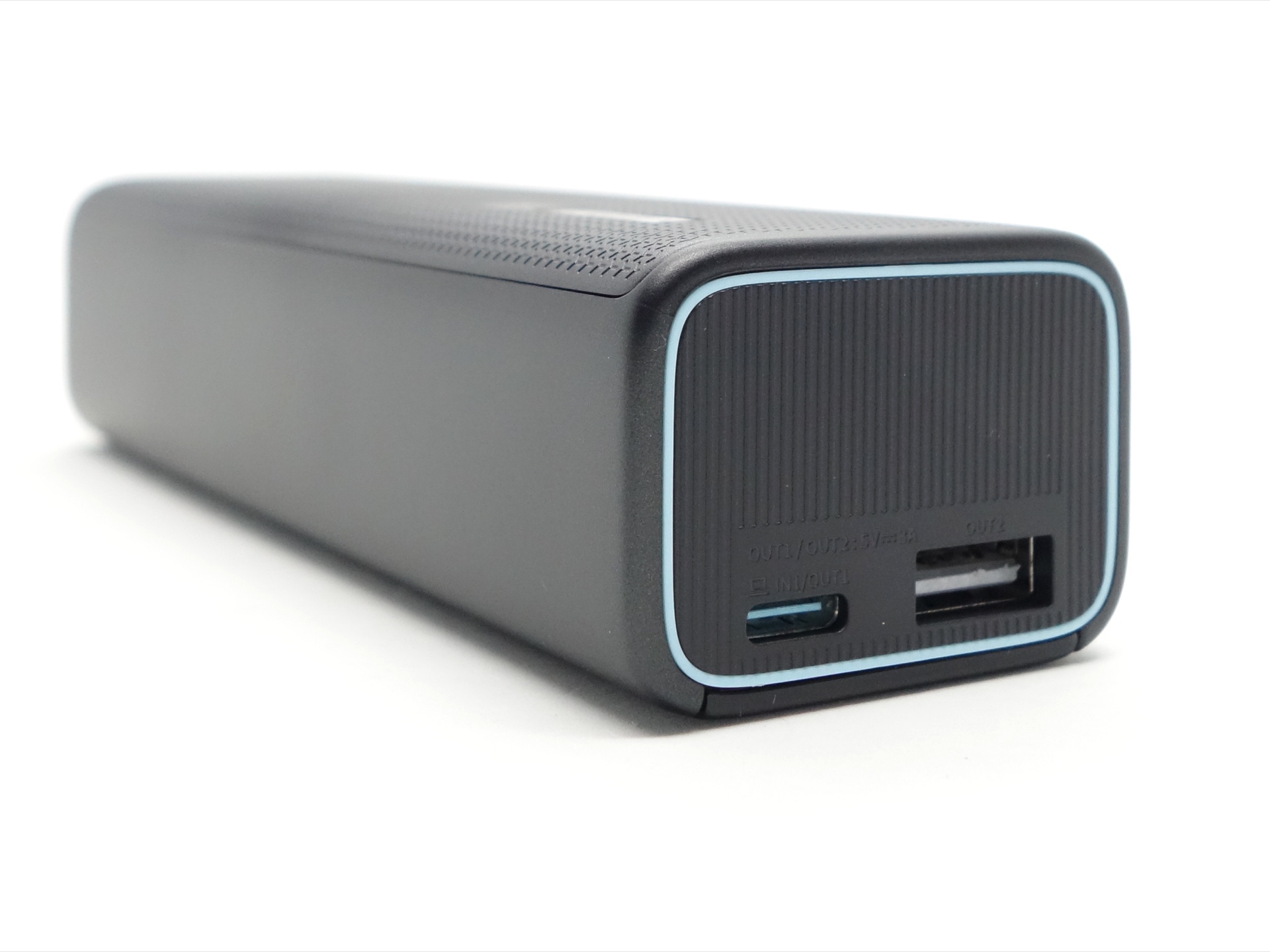
The power bank can tailstand.
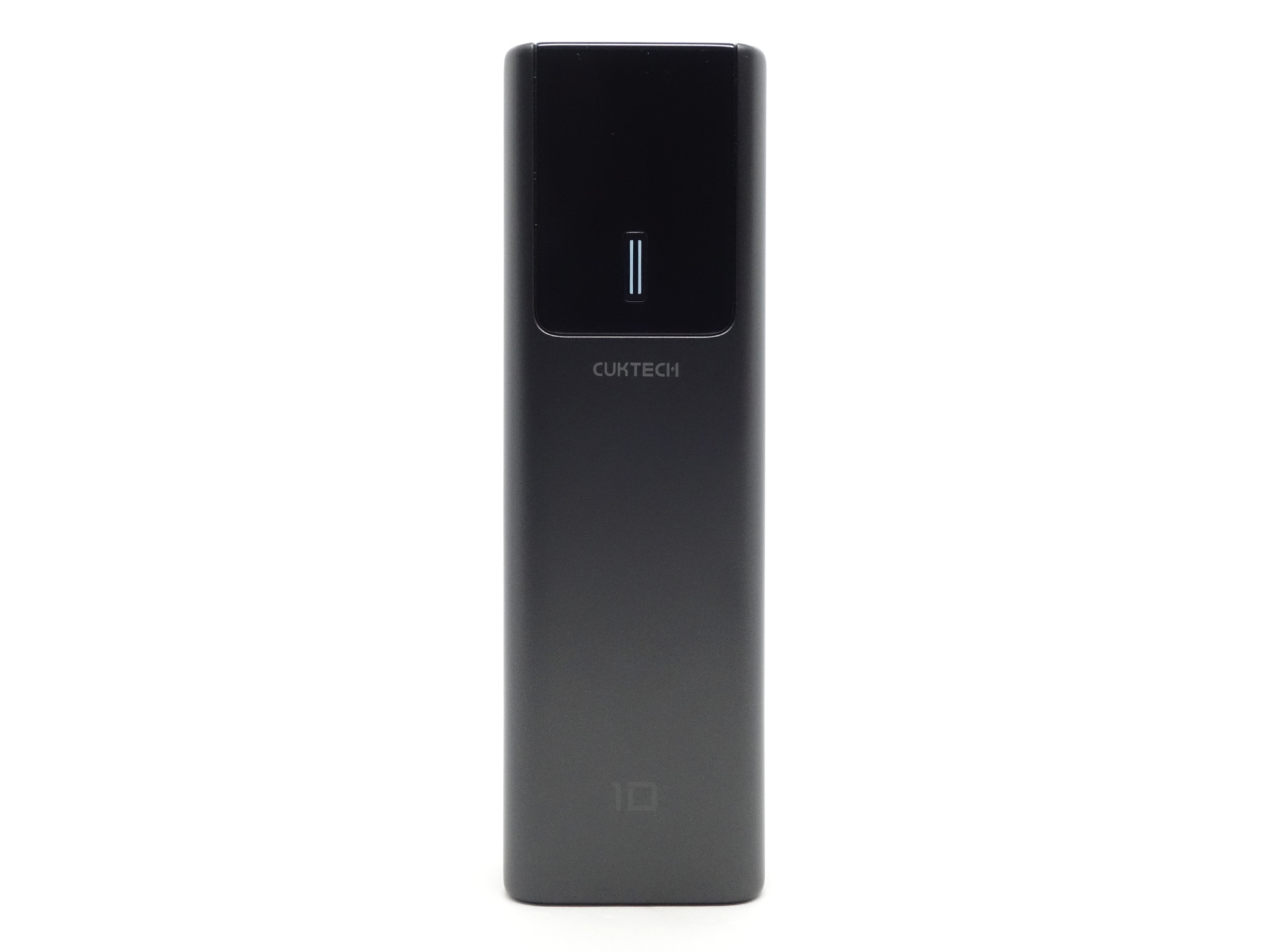
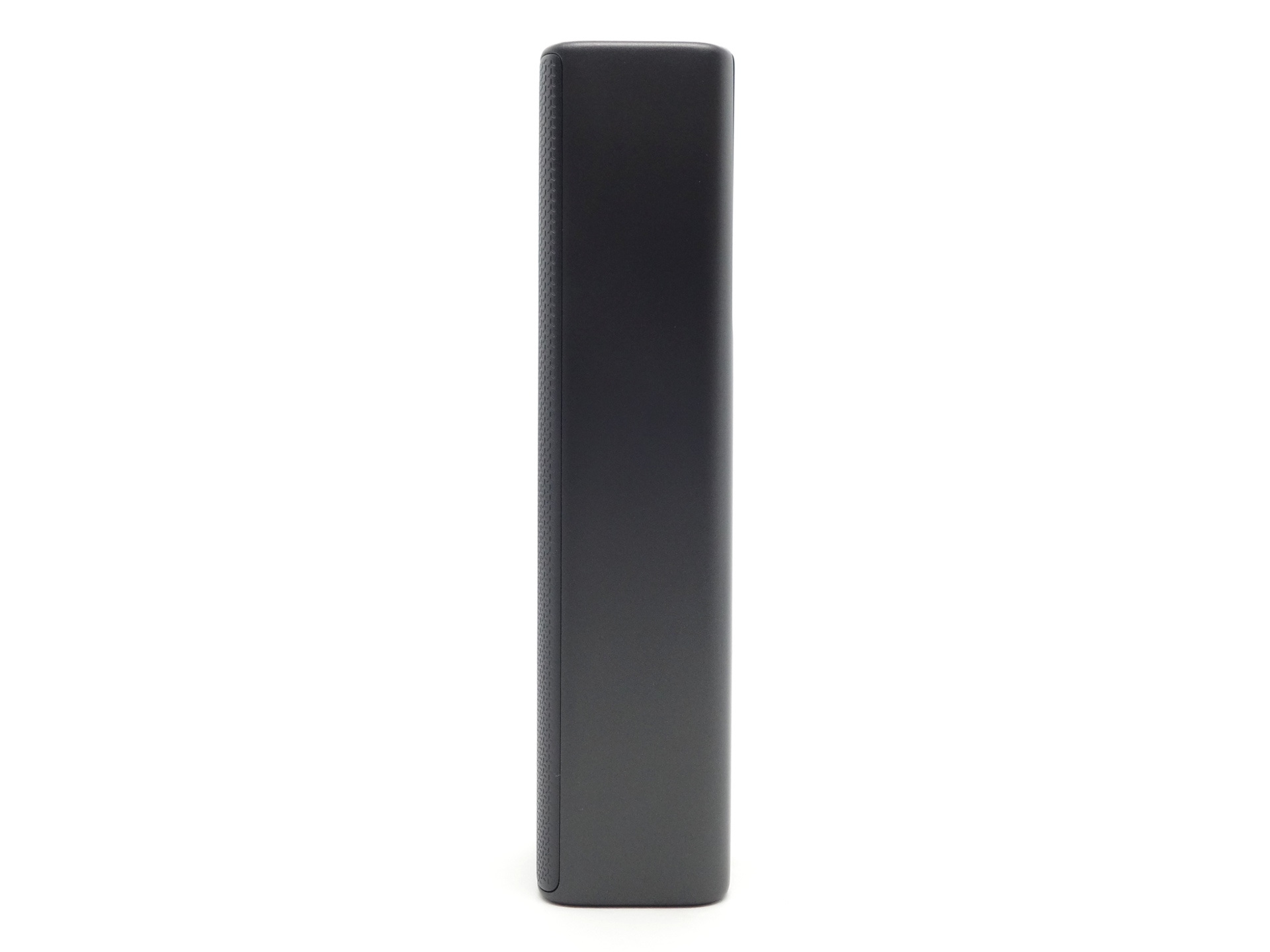
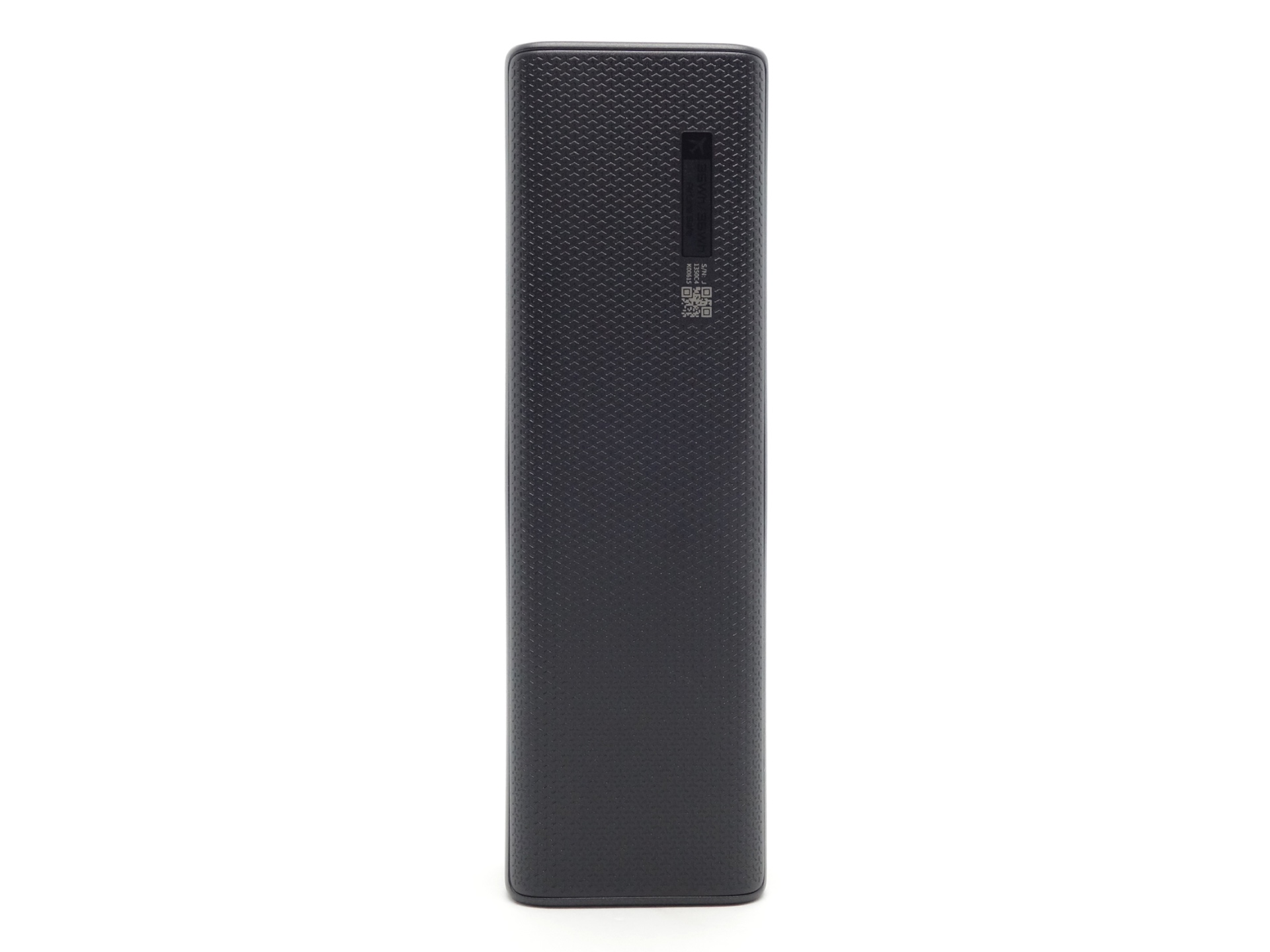
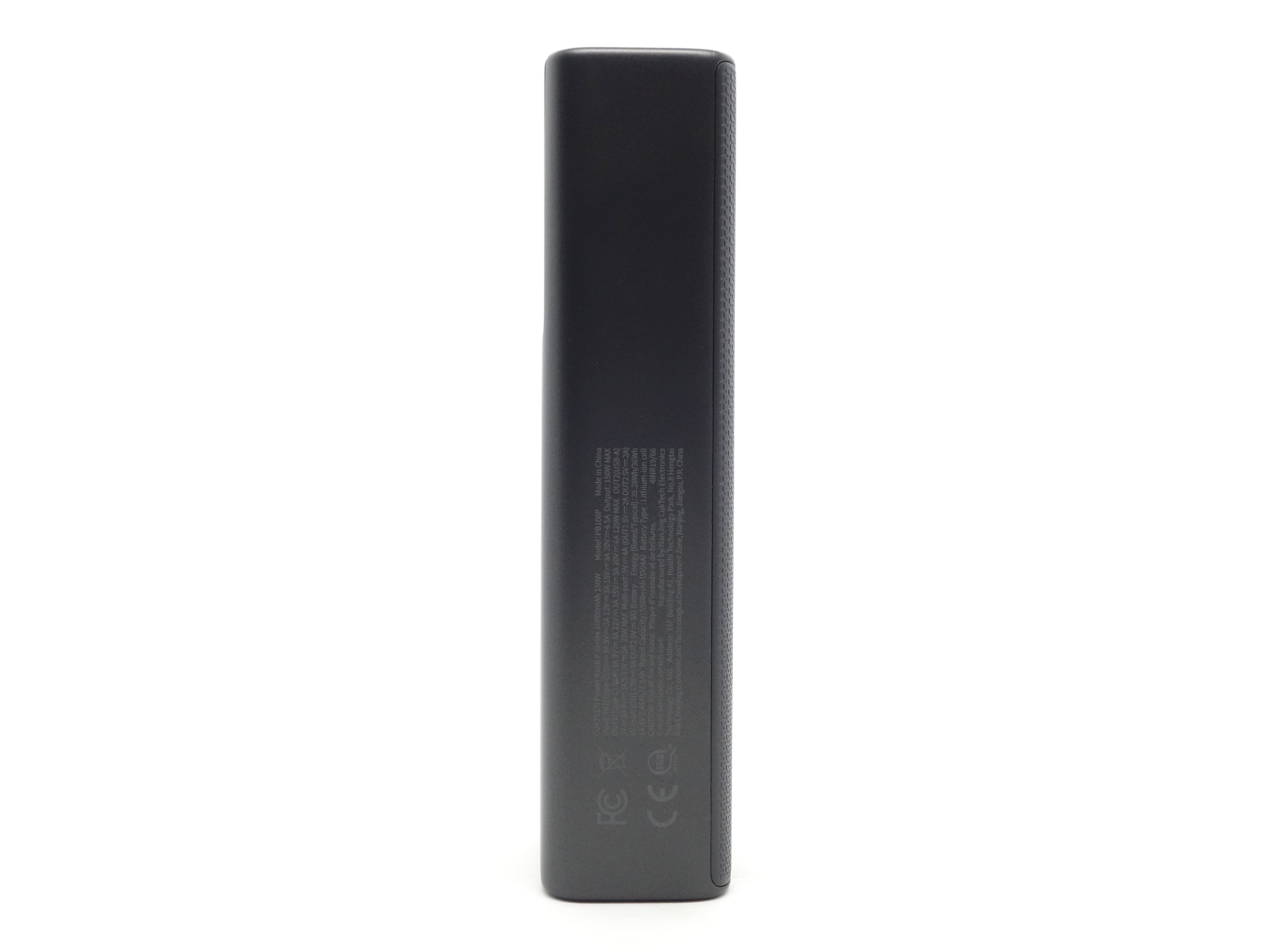
I recommend laying the power bank on its side so that it does not topple over.
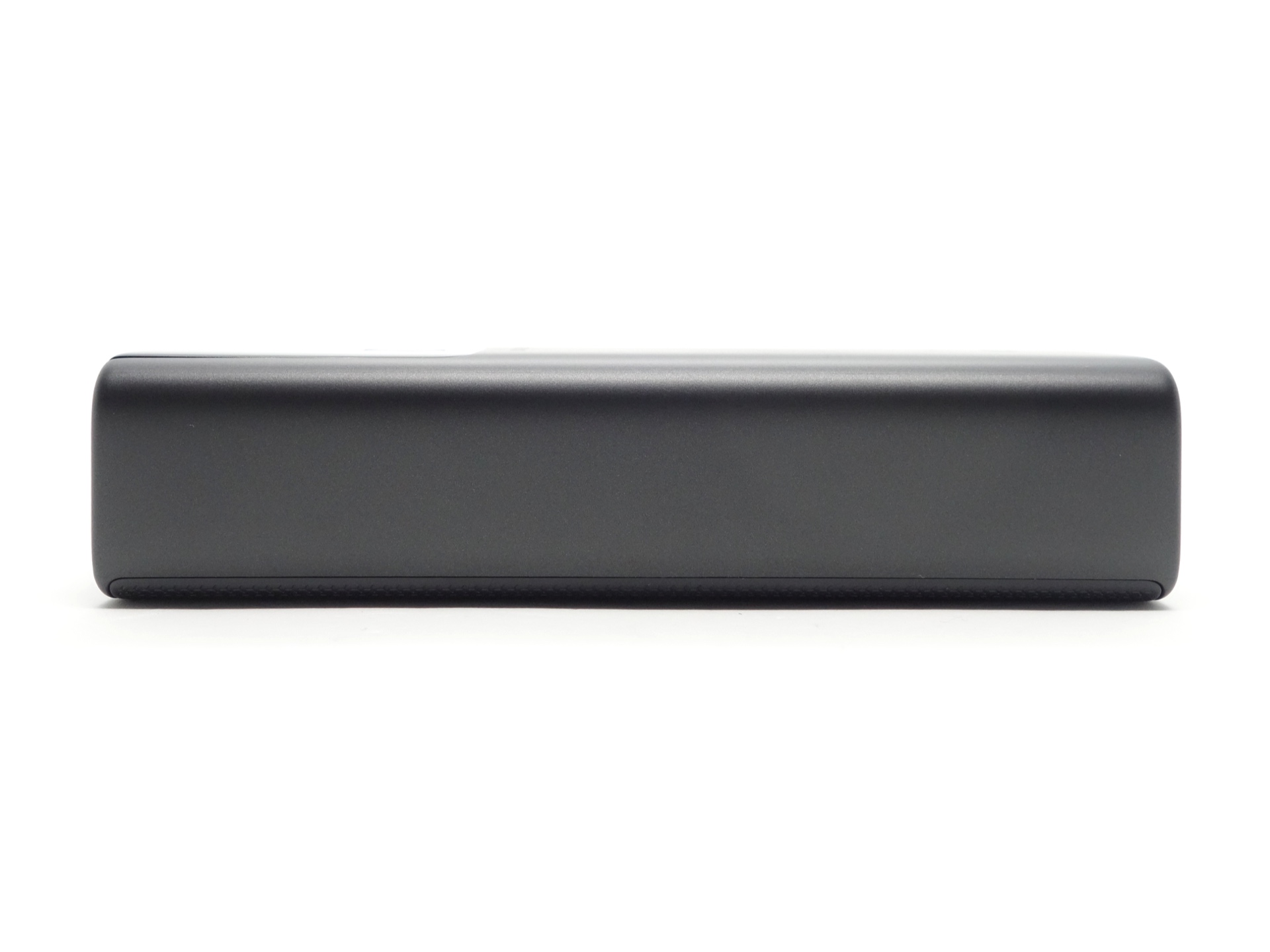
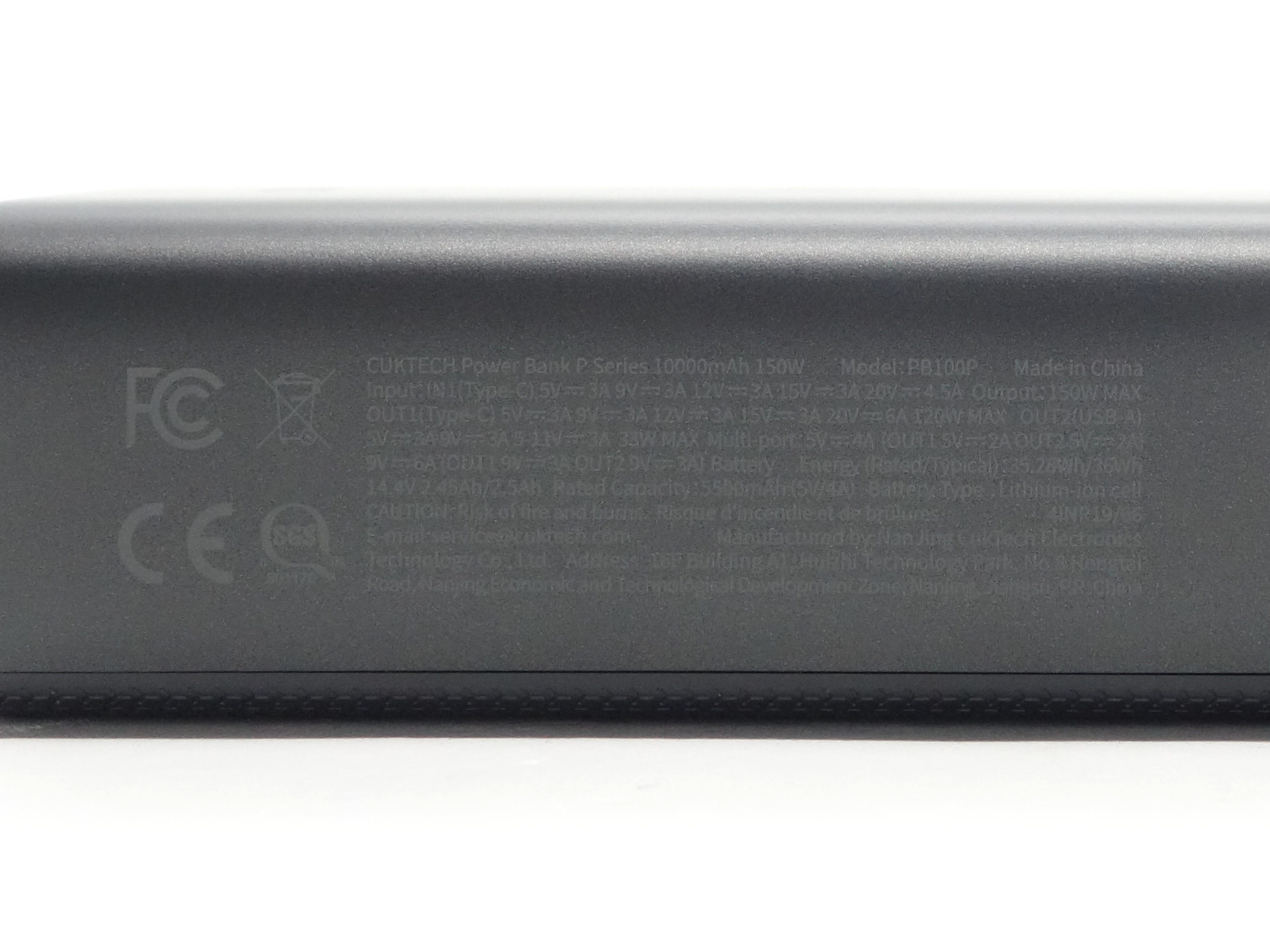
There are lot of details in small writing on the side of the power bank.
Thankfully, there is a large “36Wh” on the back of the power bank with “AirLine Safe”. This is much easier to see. But given that there is no 3C mark, it may not be permitted on flights within China.
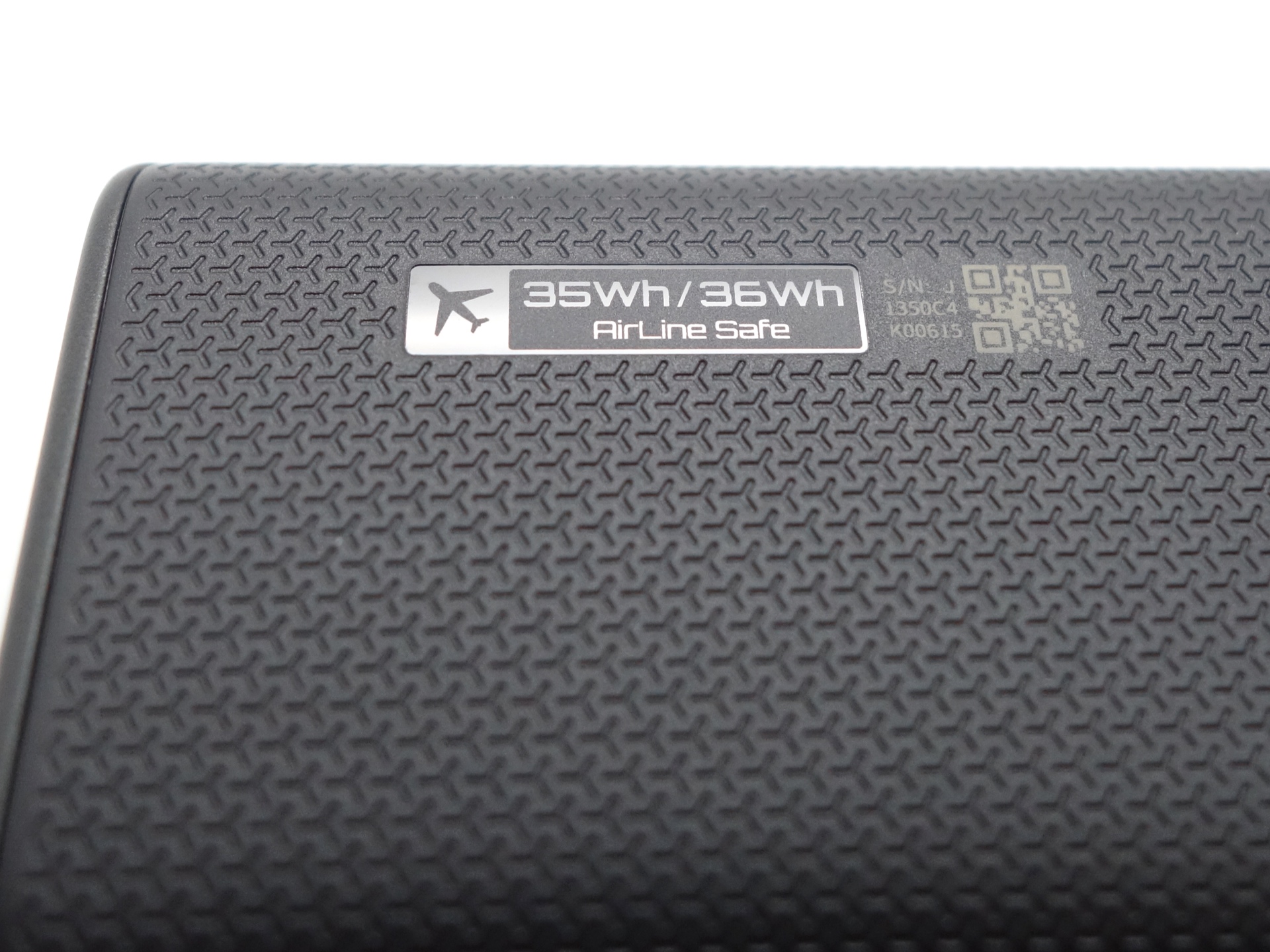
The textured finish feels nice to hold. It provides a little bit of grip but it does not feel rubbery. A phone may easily slide off if you tried to balance a phone on the textured side.
Cable#
A CUKTECH branded 0.5m USB-C to USB-C 6A cable with an e-marker chip is included.
My ChargerLAB Power-Z KM003C Amazon Australia USB Meter detected the following:
| Feature | Details |
|---|---|
| Vendor | Zimi (0x2b01) |
| Type | Passive |
| Speed | USB 2.0 only |
| Supply | 50V 5A (240W EPR) |
| Latency | ~2m, 10ns to 20ns |
The USB-C plug has 12 pins populated instead of 24.
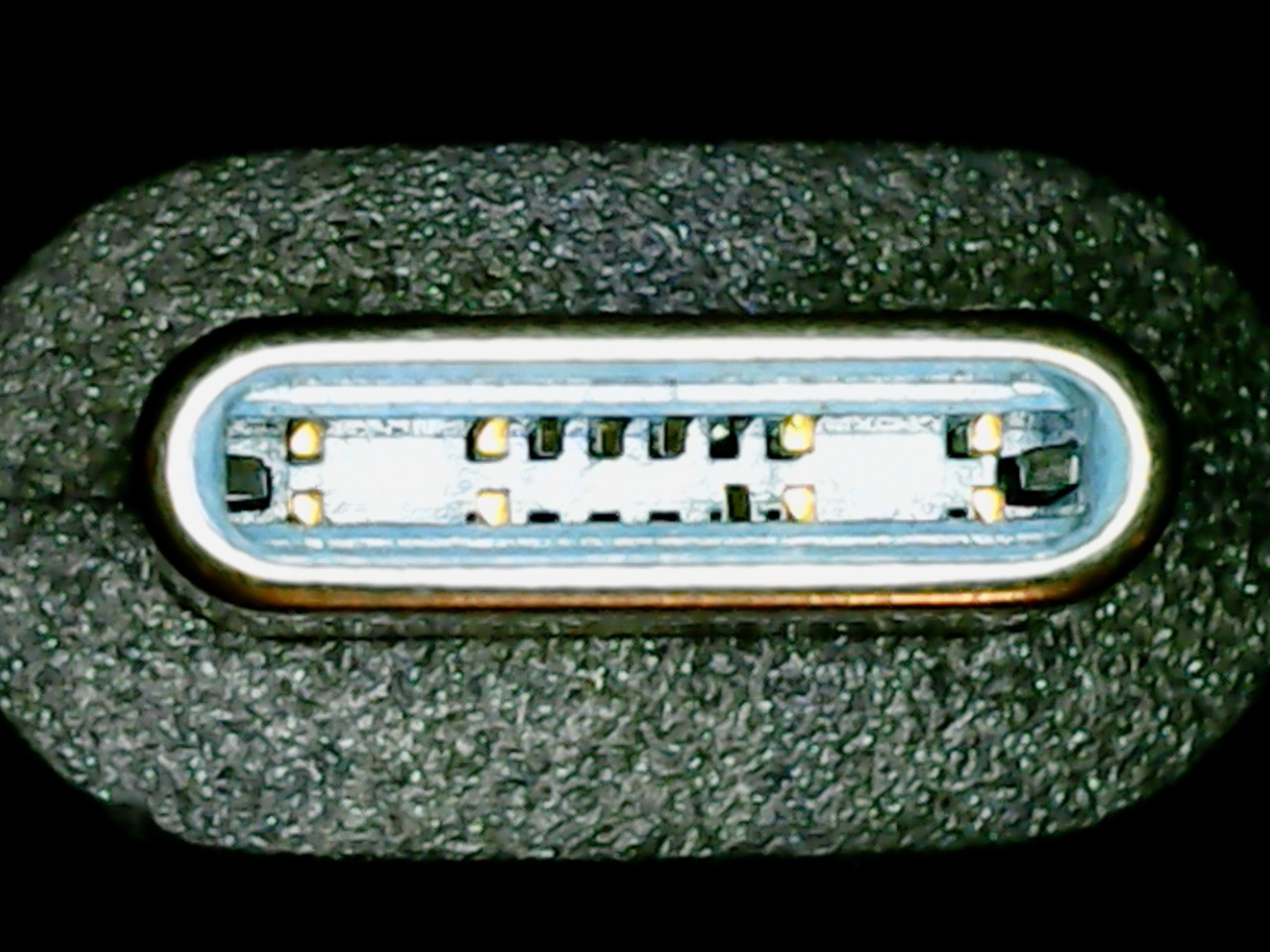
The cable feels a bit rigid.
Dimensions and size comparison#
Dimensions#
I took the following measurements using a digital caliper.
| Measurement | Unit (mm) |
|---|---|
| Length | 143.1 |
| Width | 44.97 |
| Depth | 33.56 |
Weight#
I took the following measurements using a digital scale.
| Weight | Unit (g) |
|---|---|
| CUKTECH PB100P | 282 |
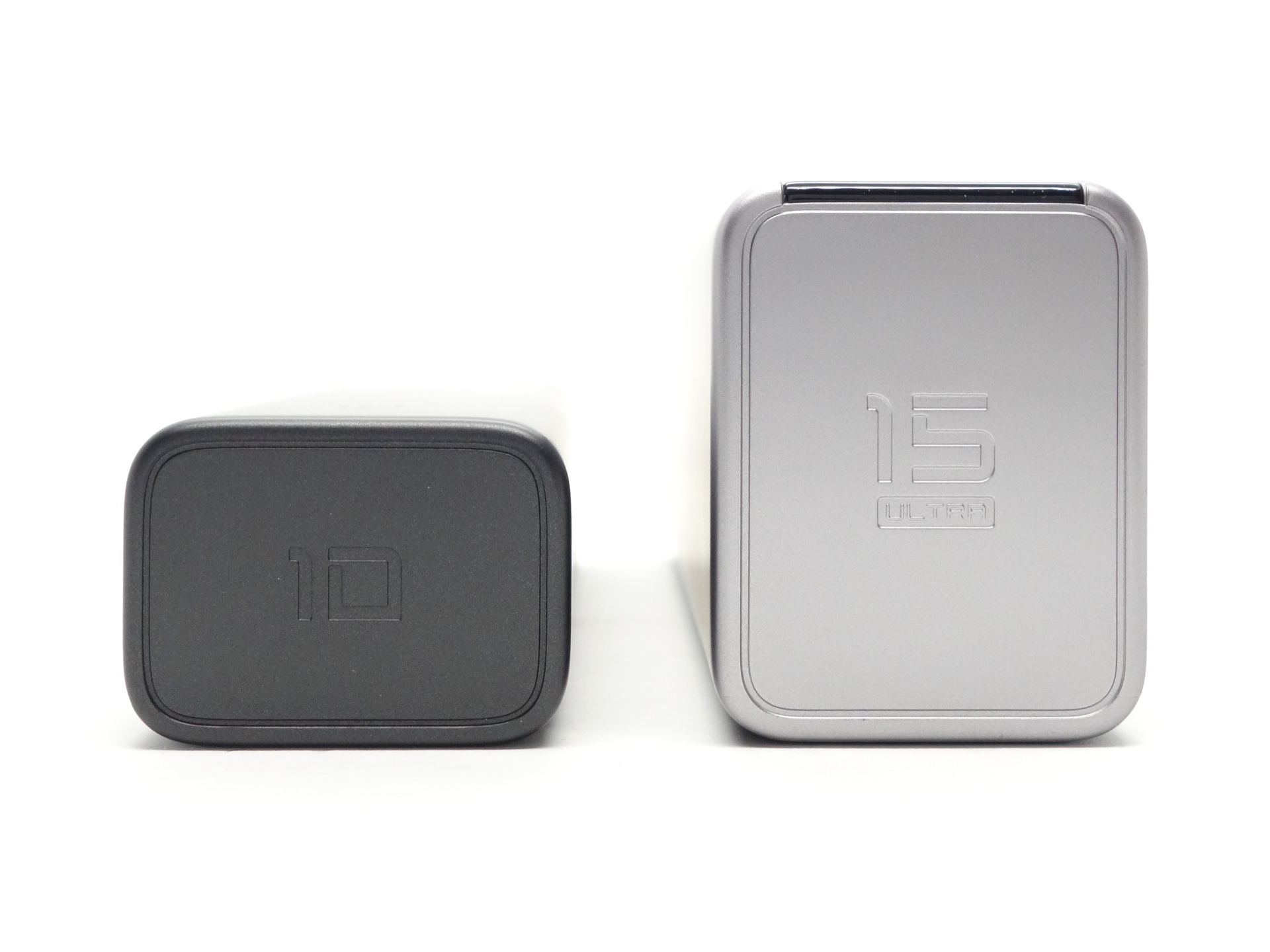
Size comparison with its competition#
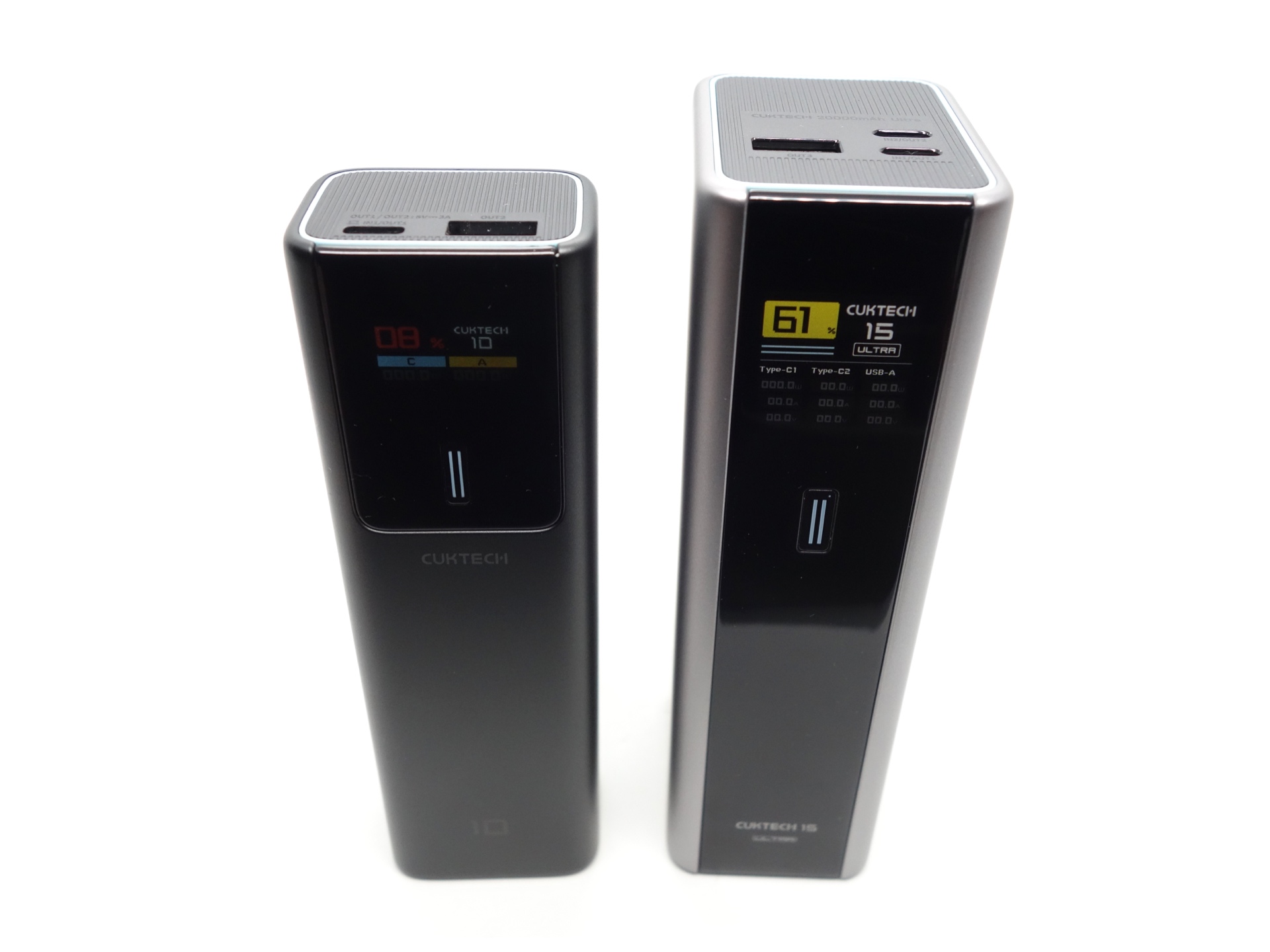
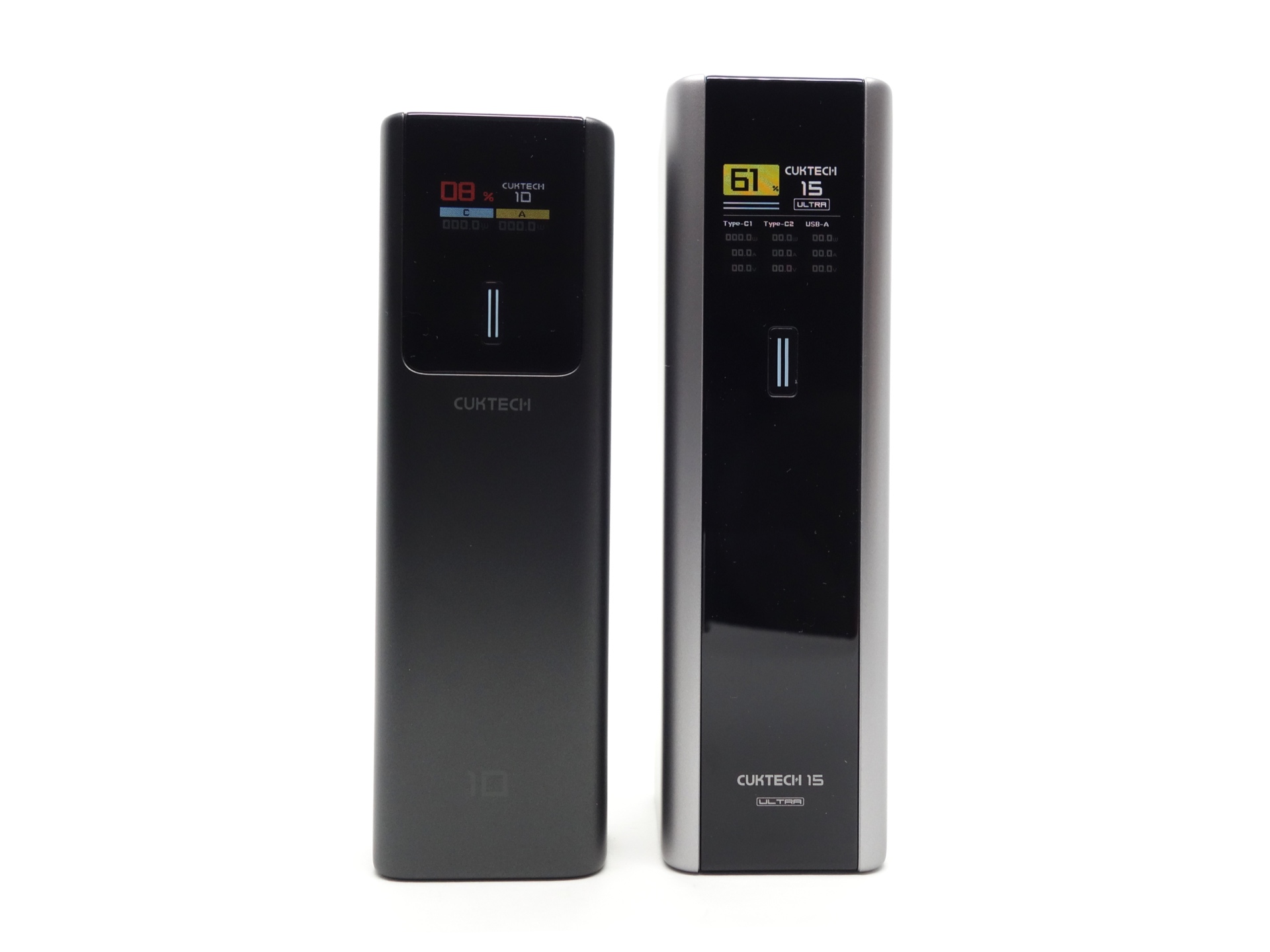
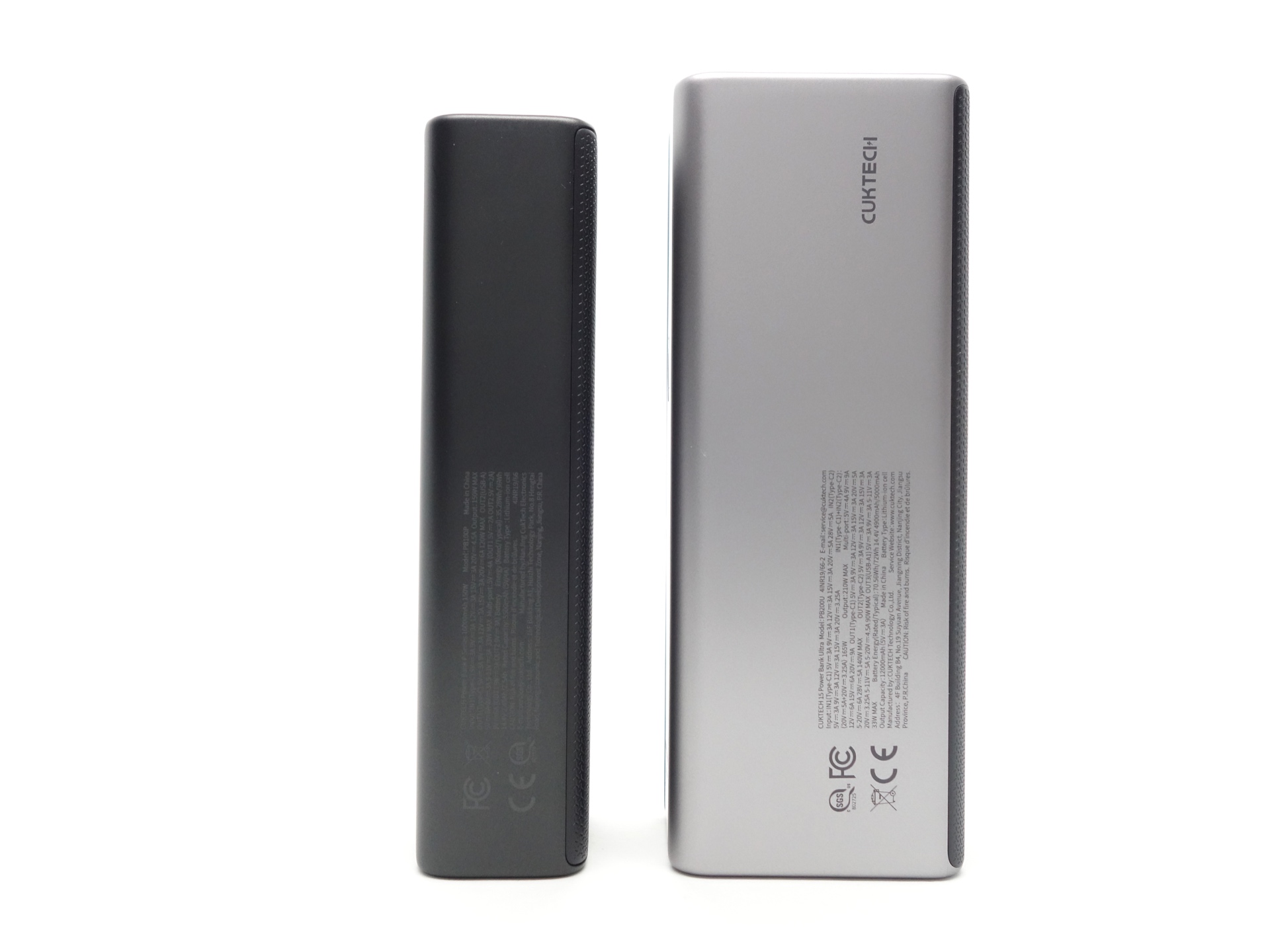
From left to right: CUKTECH 10 PB100P, CUKTECH 15 Ultra PB200U
Compatibility#
The CUKTECH PB100P can be fast charged at 90W (20V/4.5A).
It supports a lot of USB-C PD and QC protocols.
Protocol Detection#
I used a few USB Meters and the included cable to detect which protocols are supported by the power bank.
USB-C output#
ChargerLAB Power-Z KM003C Amazon Australia
PD3.0 100W, XIAOMI 120W
Fixed: 5.00V 3.00A
Fixed: 9.00V 3.00A
Fixed: 12.00V 3.00A
Fixed: 15.00V 3.00A
Fixed: 20.00V 3.00A
PPS: 5.00-11.00V 6.00A
PPS: 5.00-20.00V 6.00A
DCP
Apple 2.4A
USB-A output#
APPLE-> 5V 2.4A
BC1.2-> DCP 5V 1.5A
SAMSUNG AFC-> 9V
HUAWEI FCP-> 5V 9V
QC2.0-> 5V 9V
QC3.0-> 11.11V Max
User interface#
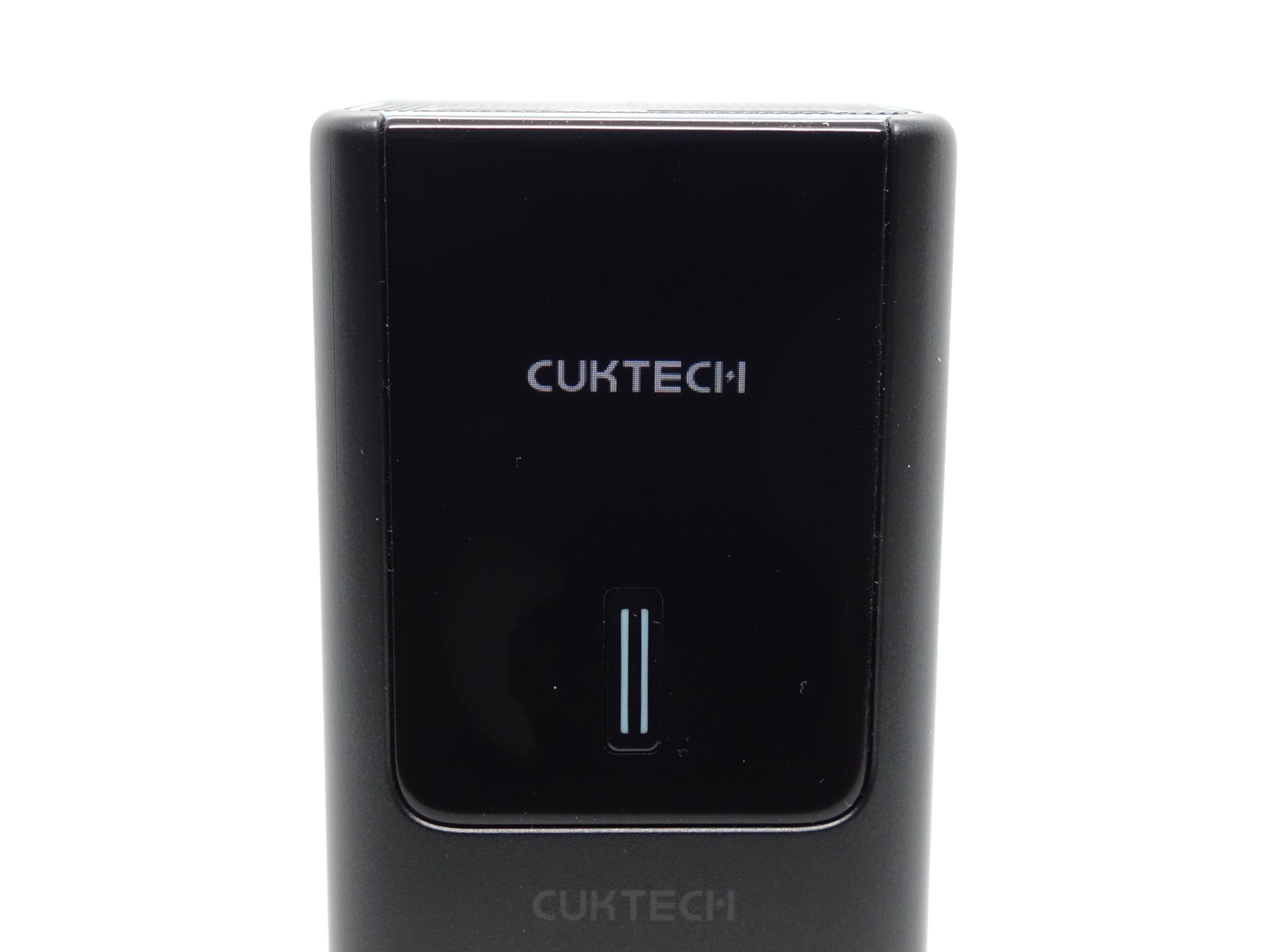
The power bank has a single button below the colour display with two thin light-blue lines.
A CUKTECH logo slowly appears when you press the button.
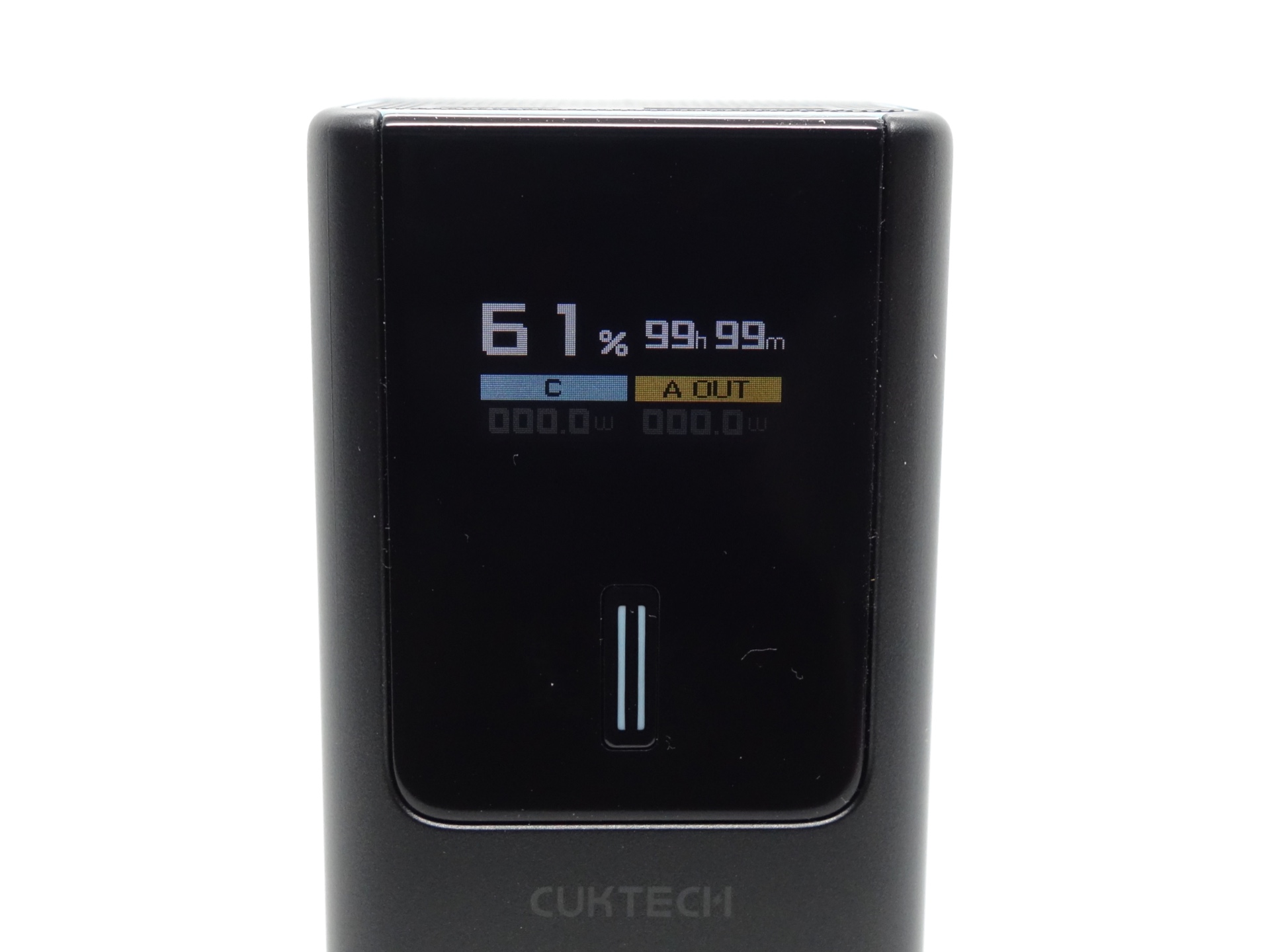
The display shows:
- Percentage of cell capacity
- Low Current Discharge Mode (lightning bolt symbol)
- Charge/Discharge Status (C IN, C OUT, A OUT)
- Charge/Discharge Time Remaining
- Power (W)
- Current (A)
- Voltage (V)
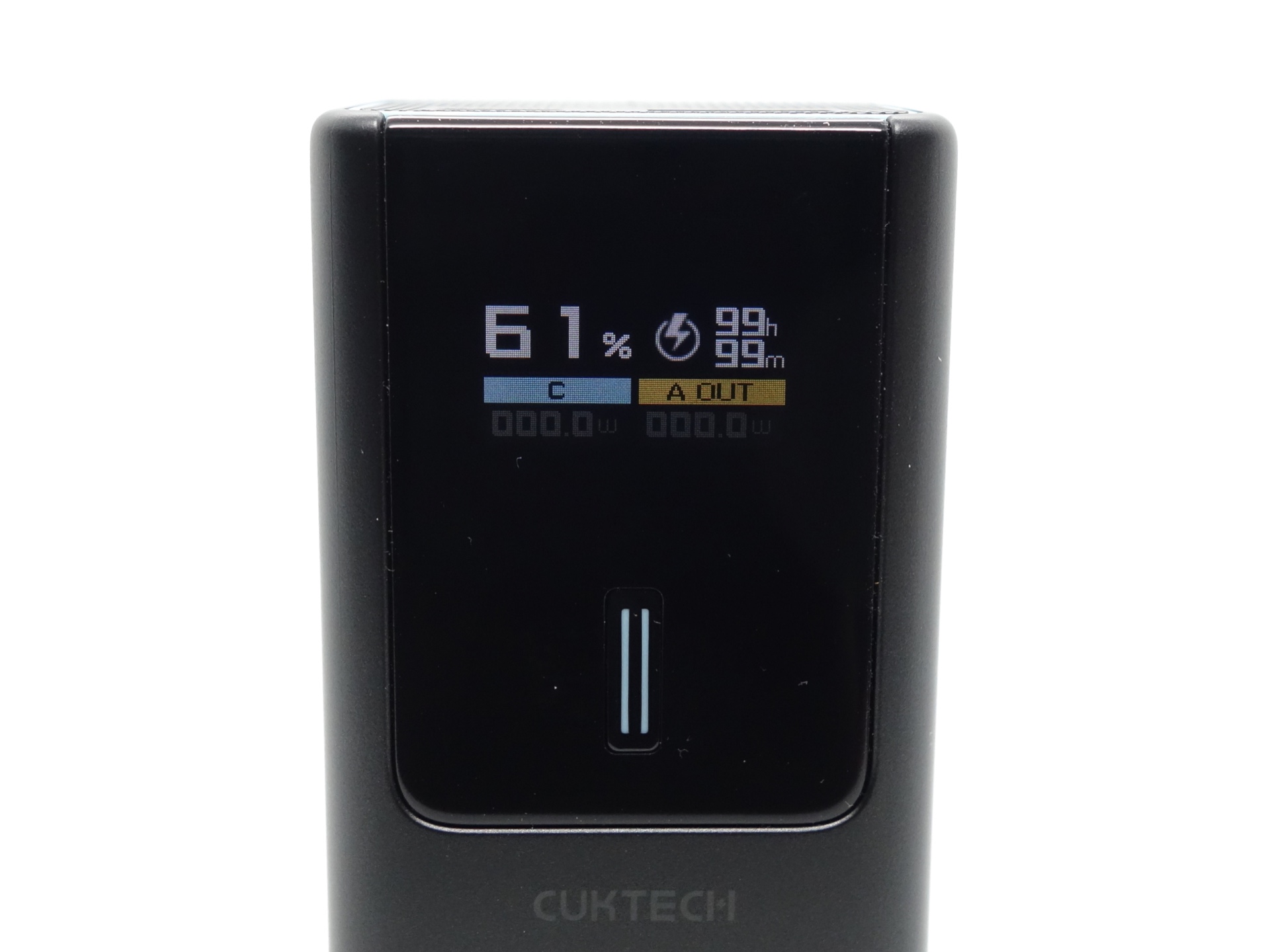
Low Current Discharge Mode can be toggled on and off by double pressing the button. This will take you back to the main screen.
The lightning bolt symbol indicates that Low Current Discharge Mode is on.
Pressing the button again from the main screen will take you to the second screen where the voltage and current are displayed.
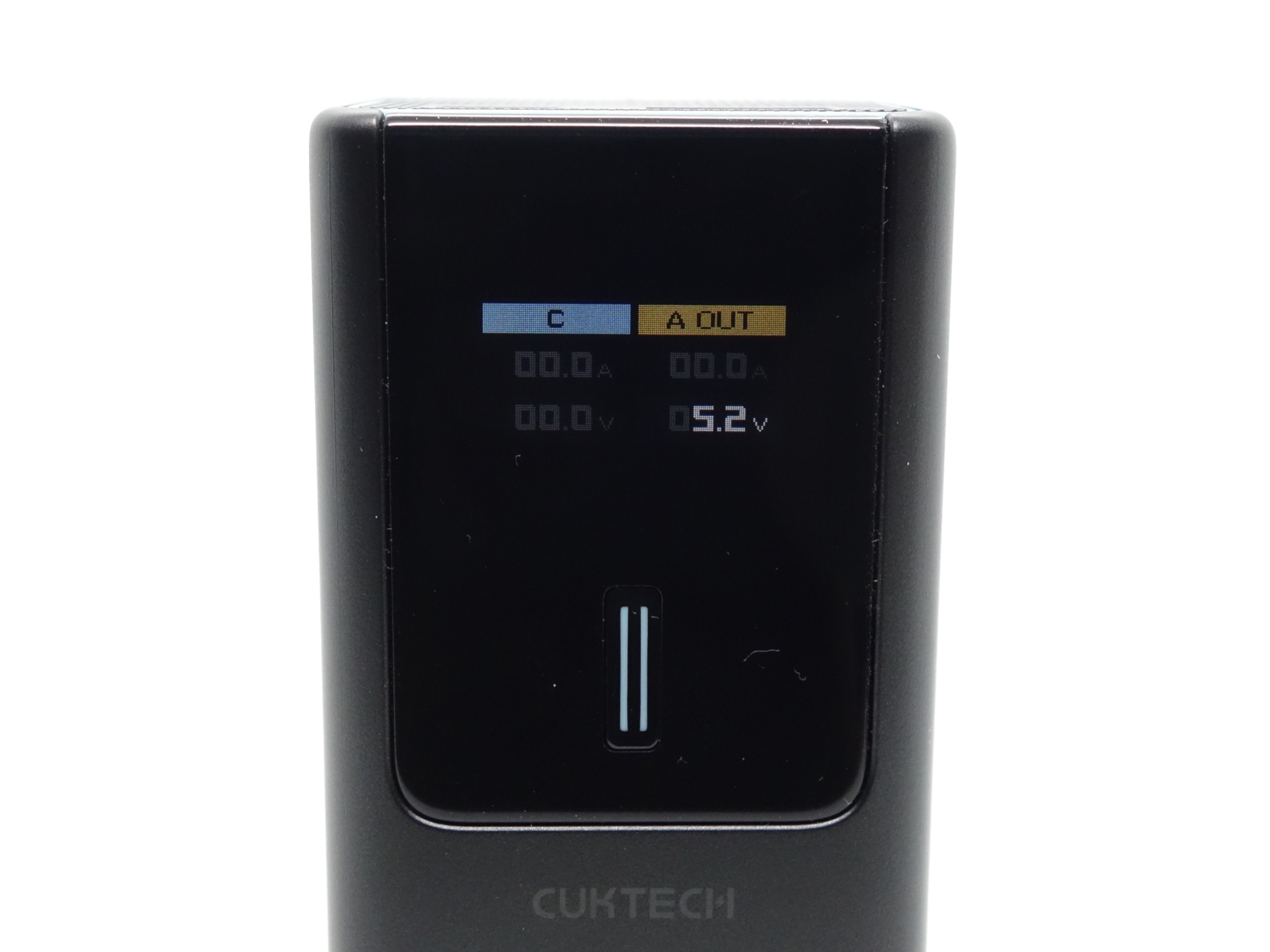
Pressing the button a third time will take you to the third screen where you are presented with the option to keep the screen on.
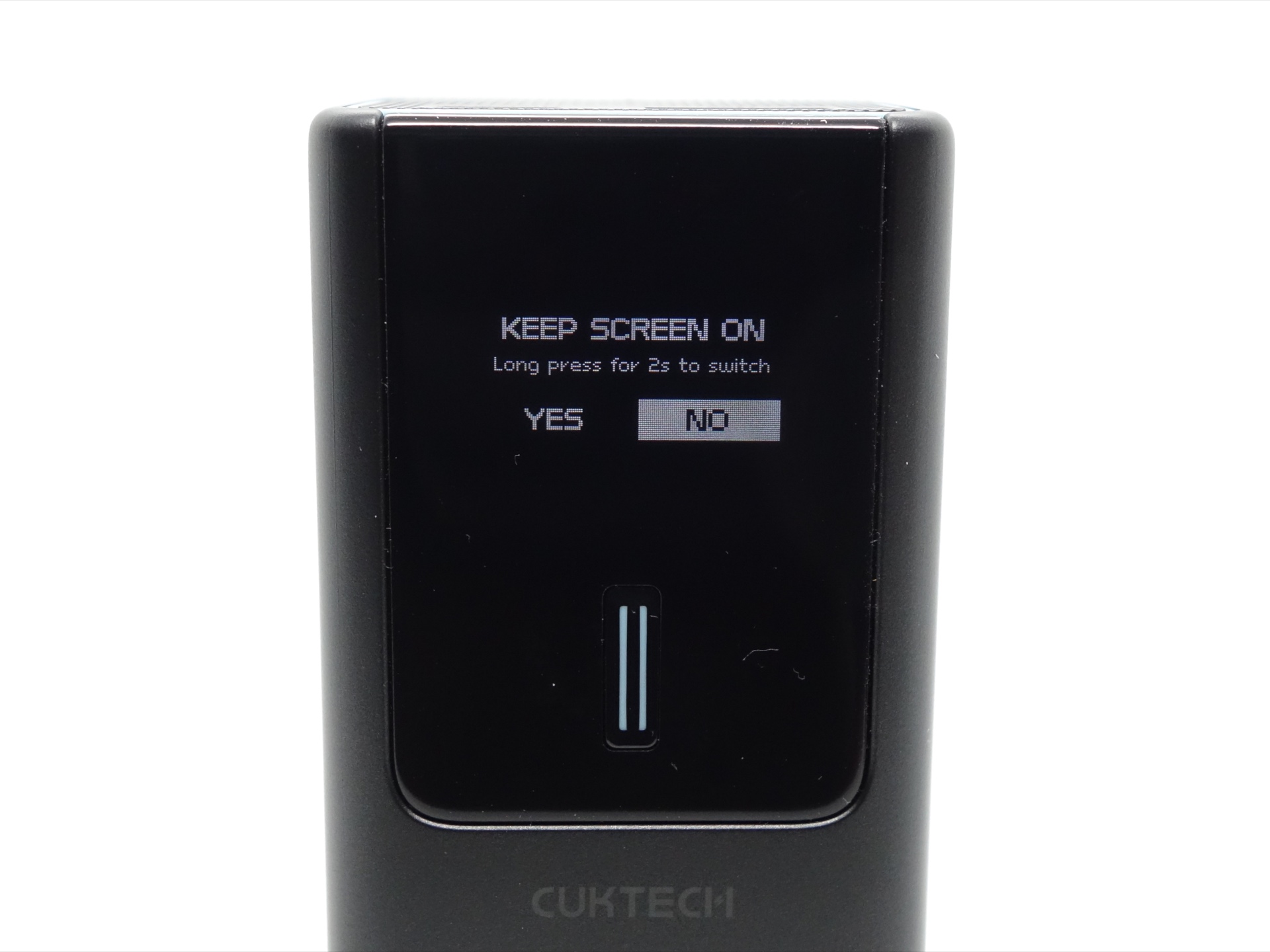
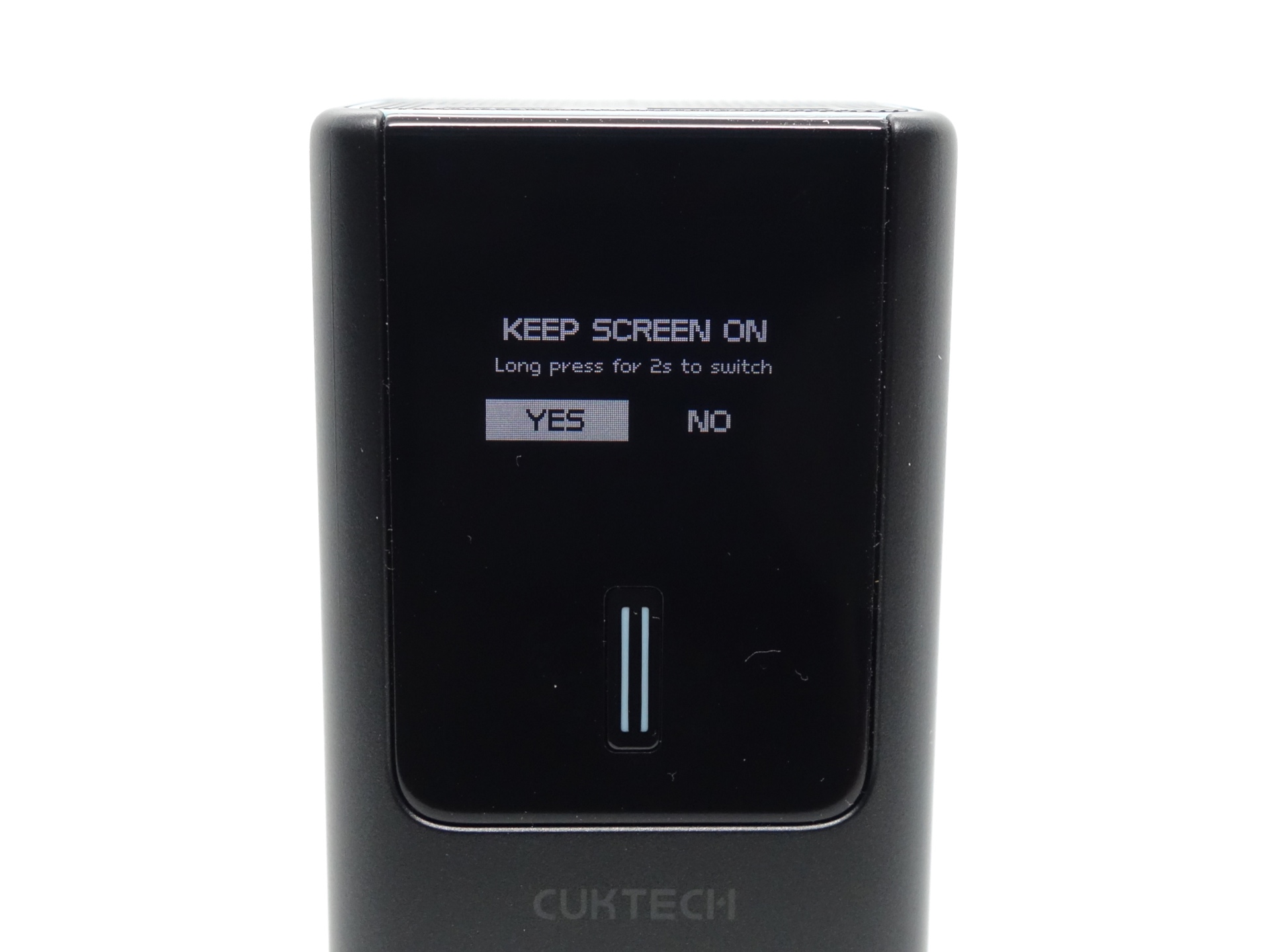
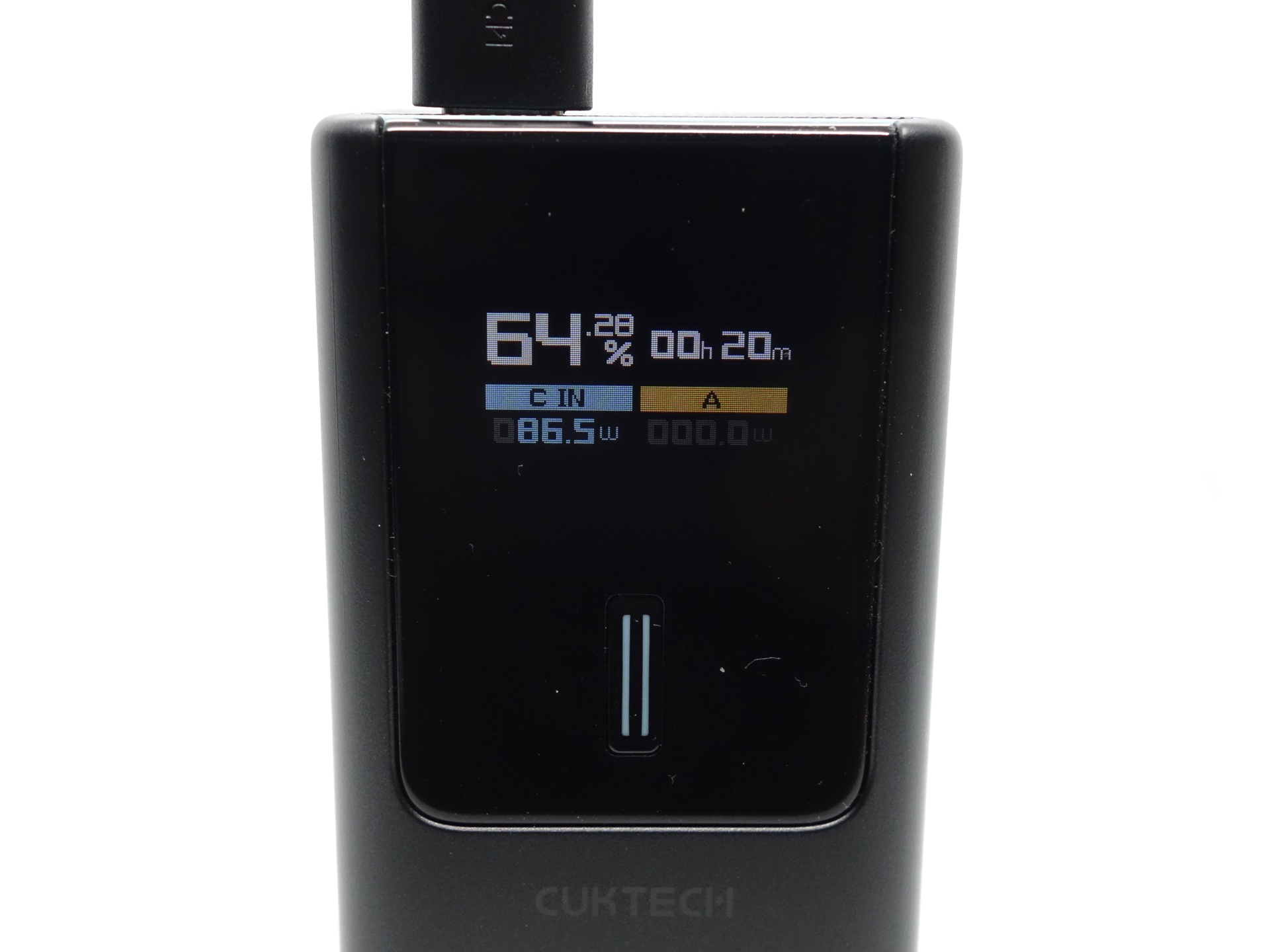
Here is an example of the screen displaying:
- Percentage of cell capacity (64.28%)
- Charge Status (C IN)
- Power (86.5W)
- Charge Time Remaining (20 minutes)
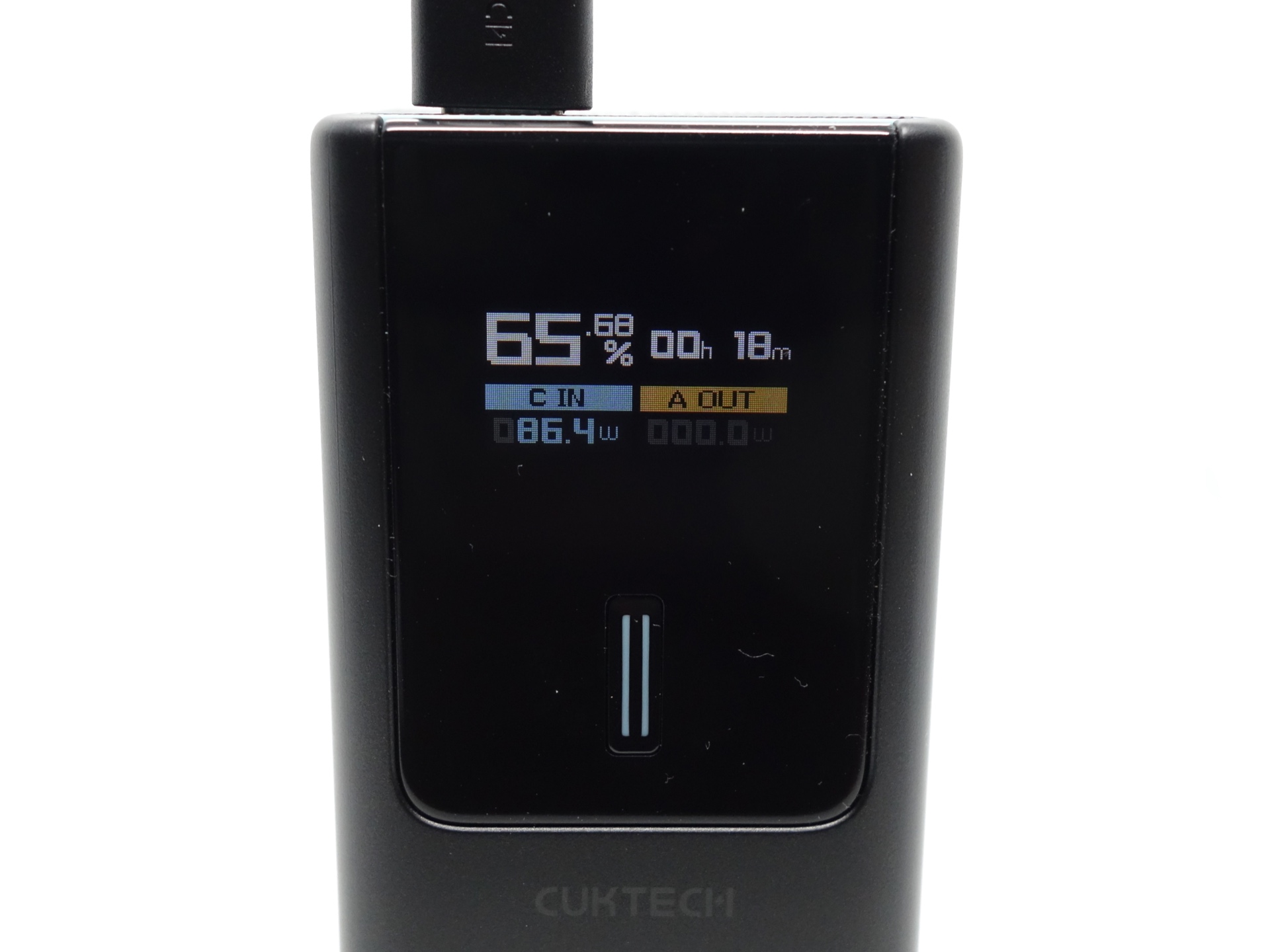
Here is an example of the screen displaying:
- Charge Status (C IN)
- Current (4.4A)
- Voltage (19.5V)
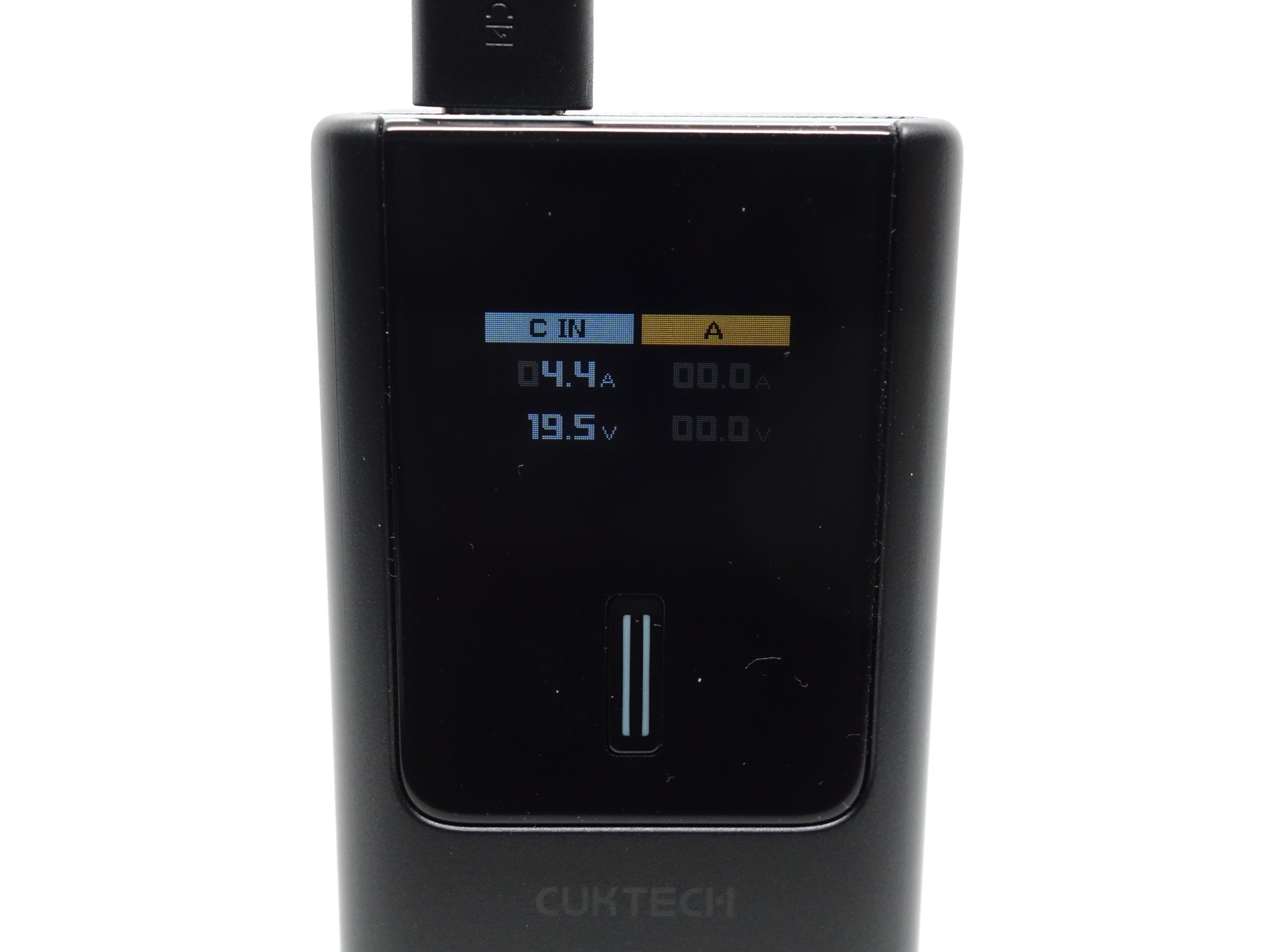
The percentage of cell capacity will be red if it is less than or equal to 10%.
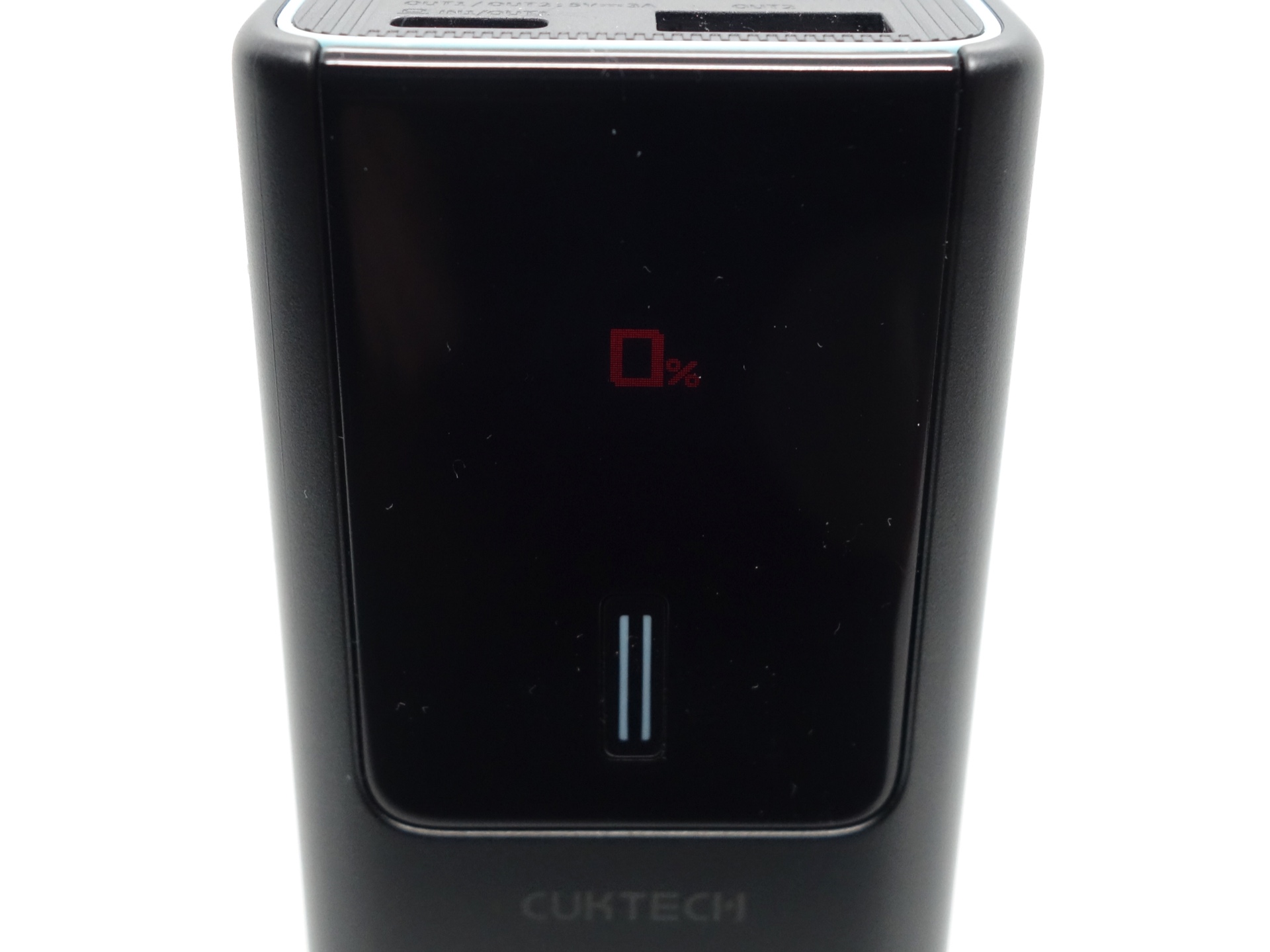
Here is an overview of how to use the button:
| Display | State | Action | Result |
|---|---|---|---|
| Off | Click | Turn the display on and view the status. | |
| On | First screen | Click | Switch to the second screen. |
| On | Second screen | Click | Switch to the third screen. |
| On | Third screen | Click | Turn the display off. |
| On | Third screen | Press and hold for 2 seconds | Keep Screen Always On. |
| Any | Press and hold for 5 seconds | Force the power bank to turn off. |
The display will automatically turn off after 60 seconds of inactivity unless you have selected the option to keep the screen always on.
Tests#
I used a ChargerLAB Power-Z KM003C Amazon Australia USB Meter to measure the voltage and current while charging and discharging the power bank.
And I used a USB-C PD board with an Atorch DL24 electronic load.
Please take my tests with a grain of salt. The accuracy may be slightly off.
Room temperature: 12 C
Charge and discharge tests#
| Port | Device | Power | Voltage | Current | Duration | Capacity | Energy | Efficiency | Temp |
|---|---|---|---|---|---|---|---|---|---|
| USB-C IN1 | Apple 140W | 86W | 20V | 4.3A | 00:46:01 | 1,838 mAh | 37.30 Wh | 33 C | |
| USB-C IN1 | PinePower Desktop | 60W | 20V | 3A | 00:48:01 | 1,845 mAh | 37.11 Wh | 29 C | |
| USB-C OUT1 | Atorch DL24P | 120W | 20V | 6A | 00:07:03 | 699 mAh | 13.84 Wh | 25 C | |
| USB-C OUT1 | Atorch DL24 | 100W | 20V | 5A | 00:10:01 | 820 mAh | 16.28 Wh | 30 C | |
| USB-C OUT1 | Atorch DL24P | 100W | 20V | 5A | 00:18:20 | 1,522 mAh | 30.21 Wh | 83.91% | 30 C |
| USB-C OUT1 | Atorch DL24 | 90W | 20V | 4.5A | 00:21:08 | 1,557 mAh | 30.96 Wh | 86.00% | 30 C |
| USB-C OUT1 | Atorch DL24 | 27W | 9V | 3A | 01:13:05 | 3,592 mAh | 31.90 Wh | 88.61% | 30 C |
| USB-C OUT1 | Atorch DL24 | 15W | 5V | 3A | 02:05:07 | 6,147 mAh | 30.55 Wh | 84.86% | 19 C |
| USB-A OUT2 | Atorch DL24 | 15W | 5V | 3A | 01:57:06 | 5,750 mAh | 27.38 Wh | 76.05% | 30 C |
| USB-C OUT1 | Apple AirPods 4 | 0.5W | 5V | 0.1 | 05:00:00 | 4,733 mAh | 2.41 Wh | 15 C |
Charge tests#
CUKTECH PB100P USB-C IN1 Apple 140W#
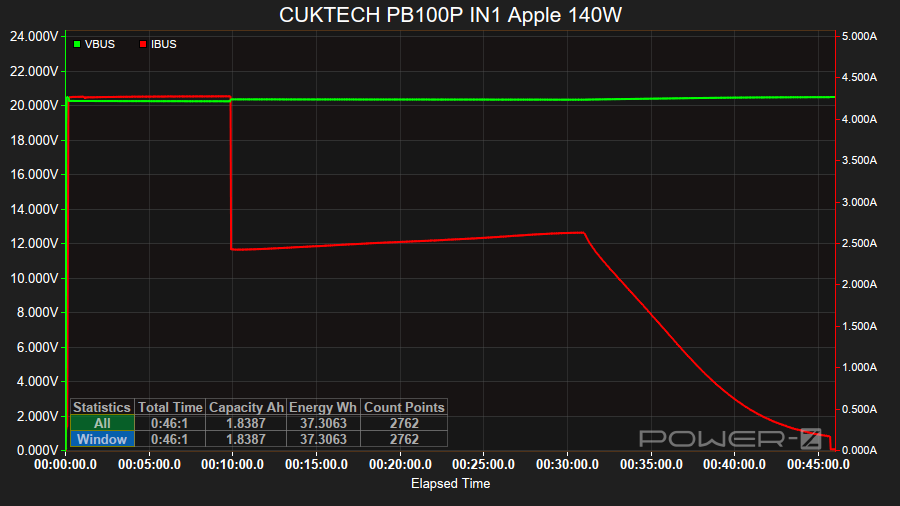
The input reached 86W (20V/4.3A) when I used an Apple 140W power supply to charge the power bank from 0% to 100%.
There was a step down from 20V/4.3A to 12V/2.5A at 10 minutes.
The current gradually decreased after 30 minutes and the power bank was fully charged within 46 minutes.
The surface temperature reached 33 C.
CUKTECH PB100P USB-C IN1 PinePower Desktop#
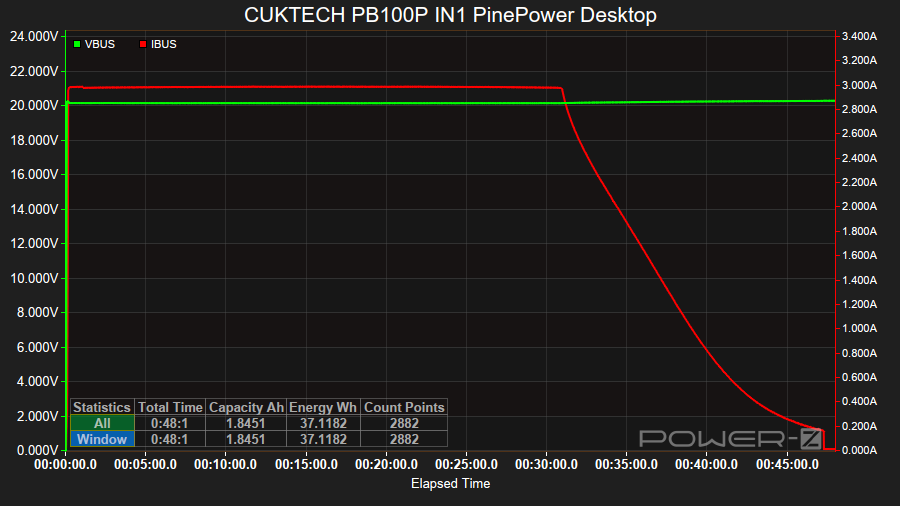
The input reached 60W (20V/3A) when I used a PinePower Desktop power supply to charge the power bank from 0% to 100%.
The input remained at 60W for the first 30 minutes and then the current gradually decreased until the power bank was full at 48 minutes.
This power bank charges slightly faster than expected!
Discharge tests#
CUKTECH PB100P USB-C OUT1 20V 6A#
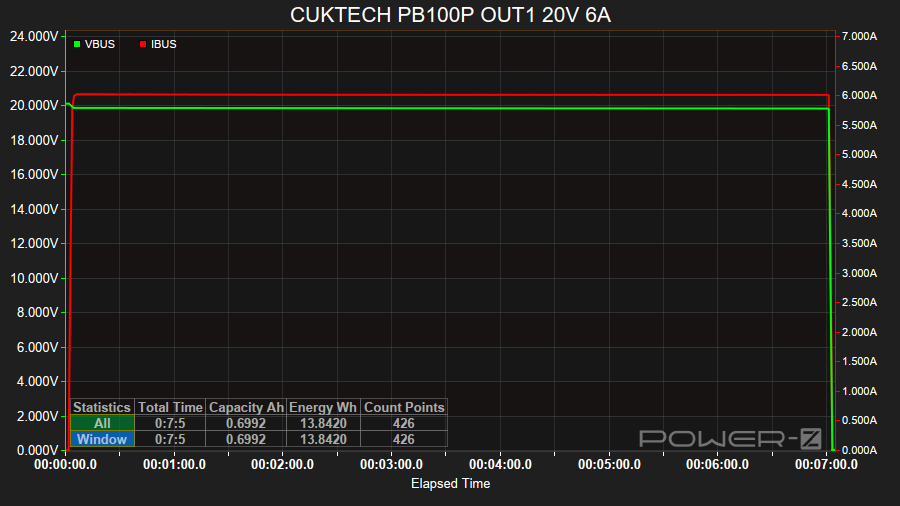
I used the ChargerLAB Power-Z KM003C Amazon Australia to trigger 20V/6A with an Atorch DL24P electronic load.
The power bank was able to supply 120W (20V/6A) for 7 minutes (13.84 Wh).
A capacity of 54% was displayed on the power bank after it cut out. The power bank may have tried to negotiate a lower voltage but my test stopped.
You can get more energy (Wh) out of the power bank when your device negotiates a lower voltage and current after stepping down from 20V/6A.
CUKTECH PB100P USB-C OUT1 20V 5A#
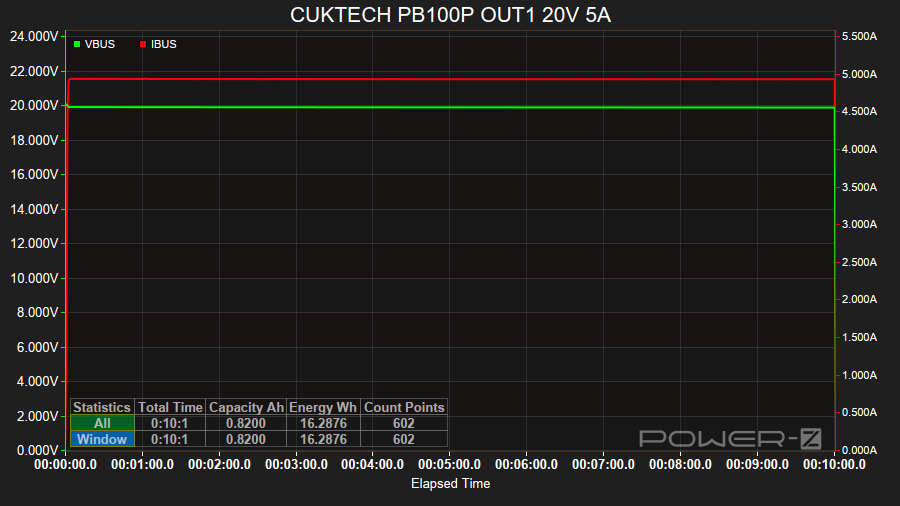
The power bank was able to supply 100W (20V/5A) for 10 minutes before it cut out. It may have attempted to step down but the USB-C PD board and the Atorch DL24 electronic load cut out instead of negotiating a lower output.
CUKTECH PB100P USB-C OUT1 20V 5A #2#
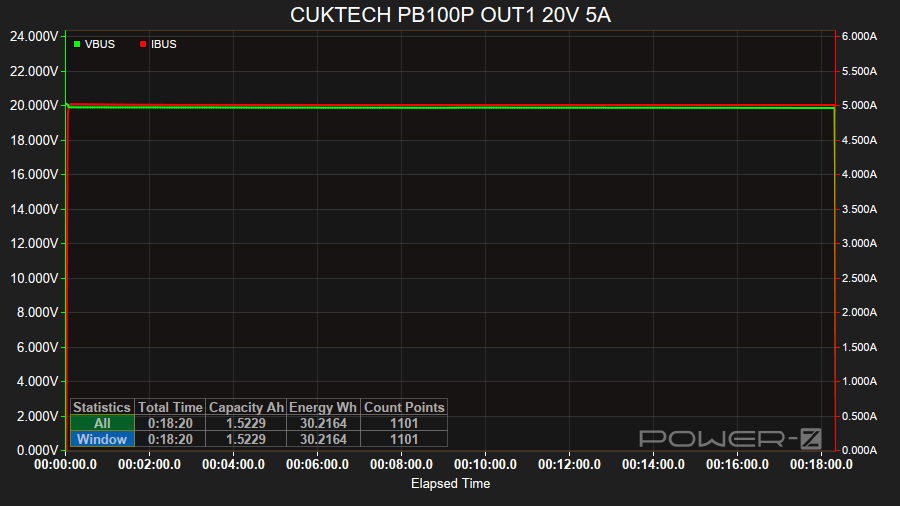
I used the ChargerLAB Power-Z KM003C Amazon Australia to trigger 20V/6A with an Atorch DL24P electronic load.
The power bank was able to supply 100W (20V/5A) for 18 minutes with an efficiency of 83.9% (30.21 Wh).
CUKTECH PB100P USB-C OUT1 20V 4.5A#
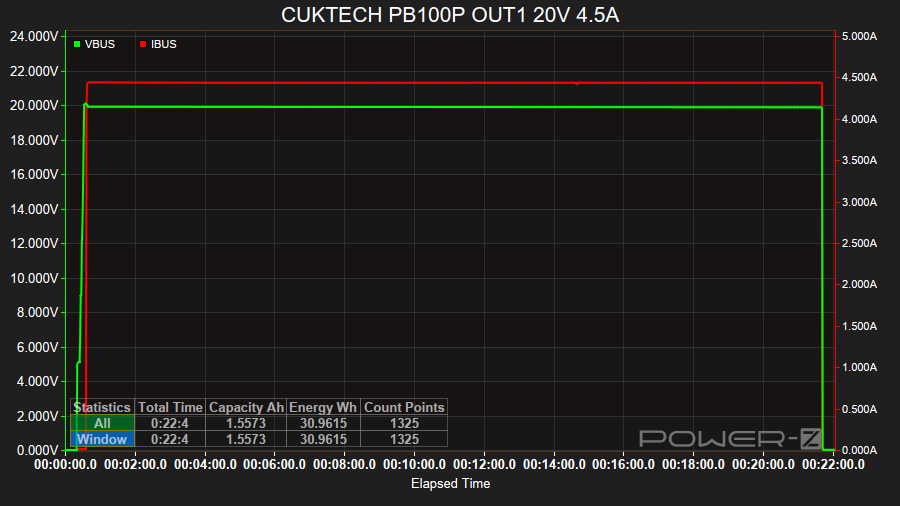
The power bank was able to supply 90W (20V/4.5A) for 21 minutes with an efficiency of 86% (30.96 Wh).
CUKTECH PB100P USB-C OUT1 9V 3A#
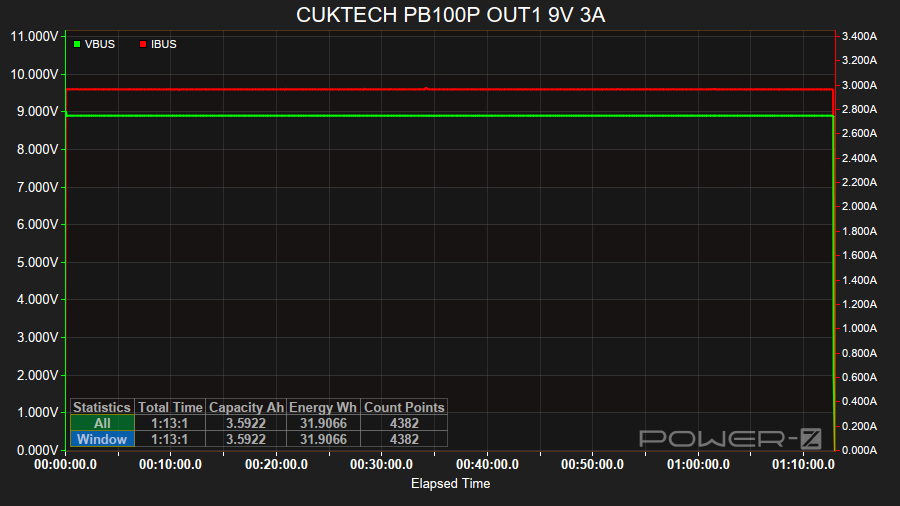
The power bank was able to supply 27W (9V/3A) for 1 hour 13 minutes with an efficiency of 88% (31.9 Wh).
CUKTECH PB100P USB-C OUT1 5V 3A#
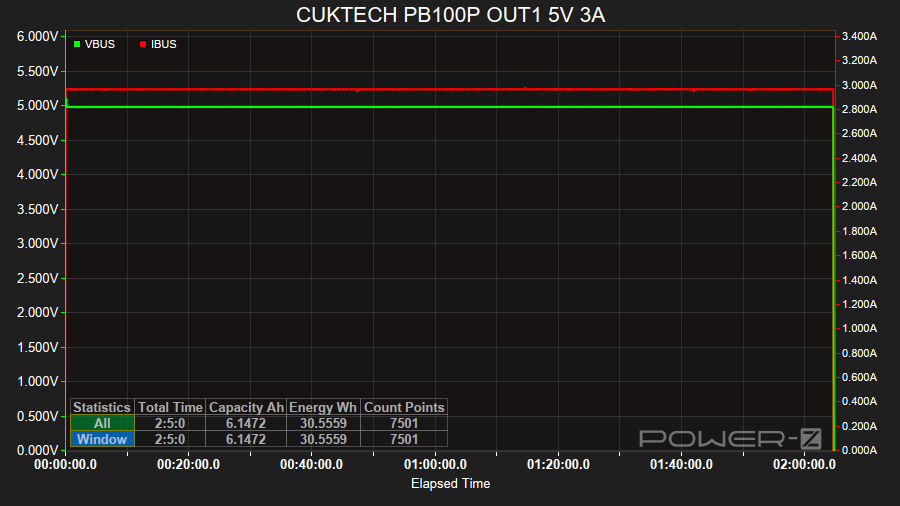
The power bank was able to supply 15W (5V/3A) for 2 hours 5 minutes with an efficiency of 84% (30.55 Wh).
CUKTECH PB100P USB-A OUT2 9V 3A#
I attempted to draw 9V/3A from the USB-A OUT2 port but the USB-C PD board connected to my Atorch DL24 electronic load cut out.
CUKTECH PB100P USB-A OUT2 5V 3A#
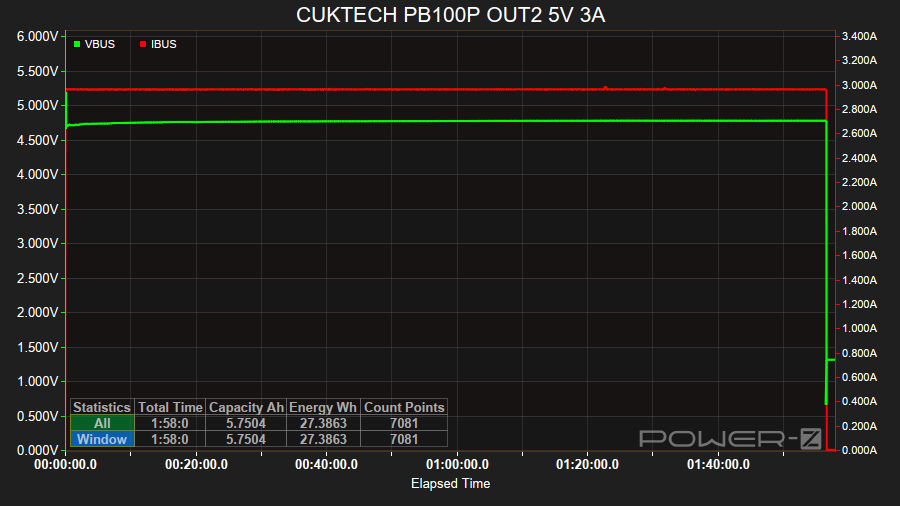
The power bank was able to supply 15W (5V/3A) for 1 hours 57 minutes with an efficiency of 76% (27.38 Wh) while using the USB-A port.
CUKTECH PB100P USB-C OUT1 Apple AirPods 4 ANC Case#
To test the low discharge current mode of the power bank, I discharged my Apple AirPods 4 ANC Case to 1% and the AirPods to 10%.
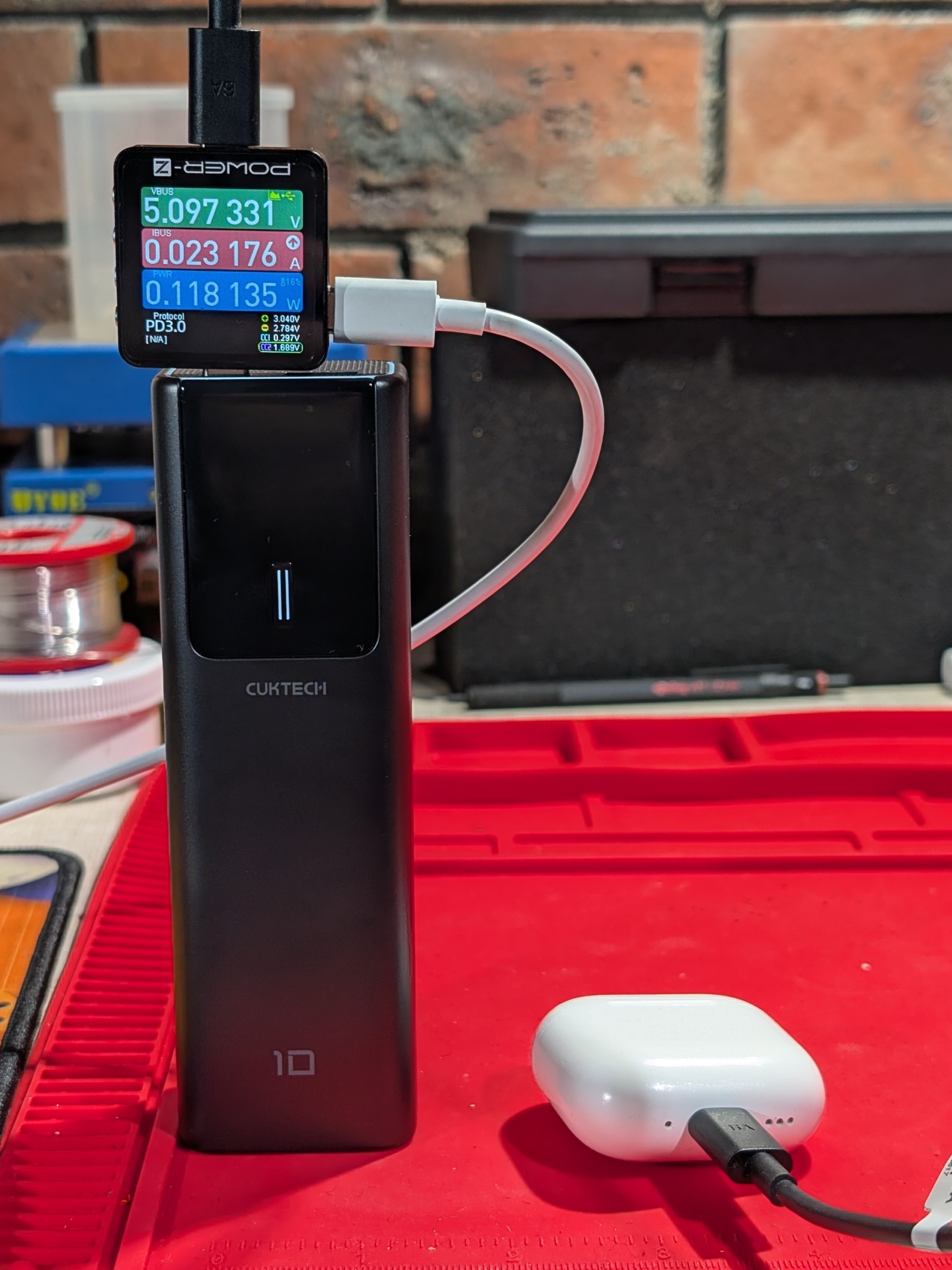
I then charged the case with AirPods inside for 5 hours!
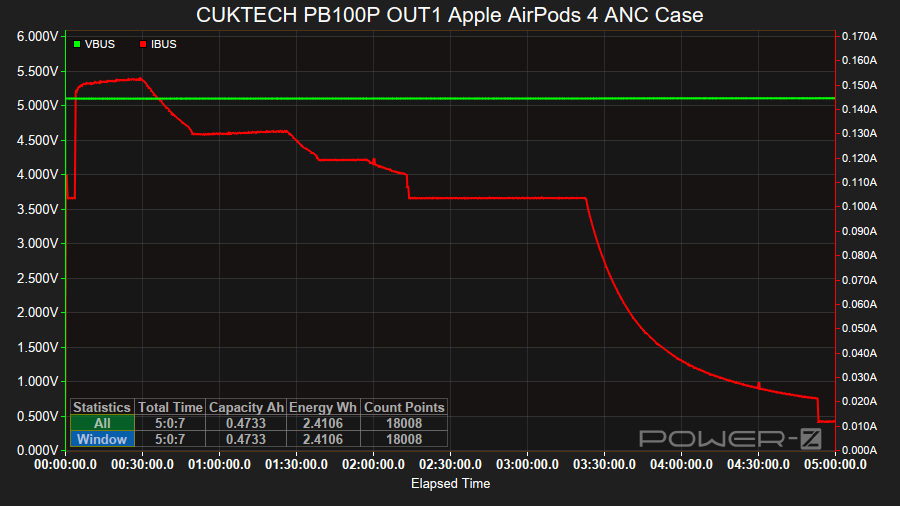
The charge current started at less than 100mA, peaked at 150mA at 30 minutes, and then it stepped down a few times.
The current started dropping gradually from 100mA at 3 hours 22 minutes.
There was a sudden drop from 22mA to 11.77mA at 4 hours 53 minutes.
The power bank was at 84% after fully charging the Apple AirPods 4 ANC case with AirPods inside.
Low discharge current mode works well.
Standby drain#
I did not notice any significant standby drain.
The power bank displayed 100% after 24 hours of being unplugged and idle.
Thermal Images#
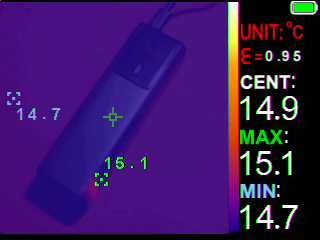
I used a Zoyi ZT-R01 IR Thermography Multimeter to take thermal images of the power bank on a silicone mat.
Room temperature: 15 C
| Time (mm:ss) | Max Temperature |
|---|---|
| 00:00 | 15.1 C |
| 05:00 | 22.7 C |
| 10:00 | 27.2 C |
The temperature peaked at 27.2 C while discharging the power bank from the USB-C port at 20V/5A.
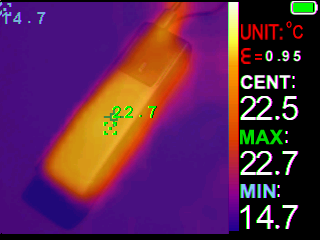
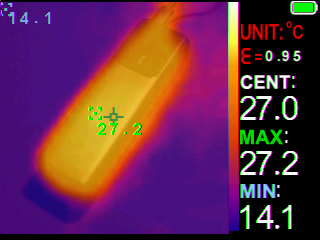
It managed to reach 33 C while charging at 86W (20V/4.3A).
Conclusion#
The CUKTECH 10 PB100P is great if you want something relatively small that can quickly charge your devices.
I topped up a MacBook and some phones over the past few weeks for “EDC” use.
There is something comforting about holding a power bank with four 18650 cells rather than an ultra-thin LiPo battery pack.
I did notice that the power bank had turned off while I was carrying it in my jeans with the cable connected to my phone as I walked around. I must have accidentally pressed the button down for 5 seconds. A lockout mode would be good.
The colour display is nice for seeing what is going on. And I like how you can turn the display off.
Low discharge current mode and pass-through charging are great features to have.
Overall, this is a great little fast charging power bank.
Pros:#
- 90W USB-C input.
- 120W USB-C output.
- 33W USB-A output.
- Pass-through charging.
- Low Current Discharge Mode.
- Colour display.
- Simple to use.
- Easy to hold.
- 0.5m USB-C to USB-C 6A cable with e-marker (50V 5A, 240W EPR).
Cons:#
- No 3C mark.
- The button can be accidentally pressed.
- Colour display attracts fingerprints.
Price#
The CUKTECH PB100P is AU$69.99 at mostlymelbourne.com
Product page#
CUKTECH PB100P at mostlymelbourne.com
CUKTECH PB100P at amazon.com.au (affiliate link)
P.S. I hope that you enjoyed my first power bank review. Please let me know if there are particular tests that you are interested in. I may need better test equipment as I was not able to test the power bank to its full potential (i.e. 120W (20V/6A) was not triggered properly and my electronic load cut out when the 100W (20V/5A) supply stepped down after 10 minutes).
I may earn a commission if you use an affiliate link or a promo code. This will help fund future torch reviews and tutorials.